




















Popular
How does Helena Walker first adapt to life on the ARK, and what does she do when she realizes she is being hunted by Nerva's scouts?
Who is Meiyin Li, and why does Helena become drawn to her?
What role does General Gaius Marcellus Nerva play in Helena’s journey?
How does Sir Edmund Rockwell’s betrayal affect Meiyin and the wider alliance?
What is the significance of Victoria Walker in Helena’s story, and how does her disappearance shape Helena’s emotional state?
Should I watch it?
Ask Your Own Question

What is the plot?
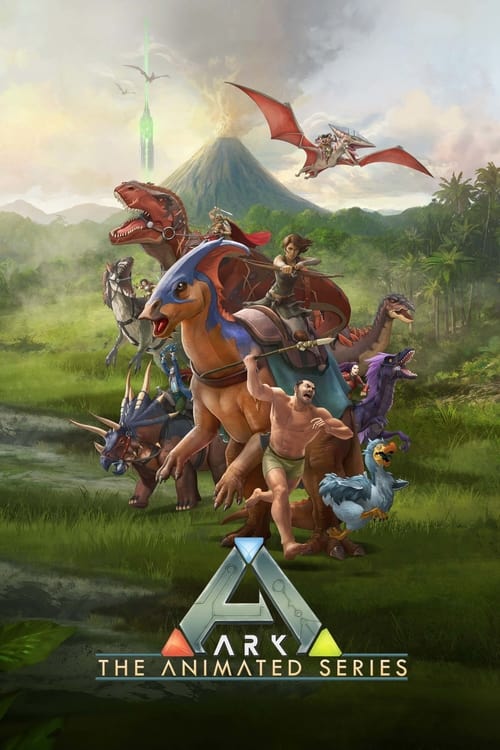
Helena Walker awakens underwater, coughing and thrashing as she fights her way toward the surface of a vast, alien sea. She is disoriented, alone, and still carrying the raw grief of her wife Victoria's death, and her first instinct is pure survival rather than understanding where she is or how she got there.
She drifts in open water until a massive megalodon charges her, turning the ocean into a panic of churning fins, snapping jaws, and blind terror. Helena escapes by desperate swimming and is eventually washed ashore on a strange island where the air is humid, the jungle is oppressive, and the land is dominated by dinosaurs and other impossible life.
On land, Helena quickly encounters a wild dodo and, before she can make sense of it, realizes she is being watched and hunted. A human hunter named Bob is tracking the bird, and the encounter becomes Helena's first contact with another person in this world. Bob is wary but experienced, and once he understands Helena is also a newcomer, he explains enough of the island's brutal rules to keep her alive. He teaches her that survival here depends on learning the creatures, the terrain, and the constant threat from hostile humans as much as from the wildlife.
Helena and Bob move through the island's dangers together, and Helena begins to absorb the reality that this place is not merely a wilderness but a violent world of warring tribes, strange technology, and people from different eras. Her scientific instincts take over as she observes the environment, but her emotional state remains fragile: she is grieving, frightened, and trying to hold onto some rational framework in a place that makes none.
Helena and Bob eventually part company, and Helena is forced into wider contact with the island's human conflict. While fleeing danger, she is pursued by scouts loyal to Nerva, a ruthless Roman warlord whose power reaches across multiple settlements. Her attempt to keep ahead of them becomes her introduction to the island's organized violence, where every choice is driven by immediate survival and every stranger could be a threat.
While on the run, Helena meets Meiyin, who becomes a crucial new ally. Their alliance forms under pressure rather than trust: both women are isolated, both are in danger, and both recognize they are stronger together than alone. Helena's practical survival instincts and Meiyin's ferocity begin to complement each other as they travel.
Helena and Meiyin then reach a treetop village led by a Lakota warrior and his adopted daughter, Alasie. The village offers one of the first signs of community and relative safety Helena has found since waking up, but that safety is fragile. The villagers are already under strain from a sickness spreading through the settlement, and Helena and Meiyin are drawn into the crisis almost immediately.
The sickness becomes the driving emergency of this stretch of the story. Helena helps investigate, and the group determines that the cure must be sought at Pteranodon Mountain. This decision turns the story into a hazardous expedition: instead of remaining protected in the village, Helena, Meiyin, and the others commit themselves to a dangerous journey into hostile terrain because doing nothing would mean allowing the illness to destroy the community.
The search for the cure is not a single clean trip but a sequence of escalating dangers, with the group moving through treacherous routes while remaining vulnerable to attack from both beasts and enemy humans. Helena's role is not simply to survive but to apply her knowledge and judgment in a world where science, medicine, and instinct must work together under pressure.
After these events, Helena and her allies attempt a raid on a brutal mining camp to liberate prisoners. The operation is an active choice to confront Nerva's system of exploitation rather than merely escape it. The plan depends on timing, stealth, and coordination, but it fails when Helena's strategy goes wrong in the middle of the action. The collapse of the plan is immediate and physical: the mission devolves into chaos, and Helena and Alasie are captured.
Their capture marks a major reversal. Instead of returning victorious, Helena is now trapped by the very forces she tried to oppose, and the situation exposes how dangerous Nerva's network truly is. The prisoners' suffering, the violence of the camp, and the consequences of the failed rescue force Helena into a more desperate and personal confrontation with the island's rulers.
At roughly the same time, Meiyin tries to turn the newly liberated villagers into soldiers. Her mindset is harder and more militant than the others', shaped by the need to fight back decisively rather than simply survive. Henry opposes her approach, arguing against making the village into an armed force. This conflict is not abstract; it is a direct clash over what kind of future the survivors should build, and the argument deepens the strain inside the group.
Nerva responds with a counterattack against John's village. The assault is a surprise strike meant to punish the resistance and break their morale. The attack is not described as a single blow but as a punishing offensive that puts the village under immediate threat and demonstrates that Nerva is willing to escalate without restraint.
During this stage, Meiyin is imprisoned in Nerva's fortress and forced to confront her own past through a series of painful memories. Her captivity gives emotional weight to her earlier aggression, revealing that her drive toward militarization is bound up with the mistakes and losses she carries. Her recollection is not a detached backstory beat; it is part of the story's present-tense pressure, showing why she is so determined to fight.
Helena, John, and Henry then mount a daring rescue to free Meiyin from Nerva's fortress. This is a high-risk choice made in direct response to captivity and retaliation, and it requires them to enter enemy territory rather than wait for a safer opportunity. The rescue is framed as a race against Nerva's control, with the group acting because delay would mean losing Meiyin and perhaps the chance to resist at all.
The final movement of the season builds around this rescue effort and the ongoing struggle against Nerva's domination. The characters are left in a state of open conflict: Helena is still searching for a way to survive this world and understand it, Meiyin is torn between vengeance and leadership, John's community is under threat, and Nerva remains entrenched as the main human antagonist. The season ends with the conflict unresolved, the resistance battered but not broken, and the island's deeper secrets still looming over everyone's struggle to endure.

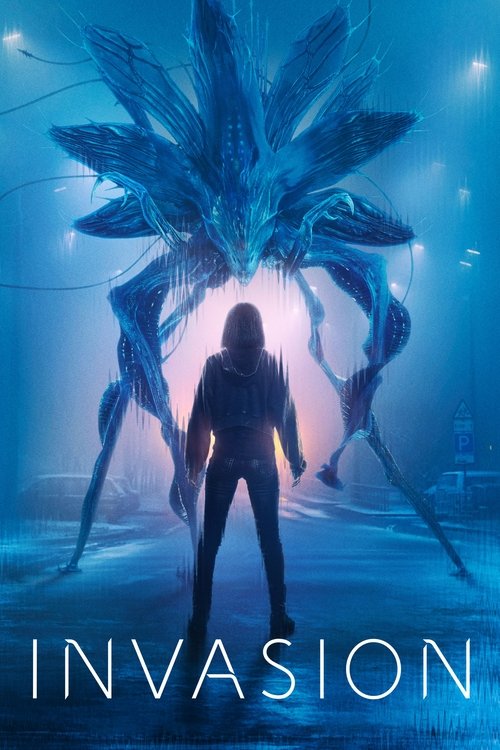




What is the ending?
ARK: The Animated Series ends with Helena and Meiyin escaping while John stays behind to confront Nerva directly. John is beaten in the fight, killed by Nerva, and then uses his last explosive shot to blow up the palace, taking Nerva and Nerva's dinosaur down with him.
The ending begins with the rescue effort already in motion. Helena and Meiyin are trying to get away, moving fast and desperate, while John remains behind instead of fleeing with them. He chooses the dangerous path and faces Nerva alone, putting himself directly in the tyrant's line of attack.
John and Nerva fight face-to-face. The struggle is hard and physical, but John is overpowered. Nerva lands the final blow and kills him. Even in that final moment, John forces out one last act of resistance. He fires an explosive bag, and the blast tears through the palace. The explosion engulfs Nerva and the dinosaur with him, turning John's death into the final destruction of the stronghold.
Helena's fate at the end is escape. She gets away alive. Meiyin's fate is also escape. She gets away alive beside Helena. John's fate is death, but only after he makes sure Nerva does not survive the collapse of the palace. Nerva's fate is death in the explosion. Nerva's dinosaur's fate is destruction in the same blast.
The final stretch of the story leaves the feeling of sacrifice on John's side and survival for Helena and Meiyin. John's last action is not to save himself, but to make sure the enemy's rule ends with him.
Is there a post-credit scene?
There is no reliable evidence in the provided sources that ARK: The Animated Series has a post-credit scene in the 2024 release. The available results describe the series' launch, episode list, and ending discussion, but none explicitly confirm a post-credit sequence.
The closest clue is a Reddit comment mentioning "at the end of the credits" and referencing Helena's corpse in a hidden tunnel, but that is a fan observation rather than an authoritative confirmation of a post-credit scene. Because the series was released as a six-episode first part in March 2024 and the second part was delayed, any such tease may be being confused with game lore or a hidden detail in the credits rather than a documented post-credit scene.
If you want, I can also summarize the ending of the 2024 first part and point out any likely teaser-style credit stingers or lore references.
How does Helena Walker first adapt to life on the ARK, and what does she do when she realizes she is being hunted by Nerva's scouts?
Helena's early story centers on disorientation, grief, and survival. She wakes into a brutal world where the rules of modern life no longer apply, and her instincts as a scientist have to compete with fear, hunger, and the constant threat of attack. Once she realizes Nerva's forces are tracking her, her focus shifts from shock to motion: she runs, hides, reads danger quickly, and begins choosing allies instead of trying to endure alone.
Who is Meiyin Li, and why does Helena become drawn to her?
Meiyin Li is a rebel leader known across the ARK as the 'Beast Queen,' a reputation that makes her seem dangerous long before Helena truly knows her. Their relationship grows from survival into trust, then into emotional intimacy, as Helena sees the strength beneath Meiyin's hardened exterior and Meiyin recognizes Helena's compassion and steadiness. Helena's attraction is tied to admiration as much as desire: Meiyin represents fierce resistance, but also vulnerability hidden under discipline.
What role does General Gaius Marcellus Nerva play in Helena’s journey?
Nerva functions as the main human threat shaping Helena's movement through the ARK. He is a brutal despot who wants to impose his will on the world, so his pressure forces Helena into alliances, flight, and increasingly dangerous choices. His presence turns Helena's personal struggle into a political one, because surviving him means deciding which communities to trust and how far she is willing to go to stop him.
How does Sir Edmund Rockwell’s betrayal affect Meiyin and the wider alliance?
Rockwell's betrayal is a major turning point because it destroys trust at the center of the multi-nation alliance. He sides with Nerva after already betraying Meiyin, which leaves her not only politically isolated but personally wounded. The emotional impact is sharp: Meiyin's confidence as a leader is tested, and the collapse of the alliance deepens the series' sense that even intellect and strategy can be corrupted by ambition.
What is the significance of Victoria Walker in Helena’s story, and how does her disappearance shape Helena’s emotional state?
Victoria is Helena's wife from her previous life, and her disappearance at the start of the series hangs over Helena like an unresolved loss. Helena carries grief, doubt, and lingering hope at the same time, which makes her emotionally guarded even when she begins building new bonds on the ARK. Victoria's absence is not just background detail; it is the wound that explains Helena's vulnerability, her loneliness, and why her feelings for Meiyin unfold with so much emotional weight.
Is this family friendly?
No -- ARK: The Animated Series is generally not family-friendly for young children, and it is better suited to teens or adults because of its graphic violence, blood, and intense scenes.
Potentially upsetting or objectionable elements for children or sensitive viewers include: - Severe violence and gore, including lots of blood and brutal deaths. - Stabbing, throat-cutting, and characters being eaten or mutilated in violent action scenes. - Intense and frightening moments tied to survival, warfare, and perilous attacks. - Mild to occasional profanity such as "crap," "ass," and "hell." - Some kissing, embracing, and brief sexual innuendo, though explicit nudity is not reported in the main parental guides. - Alcohol/substance-related content appears briefly, according to Common Sense Media. - Harsh verbal hostility and manipulative intimidation, plus some racist/misogynistic remarks noted by Common Sense Media.
If you want, I can also give you a very short age recommendation like "okay for 13+ / 16+ / adults only" based on these guides.