





















Popular
What are the main conflicts between Lee Tae and Kim So Eun throughout the series?
How does the character of Lee Tae evolve throughout the series?
What role does the character of Kim So Eun play in the political dynamics of the court?
What are the significant turning points in the relationship between Lee Tae and Kim So Eun?
How do the supporting characters influence the main storyline in Bloody Heart?
Should I watch it?
Ask Your Own Question

What is the plot?
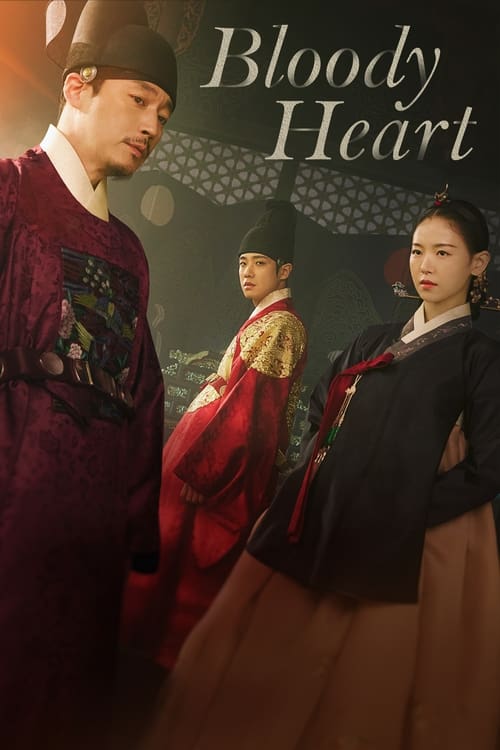
In the kingdom of Joseon, the story begins with the young and ambitious Lee Tae, the crown prince, who is determined to ascend to the throne despite the political turmoil surrounding him. His father, the king, is weak and easily manipulated by the powerful nobles, leading to a court filled with intrigue and betrayal. Lee Tae's desire for power is fueled by his need to protect his people and secure a stable future for the kingdom.
As the narrative unfolds, Lee Tae's relationship with his childhood friend, the intelligent and resourceful Kim So Eun, becomes central to the plot. So Eun, who has been raised in the palace, harbors feelings for Lee Tae but is also aware of the dangers that come with his ambition. She tries to guide him, urging him to be cautious in his pursuit of power. Their bond is tested as Lee Tae becomes more consumed by his desire to claim the throne.
The political landscape shifts dramatically when Lee Tae's father is assassinated, leaving the young prince to navigate the treacherous waters of court politics alone. The nobles, sensing an opportunity, begin to vie for power, and Lee Tae must quickly learn to play their game. He makes a bold decision to align himself with a faction that supports his claim to the throne, solidifying his position but also making powerful enemies.
As Lee Tae consolidates his power, he faces betrayal from those he once trusted. A close advisor, who had been secretly working with rival factions, attempts to undermine him. In a tense confrontation, Lee Tae discovers the betrayal and is forced to confront his former ally. The encounter escalates into a physical struggle, showcasing Lee Tae's determination to protect his claim. He ultimately overcomes the advisor, but the experience leaves him more isolated and wary of those around him.
Meanwhile, So Eun finds herself caught in the crossfire of the political machinations. She is kidnapped by a rival faction seeking to leverage her connection to Lee Tae. In a gripping sequence, Lee Tae learns of her abduction and rallies his loyal supporters to mount a rescue. The rescue mission is fraught with danger, as they infiltrate the enemy's stronghold. Lee Tae fights through guards, showcasing his growing prowess as a leader and warrior. He finally reaches So Eun, and their reunion is both emotional and tense, as they realize the stakes of their situation.
After the rescue, Lee Tae and So Eun's relationship deepens, but the pressures of the throne weigh heavily on him. He grapples with the moral implications of his decisions, especially as he begins to make choices that lead to bloodshed. The internal conflict within Lee Tae intensifies as he struggles to balance his ambition with his humanity. He seeks counsel from So Eun, who urges him to remember the people he wishes to protect.
As Lee Tae's power grows, he faces a pivotal moment when he must decide whether to execute a rival noble who poses a significant threat to his reign. The decision is fraught with tension, as it could either solidify his rule or lead to further unrest. In a dramatic council meeting, Lee Tae chooses to spare the noble's life, believing that mercy will strengthen his position. However, this decision is met with mixed reactions from his supporters, some of whom feel betrayed by his leniency.
The climax of the story occurs during a grand festival in the capital, where Lee Tae's enemies plot to assassinate him. The atmosphere is charged with excitement, but beneath the surface, danger lurks. As the festival unfolds, an assassination attempt is made, leading to chaos in the streets. Lee Tae, with So Eun by his side, fights against the attackers in a desperate bid to survive. The scene is filled with vivid imagery of the festival's colors contrasting with the violence erupting around them.
In the aftermath of the assassination attempt, Lee Tae's position is more precarious than ever. He realizes that he cannot trust anyone, and paranoia begins to consume him. He isolates himself further, pushing So Eun away as he becomes more ruthless in his quest for power. The emotional toll of his decisions weighs heavily on him, leading to moments of introspection where he questions the cost of his ambition.
The final act of the story sees Lee Tae facing a coup led by the very nobles he once sought to ally with. In a dramatic showdown, he must confront the leaders of the rebellion in a battle for his life and the throne. The confrontation is intense, with strategic maneuvers and fierce combat. Lee Tae's determination to protect his kingdom drives him to fight with everything he has, culminating in a climactic duel with the leader of the coup.
In the end, Lee Tae emerges victorious but at a great cost. The bloodshed leaves him haunted, and he realizes that the throne he fought so hard for may not bring him the peace he sought. The series concludes with Lee Tae standing alone in the palace, reflecting on the sacrifices made and the loneliness of power, while So Eun watches from a distance, torn between her love for him and the man he has become.
What is the ending?
In the ending of "Bloody Heart," Lee Tae and Park Gyeong-eun face the consequences of their tumultuous relationship and the political turmoil surrounding them. The series concludes with a tragic resolution, where personal sacrifices and the weight of their choices lead to a heartbreaking separation.
As the story unfolds in the final episodes, the tension escalates between Lee Tae, the king, and Park Gyeong-eun, his beloved. The political landscape is fraught with betrayal and power struggles, and both characters are forced to confront their loyalties and desires. In a climactic moment, Lee Tae makes a decision that ultimately leads to Gyeong-eun's departure, marking a poignant end to their love story.
In the final scenes, Lee Tae is left to grapple with the consequences of his actions, while Gyeong-eun embarks on a new path, forever changed by her experiences. The series closes on a somber note, emphasizing the sacrifices made in the name of love and duty.
As the final episodes of "Bloody Heart" unfold, the atmosphere is thick with tension and impending doom. The camera pans over the royal palace, where the weight of the crown feels heavier than ever on Lee Tae's head. He stands alone in his chamber, the flickering candlelight casting shadows that mirror his internal conflict. His heart is torn between his duty as king and his love for Park Gyeong-eun, who has become a symbol of both hope and despair in his life.
Scene breaks reveal the escalating stakes. In one pivotal moment, Gyeong-eun confronts Lee Tae in the garden, the vibrant flowers around them contrasting sharply with the dark clouds looming overhead. Her eyes are filled with determination, yet they betray a deep sadness. She implores him to consider the consequences of his decisions, knowing that their love is entangled in the web of political intrigue. Lee Tae, torn between his feelings and the demands of his position, struggles to articulate his emotions, his voice trembling as he promises to protect her.
As the political machinations unfold, betrayal lurks in every corner. Lee Tae's advisors whisper in the shadows, urging him to make sacrifices for the sake of the kingdom. The tension reaches a boiling point when Gyeong-eun learns of a plot against Lee Tae, and she rushes to warn him. In a heart-wrenching scene, she finds him in the throne room, surrounded by his council. The air is thick with tension as she pleads for him to reconsider his alliances, but the king, blinded by his sense of duty, dismisses her concerns.
The climax arrives when Gyeong-eun is faced with an impossible choice. In a moment of desperation, she decides to leave the palace, believing that her departure will protect Lee Tae from the political fallout that their love has incited. The scene is heart-wrenching; as she walks away, the camera captures the tears streaming down her face, each step echoing the weight of her sacrifice. Lee Tae watches her go, his heart breaking as he realizes the depth of his loss.
In the final moments, the narrative shifts back to Lee Tae, who is left alone in the throne room, the crown heavy on his head. The once vibrant colors of the palace fade to muted tones, symbolizing the emptiness he feels without Gyeong-eun by his side. He grapples with the reality of his choices, understanding that the throne has cost him the one person he truly loved.
The series concludes with a poignant silence, leaving viewers with the haunting image of Lee Tae standing alone, a king without a queen, and Gyeong-eun embarking on a new journey, forever marked by the love they shared and the sacrifices they made. The fate of each character is sealed in this bittersweet ending, emphasizing the tragic consequences of love intertwined with duty and ambition.
Is there a post-credit scene?
In the TV show "Bloody Heart," there is no post-credit scene. The series concludes its narrative without any additional scenes after the credits roll. The final moments of the show focus on the resolution of the main characters' arcs, particularly the tumultuous relationship between Lee Tae and the political intrigues surrounding the throne. The ending leaves viewers with a sense of closure regarding the characters' fates, emphasizing the themes of sacrifice, love, and the harsh realities of power.
What are the main conflicts between Lee Tae and Kim So Eun throughout the series?
The main conflicts between Lee Tae and Kim So Eun revolve around their differing loyalties and the political machinations of the royal court. Lee Tae, as the king, is torn between his duty to the throne and his love for So Eun, who is caught in the web of palace intrigue. Their relationship is further complicated by So Eun's past and her connections to other powerful figures, leading to moments of betrayal and heartache as they navigate their feelings amidst the pressures of their respective roles.
How does the character of Lee Tae evolve throughout the series?
Lee Tae begins as a conflicted ruler, struggling to assert his authority while dealing with the expectations of the court and his own desires. As the series progresses, he becomes more ruthless and strategic, often making morally ambiguous decisions to protect his reign. His evolution is marked by moments of vulnerability, particularly in his interactions with So Eun, where his emotional struggles are laid bare, showcasing his internal battle between love and duty.
What role does the character of Kim So Eun play in the political dynamics of the court?
Kim So Eun plays a crucial role in the political dynamics of the court as she becomes a pawn in the power struggles between various factions. Her intelligence and resourcefulness allow her to navigate the treacherous waters of court politics, but her personal feelings for Lee Tae often cloud her judgment. So Eun's character embodies the tension between personal loyalty and political necessity, making her a key player in the unfolding drama.
What are the significant turning points in the relationship between Lee Tae and Kim So Eun?
Significant turning points in the relationship between Lee Tae and Kim So Eun include their initial meeting, where a spark of attraction ignites amidst the backdrop of political tension. Another pivotal moment occurs when So Eun is forced to choose between her loyalty to Lee Tae and her family's safety, leading to a heartbreaking confrontation. The climax of their relationship is marked by a betrayal that tests their love and commitment, ultimately reshaping their bond as they confront the consequences of their choices.
How do the supporting characters influence the main storyline in Bloody Heart?
The supporting characters in Bloody Heart significantly influence the main storyline by representing various factions within the court and embodying the complexities of loyalty and betrayal. Characters like the scheming ministers and rival claimants to the throne create obstacles for Lee Tae and So Eun, forcing them to make difficult decisions. Additionally, the relationships these characters have with the protagonists often serve as mirrors to Lee Tae and So Eun's struggles, highlighting themes of ambition, sacrifice, and the cost of power.
Is this family friendly?
"Bloody Heart," produced in 2022, is a historical drama that contains several elements that may not be suitable for children or sensitive viewers. Here are some potentially objectionable aspects:
-
Violence and Bloodshed: The series features scenes of political intrigue and power struggles that often result in violence, including sword fights and executions, which may be graphic and intense.
-
Political Intrigue: The show delves into themes of betrayal, manipulation, and the harsh realities of power, which may be complex and unsettling for younger audiences.
-
Romantic Tensions: There are romantic relationships that involve betrayal and emotional turmoil, which may include mature themes of love and loss.
-
Death and Grief: Characters experience significant loss, leading to scenes of mourning and emotional distress that could be upsetting.
-
Mature Themes: The narrative explores themes of loyalty, ambition, and moral ambiguity, which may be difficult for younger viewers to fully understand or process.
Overall, "Bloody Heart" is more suited for mature audiences due to its intense themes and emotional depth.