





Popular
What role does the character of Tannie Maria play in the story?
How does Tannie Maria's relationship with her boss, Hattie, develop throughout the series?
What is the significance of the recipes included in each episode?
Who are the main suspects in the murder investigation, and what are their motivations?
How does Tannie Maria's personal life intersect with the murder mystery?
Should I watch it?
Ask Your Own Question

What is the plot?
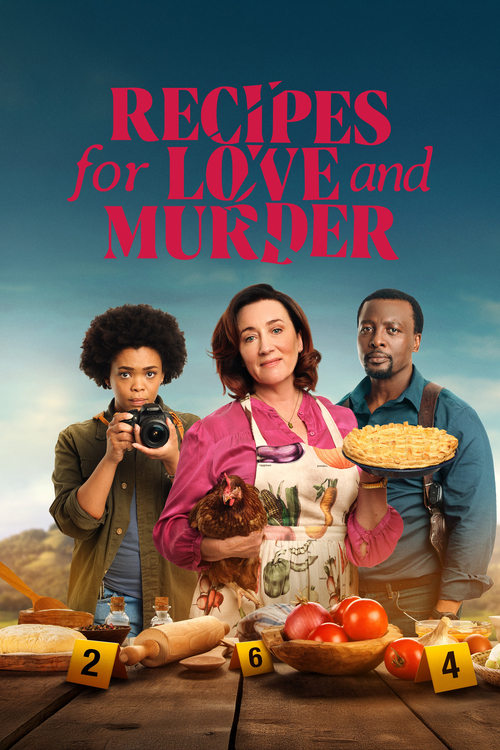
In the small South African town of Tswalu, the story begins with the introduction of the protagonist, a food journalist named Tannie Maria. She is passionate about cooking and has a deep love for food, which she believes can heal emotional wounds. Tannie Maria works for a local newspaper, where she writes a column that combines recipes with advice for readers. Her life takes a turn when she receives a letter from a reader, asking for help with a troubled relationship. This letter ignites her curiosity and sets her on a path to become more involved in the lives of her readers.
As Tannie Maria delves into her readers' lives, she becomes particularly invested in the case of a young woman named Jessie, who is in a tumultuous relationship. Tannie Maria's concern for Jessie grows, and she decides to meet her in person. During their meeting, Jessie reveals that she is being threatened by her boyfriend, which deeply unsettles Tannie Maria. She offers Jessie support and advice, encouraging her to stand up for herself. This encounter solidifies Tannie Maria's role as a confidante and protector for those in need.
The plot thickens when Jessie is found dead shortly after their meeting. The news of her murder sends shockwaves through the community, and Tannie Maria is devastated. She feels a sense of guilt for not being able to help Jessie and becomes determined to uncover the truth behind her death. Tannie Maria begins her own investigation, driven by a mix of grief and a desire for justice. She starts to gather information about Jessie's life, speaking to friends and acquaintances to piece together the events leading up to the murder.
As Tannie Maria investigates, she encounters various suspects, including Jessie's boyfriend, who becomes a prime suspect due to his violent behavior. Tannie Maria's interactions with him are tense, as she confronts him about his relationship with Jessie. He denies any involvement in her death, but Tannie Maria remains skeptical. Her determination to find the truth leads her to dig deeper into the lives of those around Jessie, revealing secrets and hidden motives.
During her investigation, Tannie Maria also faces challenges from the local police, who are not keen on her meddling in the case. The lead detective, who is initially dismissive of her efforts, begins to take notice of her findings as she uncovers crucial evidence. Tannie Maria's persistence pays off when she discovers a connection between Jessie and a local crime ring, suggesting that her murder may be linked to something much larger than a simple domestic dispute.
As Tannie Maria continues to unravel the mystery, she finds herself in increasingly dangerous situations. She receives threats warning her to stop her investigation, which only fuels her resolve. Tannie Maria's emotional state fluctuates between fear and determination, as she grapples with the risks involved in seeking justice for Jessie. Her passion for cooking becomes a source of comfort, and she often turns to her culinary skills to cope with the stress of the investigation.
The climax of the story occurs when Tannie Maria confronts the true murderer during a tense showdown. She gathers evidence that points to a shocking twist: the murderer is someone she never expected, a person close to Jessie who had been manipulating events from behind the scenes. The confrontation is fraught with tension, as Tannie Maria must use her wits to escape a potentially deadly situation. In a moment of bravery, she manages to outsmart the murderer, leading to their arrest.
In the aftermath of the investigation, Tannie Maria reflects on the impact of Jessie's death and the importance of community. She finds solace in her cooking, using it as a way to honor Jessie's memory. The story concludes with Tannie Maria continuing her work as a food journalist, now with a deeper understanding of the complexities of love, loss, and the power of food to bring people together.
More TV Shows Like This
Browse All TV Shows →








What is the ending?
In the ending of "Recipes for Love and Murder," the mystery surrounding the murders in the small town is resolved. The protagonist, Tannie Maria, uncovers the truth about the killer, leading to a tense confrontation. The resolution brings closure to the various character arcs, with Tannie Maria finding a sense of peace and purpose in her life, while the community begins to heal from the turmoil.
As the final episodes unfold, the tension in the small town escalates. Tannie Maria, a passionate cook and amateur sleuth, has been deeply involved in solving the murders that have plagued her community. The atmosphere is thick with suspense as she pieces together clues, driven by her desire to protect her friends and neighbors.
Scene by scene, the narrative begins with Tannie Maria receiving a cryptic message that hints at the identity of the murderer. She feels a mix of fear and determination, knowing that she must act quickly to prevent further tragedy. The camera captures her furrowed brow and the way her hands tremble slightly as she prepares her favorite dish, a metaphor for her nurturing spirit amidst chaos.
In the next scene, Tannie gathers her closest allies, including her friend and confidant, Hattie. They sit around a table cluttered with ingredients and notes, their faces illuminated by the warm glow of the kitchen. Tannie expresses her fears about the killer, her voice trembling with emotion. Hattie reassures her, emphasizing the importance of community and support. This moment highlights Tannie's vulnerability and the strength of their friendship.
As the investigation progresses, Tannie confronts various townsfolk, each interaction revealing more about their hidden lives and secrets. The tension builds as she realizes that the killer is someone she knows well, someone who has been hiding in plain sight. The cinematography shifts to darker tones, reflecting the growing danger and uncertainty.
In a climactic scene, Tannie Maria confronts the murderer in a secluded area of the town, where the shadows loom large. The confrontation is fraught with emotion, as Tannie grapples with feelings of betrayal and fear. The murderer, revealed to be a character she once trusted, explains their motives, which are rooted in jealousy and desperation. Tannie's heart races as she listens, her mind racing to find a way to defuse the situation.
The tension peaks when the murderer threatens Tannie, but she stands her ground, using her knowledge of cooking and her understanding of human nature to appeal to their better instincts. The scene is charged with emotion, showcasing Tannie's growth from a passive participant to an active agent of change. The camera captures her fierce determination, her eyes shining with resolve.
In the aftermath of the confrontation, the town begins to heal. Tannie Maria is seen in her kitchen once more, this time preparing a feast for the community. The atmosphere is lighter, filled with laughter and camaraderie. The townsfolk come together, sharing stories and food, symbolizing their resilience and unity.
As the series concludes, Tannie reflects on her journey. She has not only solved the mystery but has also found her place within the community. The final scenes show her smiling, surrounded by friends, as she realizes that love and connection are the true ingredients for a fulfilling life. The camera pans out, capturing the vibrant life of the town, now free from the shadow of fear.
In summary, Tannie Maria emerges as a stronger, more confident individual, having faced her fears and embraced her role as a protector of her community. The other characters, too, find their paths, with Hattie continuing to support Tannie, and the townsfolk coming together to rebuild their lives. The resolution emphasizes themes of love, friendship, and the importance of community in overcoming adversity.
Is there a post-credit scene?
In the 2022 series "Recipes for Love and Murder," there is no post-credit scene. The show concludes its episodes without additional content after the credits, focusing instead on wrapping up the narrative arcs within the main episodes. The series centers around the character of Tannie Maria, who navigates her life as a recipe columnist while becoming embroiled in local mysteries and murders, blending elements of culinary arts with crime-solving. Each episode ties up its storylines, leaving viewers with a sense of closure without the need for post-credit revelations.
What role does the character of Tannie Maria play in the story?
Tannie Maria is the central character, a middle-aged woman who works as a recipe columnist for a local newspaper in a small South African town. She is passionate about cooking and uses her culinary skills to connect with the community. Throughout the series, her character evolves as she becomes embroiled in a murder investigation, driven by her desire to help others and find love.
How does Tannie Maria's relationship with her boss, Hattie, develop throughout the series?
Tannie Maria's relationship with Hattie, her boss, is initially strained due to Hattie's strict and no-nonsense demeanor. However, as the series progresses, Hattie begins to see Tannie Maria's value not just as a writer but as a person. Their dynamic shifts from one of tension to mutual respect, especially as they work together to solve the murder mystery.
What is the significance of the recipes included in each episode?
The recipes in each episode serve as a narrative device that reflects Tannie Maria's emotional state and the themes of the story. Each recipe is tied to the events of the episode, often symbolizing comfort, healing, or connection. They also provide insight into Tannie Maria's character, showcasing her love for cooking and her desire to nurture those around her.
Who are the main suspects in the murder investigation, and what are their motivations?
The main suspects in the murder investigation include various townsfolk, each with their own motives. For instance, one suspect is a jealous rival who feels threatened by the victim's popularity, while another is a local businessman with a hidden agenda. As Tannie Maria delves deeper into the investigation, she uncovers secrets that reveal the complexities of each character's motivations.
How does Tannie Maria's personal life intersect with the murder mystery?
Tannie Maria's personal life is deeply intertwined with the murder mystery as she navigates her feelings for a local detective, who becomes both a romantic interest and a partner in solving the case. Her quest for love and her involvement in the investigation create a tension between her desire for a normal life and the chaos that the murder brings to her world.
Is this family friendly?
"Recipes for Love and Murder," produced in 2022, is generally considered suitable for a family audience, but it does contain some elements that may be objectionable or upsetting for children or sensitive viewers.
-
Murder Mysteries: The central theme revolves around murder investigations, which may include discussions of death and crime that could be unsettling for younger viewers.
-
Violence: While not graphic, there are scenes that depict the aftermath of violent acts, including crime scenes and the emotional impact on characters.
-
Emotional Turmoil: Characters experience significant emotional distress, including grief, betrayal, and fear, which may be intense for some viewers.
-
Adult Themes: There are references to adult relationships and complexities that may not be suitable for younger audiences.
-
Tension and Suspense: The show builds suspense through various plot twists and cliffhangers, which could be anxiety-inducing for sensitive viewers.
Overall, while the show is crafted with a blend of humor and drama, parents may want to preview episodes to determine their appropriateness for their children.









