







Loading additional questions...
Popular
What motivates the main character, Aoi, to pursue her passion for music despite her family's disapproval?
How does the relationship between Aoi and her childhood friend, Haruto, evolve throughout the series?
What challenges does Aoi face in her music competitions, and how do they affect her character development?
What role does the character of Ms. Tanaka play in Aoi's journey, and how does she influence Aoi's growth?
How does Aoi's relationship with her family impact her musical journey throughout the series?
Should I watch it?
Ask Your Own Question

What is the plot?
In the small town of Hoshizora, a group of high school students is introduced, each with their own dreams and aspirations. The protagonist, Aoi, is a passionate musician who struggles with self-doubt and the pressure of her family's expectations. She is determined to join the prestigious Hoshizora Music Academy, but her confidence wavers as she compares herself to her talented peers. Aoi's best friend, Rina, encourages her to participate in the upcoming music festival, believing it will help Aoi find her voice.
As the festival approaches, Aoi meets Haruto, a charismatic and skilled pianist who has a reputation for being aloof. Initially, Aoi feels intimidated by him, but she soon discovers that Haruto is also dealing with his own insecurities about performing. They form a tentative friendship, bonding over their shared love for music. Haruto reveals that he has been composing a piece for the festival, and Aoi expresses her desire to collaborate with him.
In a pivotal scene, Aoi and Haruto begin working together on their music. They spend long hours practicing, and during these sessions, Aoi starts to open up about her fears and aspirations. Haruto, in turn, shares his struggles with the pressure to succeed, revealing that he feels trapped by his family's expectations as well. Their connection deepens, and Aoi begins to regain her confidence as she finds her unique sound.
As the festival draws nearer, tensions rise among the group. Aoi's rival, Mei, who is also vying for a spot at the Hoshizora Music Academy, becomes increasingly competitive. Mei challenges Aoi to a musical duel, which Aoi reluctantly accepts. The duel takes place in front of their classmates, and Aoi feels overwhelmed by the pressure. During the performance, Aoi falters, but Haruto's encouraging presence helps her regain her composure. She delivers a heartfelt rendition of their collaborative piece, impressing the audience and earning their respect.
After the duel, Aoi's confidence begins to blossom, but she still grapples with her feelings for Haruto. She realizes that she has developed romantic feelings for him, but is unsure if he feels the same way. Meanwhile, Haruto is also conflicted, as he struggles to balance his growing affection for Aoi with his commitment to his own musical ambitions.
In a dramatic twist, Aoi discovers that Haruto has been offered a scholarship to study abroad, which would mean leaving Hoshizora and potentially ending their collaboration. Heartbroken, Aoi confronts Haruto about his decision. He expresses his desire to take the opportunity but also reveals that he doesn't want to leave Aoi behind. They share an emotional moment, where Aoi encourages Haruto to pursue his dreams, even if it means being apart.
The day of the music festival arrives, and Aoi is filled with a mix of excitement and anxiety. She performs her piece with Haruto, and their chemistry on stage captivates the audience. The performance is a success, and they receive a standing ovation. However, as the festival concludes, Haruto announces his decision to accept the scholarship, leaving Aoi devastated.
In the aftermath, Aoi reflects on her journey and the growth she has experienced. She decides to apply to the Hoshizora Music Academy, motivated by her desire to continue pursuing her passion for music. Aoi and Haruto share a bittersweet farewell, promising to support each other from afar. The series ends with Aoi standing on the stage where they performed, filled with hope for the future and a newfound determination to follow her dreams, no matter the distance.









What is the ending?
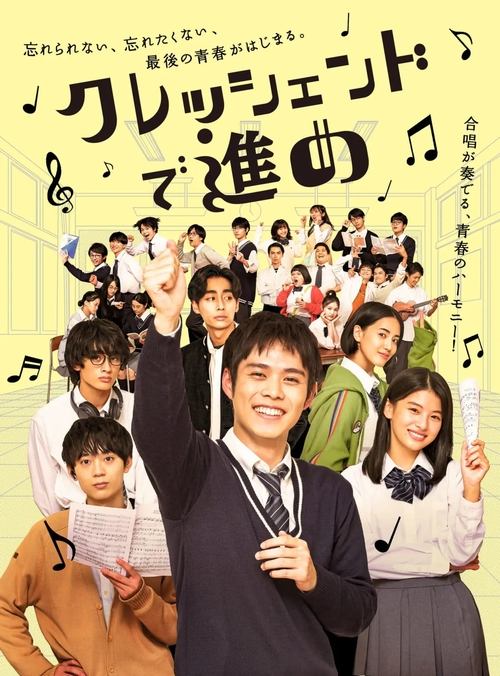
In the ending of "Crescendo de Susume," the main characters come together for a final performance that encapsulates their growth and the bonds they have formed. The climax occurs during a pivotal concert where they confront their fears and insecurities, ultimately leading to a cathartic resolution. Each character finds their own path, with some pursuing their dreams in music while others take different directions, but all are changed by their experiences.
As the final notes of their performance linger in the air, the characters reflect on their journey, realizing the importance of friendship, perseverance, and self-acceptance. The series concludes with a sense of hope and new beginnings, leaving the audience with a feeling of fulfillment.
The final act of "Crescendo de Susume" unfolds in a vibrant concert hall, filled with an eager audience buzzing with anticipation. The stage is set, adorned with soft lights that cast a warm glow over the performers. The main characters--Miyu, Haruto, and Saki--stand backstage, their hearts racing as they prepare for the performance that will define their journey.
Scene 1: Backstage Tension Miyu, clutching her violin, feels a mix of excitement and anxiety. She recalls the struggles she faced throughout the series, from her initial doubts about her talent to the friendships she forged along the way. Haruto, standing beside her, offers a reassuring smile, though he too is battling his own fears of inadequacy. Saki, the ever-optimistic member of the trio, encourages them both, reminding them of how far they've come together.
Scene 2: The Performance Begins As the curtain rises, the audience erupts in applause. The trio steps into the spotlight, their faces illuminated by the stage lights. They begin to play a piece that symbolizes their journey--a composition filled with both joy and sorrow. The music swells, and the characters pour their emotions into every note, each one a reflection of their personal growth and struggles.
Scene 3: Confronting Insecurities Midway through the performance, the music shifts to a more somber tone. This moment serves as a metaphor for the internal battles they have faced. Haruto, in particular, struggles with his self-doubt, and as he plays, flashbacks of his past failures flash through his mind. However, he finds strength in the support of his friends, and the music becomes a cathartic release for him.
Scene 4: A Moment of Unity As the piece reaches its climax, the trio harmonizes beautifully, their individual strengths blending into a powerful sound. The audience is captivated, and the energy in the room is palpable. In this moment, they realize that their journey has not just been about music, but about the bonds they have formed and the support they have given each other.
Scene 5: The Final Note The performance concludes with a breathtaking crescendo, leaving the audience in awe. As the last note hangs in the air, the trio exchanges glances filled with understanding and gratitude. They bow together, their hearts full, knowing they have overcome their fears and insecurities.
Scene 6: After the Performance Backstage, the characters embrace, tears of joy streaming down their faces. They reflect on their journey, acknowledging the challenges they faced and the growth they experienced. Miyu decides to pursue a career in music education, wanting to inspire others as she was inspired. Haruto, having found his confidence, chooses to compose music, while Saki, ever the dreamer, plans to travel and share their story through her art.
Scene 7: A New Beginning The series closes with a montage of each character embarking on their new paths. Miyu stands in front of a classroom, teaching young students, while Haruto is seen in a studio, surrounded by sheets of music. Saki is traveling, capturing moments of beauty through her art. The final scene shows them reuniting at a park, laughter and music filling the air, symbolizing that while their paths may diverge, their friendship remains a constant source of strength.
The ending of "Crescendo de Susume" encapsulates the themes of growth, friendship, and the courage to pursue one's dreams, leaving the audience with a sense of hope and inspiration.
Is there a post-credit scene?
What motivates the main character, Aoi, to pursue her passion for music despite her family's disapproval?
Aoi's motivation to pursue music stems from her deep-seated love for the art form, which was ignited during her childhood when she first heard her grandmother play the piano. This passion is compounded by her desire to honor her grandmother's memory, as well as her longing for self-expression and independence. Throughout the series, Aoi grapples with feelings of guilt and rebellion against her family's expectations, which fuels her determination to prove that her dreams are valid.
How does the relationship between Aoi and her childhood friend, Haruto, evolve throughout the series?
Aoi and Haruto's relationship begins as a close friendship rooted in shared childhood memories and a mutual love for music. As the series progresses, their bond deepens, with Haruto supporting Aoi's musical ambitions while also struggling with his own insecurities. Tension arises when Haruto feels overshadowed by Aoi's talent, leading to moments of conflict and misunderstanding. Ultimately, their relationship evolves into a complex mix of friendship and unspoken romantic feelings, culminating in pivotal scenes where they confront their emotions and the impact of their dreams on their connection.
What challenges does Aoi face in her music competitions, and how do they affect her character development?
Aoi faces numerous challenges in her music competitions, including intense pressure to perform perfectly, the fear of failure, and the emotional weight of her family's expectations. Each competition serves as a crucible for her character development, forcing her to confront her self-doubt and insecurities. For instance, during a particularly challenging performance, Aoi experiences a panic attack on stage, which leads her to seek help and ultimately grow stronger. These experiences teach her resilience, the importance of vulnerability, and the value of support from her friends, shaping her into a more confident and self-assured individual.
What role does the character of Ms. Tanaka play in Aoi's journey, and how does she influence Aoi's growth?
Ms. Tanaka, Aoi's music teacher, plays a pivotal role in her journey by serving as both a mentor and a source of tough love. Initially, Ms. Tanaka is strict and demanding, pushing Aoi to her limits to unlock her potential. However, as Aoi struggles with her identity and the pressures surrounding her, Ms. Tanaka becomes a guiding figure who encourages her to embrace her unique style and emotions in her music. Through their interactions, Ms. Tanaka imparts valuable life lessons about perseverance, authenticity, and the importance of finding one's voice, significantly influencing Aoi's growth as both a musician and an individual.
How does Aoi's relationship with her family impact her musical journey throughout the series?
Aoi's relationship with her family is fraught with tension, primarily due to their disapproval of her musical aspirations. Her parents, particularly her father, envision a more traditional career path for her, leading to frequent conflicts that leave Aoi feeling isolated and misunderstood. This familial pressure serves as both a source of motivation and a significant emotional burden for Aoi. As the series unfolds, Aoi learns to navigate these familial expectations while asserting her own identity, ultimately leading to moments of reconciliation where her family begins to understand and appreciate her passion for music. This dynamic adds depth to Aoi's character, showcasing her struggle for acceptance and the courage it takes to pursue her dreams.