
















Popular
Who is the mole or saboteur in Fiasco, and how is that character connected to the production crew?
What exactly happens on the first day of shooting that starts the disaster in Fiasco?
Why is Raphaël Valande making this film, and how does his grandmother connect to his story?
What roles do Jean-Marc Torrosian and Magalie Verès play in the sabotage investigation?
Who is Slice, and why is the behind-the-scenes crew so important to the story?
Should I watch it?
Ask Your Own Question

What is the plot?
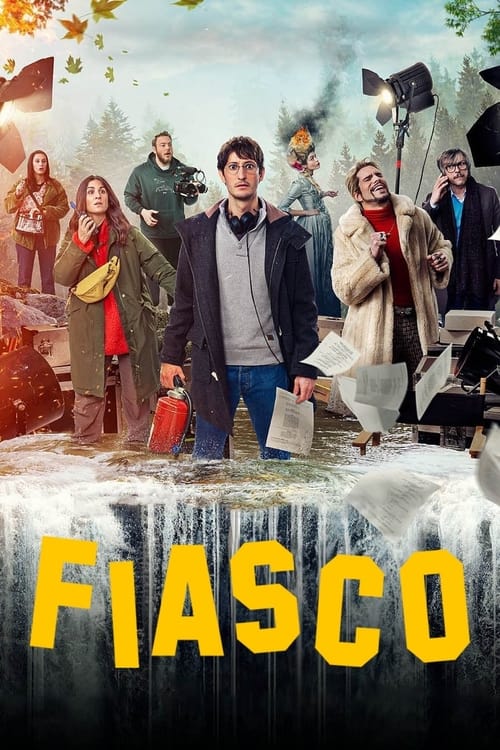
Raphaël Valande is a nervous first-time director shooting his debut feature as a tribute to his grandmother, a woman he presents as a Resistance heroine, and the production is already strained by his inexperience and the constant pressure of a large crew watching him fail in small ways. A behind-the-scenes documentary team is present from the start, recording the shoot as if it is supposed to be a making-of, but the footage quickly becomes a record of the production unraveling.
The first major crisis is a blackmail scheme. Someone starts leaving threatening messages and demands tied to the production, and Raphaël, Jean-Marc, Magalie, the assistant director, and Gabrielle, the newly hired unpaid intern, begin trying to determine who is responsible. Gabrielle suspects Tatiana because Tatiana is angry at Raphaël, so Raphaël goes to apologize to her in person. While doing so, he takes a remote that Tatiana needs for her work and keeps it for himself, creating another practical problem on set.
As the crew keeps investigating the blackmail, Magalie notices that the message contains a mistake in the number written by the blackmailer. She explains that the blackmailer likely wrote "5" instead of "4," meaning the demand was intended to be for 48 hours, or two days, rather than whatever had first been understood. This mistake becomes an important clue, but it does not stop the production from continuing to deteriorate.
The crew then discovers that they have lost their financing and that the film can no longer be made under the current conditions. The situation worsens the atmosphere among the staff, with everyone scrambling, blaming each other, and trying to salvage what remains of the shoot while the documentary camera keeps capturing every mistake and humiliation.
Near the premiere night, Raphaël's diary accidentally catches fire, destroying the material he had been relying on and ruining whatever plan he had built around it. The documentary then uses him for laughs, emphasizing his incompetence and turning his disaster into the very subject of the film being made about him.
After the premiere, Raphaël studies Slice's writing style in a signature and notices a distinctive rounded circle in the handwriting, the same detail he had been looking for in the blackmail notes. He realizes that Slice is the mole and the blackmailer. He immediately runs after Slice, and Tom joins him to help in the chase.
Raphaël catches Slice and confronts him directly. Slice says that Raphaël was the real problem all along and that he only documented the truth, though he admits he sometimes pushed things to increase drama and suspense. The confrontation leaves the production's chaos exposed as a combination of sabotage, manipulation, and Raphaël's own failure to control the set.
At the same time, several relationships among the crew shift. Tom and Jean-Marc kiss, and Magalie gets back together with her ex. After those developments begin, Raphaël addresses everyone and openly admits his flaws and insecurities. He then gives an awkward speech and kisses Ingrid.
Slice takes the camera to film that kiss. While he is sitting in the corner, he accidentally falls down a few floors and dies. The series ends with Slice's death while he is still making the documentary about Raphaël's failures.



What is the ending?
The ending of Fiasco is a chaotic collapse and then a strangely tender confession. Raphaël finally exposes Slice as the saboteur, but Slice dies while trying to film the closing moment, and Raphaël is left to admit his own failures in front of everyone.
Raphaël's film premiere night turns into a final trap for the people around him. The documentary built from the crew's behind-the-scenes disaster is screened, and the damage to his project is made public in front of the audience. During this stretch, Raphaël notices a clue in Slice's autograph that matches the writing style he had been watching for, and he realizes that Slice is the mole who has been blackmailing and undermining the production. Raphaël immediately runs after him, and Tom helps him in the chase.
When Raphaël corners Slice, Slice does not deny what he has done. He says that Raphaël was the real problem and that he was only recording the truth, though he admits he did stir things up at times to make the story more dramatic. The confrontation leaves Raphaël facing the fact that the sabotage did not create every disaster on its own; many of the failures came from his own decisions and insecurities. After this, the film's relationships begin to resolve around the edges: Tom and Jean-Marc kiss, and Magalie gets back together with her ex.
Raphaël then steps before everyone and gives an awkward, emotional apology for all the chaos he caused. He says, in effect, that he has been wrong, and he finally shows the insecurity he has been hiding throughout the production. Ingrid responds to that honesty, and Raphaël kisses her. For a brief moment, the night looks as if it might settle into a real ending rather than another disaster.
Then the final turn happens. Slice, still acting like a filmmaker chasing the right image, takes up a camera to capture Raphaël and Ingrid's kiss. While doing so, he loses his footing and falls from the terrace to his death. His fate is the last and most extreme consequence of the production's long chain of disorder.
The main characters' endings are: - Raphaël: he survives, exposes Slice, and publicly admits his own faults. - Slice: he is revealed as the saboteur and dies after falling while filming the final scene. - Tom: he helps Raphaël in the chase and ends the story kissing Jean-Marc. - Jean-Marc: he ends the story in a relationship moment with Tom, kissing him. - Magalie: she reconciles with her ex. - Ingrid: she responds to Raphaël's apology and kisses him.
Is there a post-credit scene?
No. I could not verify any post-credit scene for Fiasco (2024) from the available sources, and the series is described as a limited Netflix comedy about a disastrous film shoot rather than a title known for a post-credits sting.
The most relevant material I found only confirms that the show has an end credits song, not an extra scene after the credits. Since none of the provided sources mention a post-credit scene, I can't responsibly describe one as if it exists.
Who is the mole or saboteur in Fiasco, and how is that character connected to the production crew?
The central identity mystery is which crew member is secretly sabotaging Raphaël Valande's film from inside the production, and the series treats that person's hidden role as the main engine of the story. Available summaries say the sabotage is carried out by someone on the crew who is present from the very first day of shooting and who uses blackmail and disruption to wreck the production, forcing Raphaël, producer Jean-Marc Torrosian, and assistant producer Magalie Verès into a damaging search for the culprit.
What exactly happens on the first day of shooting that starts the disaster in Fiasco?
The first day of shooting is where Raphaël's out-of-control behavior begins to spiral publicly, and a crew member captures one of his explosive speeches on camera. That recording becomes the first major weapon used against the production, because the person who filmed it then starts blackmailing, sabotaging, and derailing the movie over the following episodes.
Why is Raphaël Valande making this film, and how does his grandmother connect to his story?
Raphaël is making his directorial debut as a tribute to his grandmother, who was a member of the French Resistance. That personal motive matters because his film is tied to family legacy and self-validation, so the production's collapse becomes not just a professional disaster but a direct blow to his attempt to honor her.
What roles do Jean-Marc Torrosian and Magalie Verès play in the sabotage investigation?
Jean-Marc Torrosian and Magalie Verès are the key producers trying to protect the shoot and identify the person undermining it from within the crew. The available plot descriptions show them repeatedly attempting to track down the mole, but each effort is met with new retaliation that creates even bigger problems and pushes the production closer to collapse.
Who is Slice, and why is the behind-the-scenes crew so important to the story?
Slice is the documentary filmmaker who, along with a crew, is assigned to capture the making-of material for the film. Their presence matters because they witness the entire breakdown in real time, turning the series into a story about both the movie being made and the chaotic secret war happening around it.
Is this family friendly?
No, it is not especially family-friendly. Fiasco is rated TV-MA and is described as containing profanity, sex, smoking, and mild violence.
Potentially objectionable or upsetting elements for children or sensitive viewers include:
- Frequent profanity and adult language.
- Sexual content that is described as mild, but still present.
- Smoking and moderate alcohol/drug-related content.
- Mild violence and chaotic on-set mishaps/scandals.
- A generally adult, satirical showbiz setting centered on production disasters and sabotage, which may be more suitable for teens and adults than younger children.
IMDb lists no frightening or intense scenes, but the overall tone is still adult-oriented because of the language and sexual content.