
















Popular
What specific letter does the Marquis receive at Lucía’s engagement party, and who sent it?
Why does Lucía de Avellaneda’s engagement fall apart so suddenly?
Who is the woman claiming to be the Marquis’s wife, and what does she want?
How does Lucía react when the letter interrupts her engagement party?
What is the relationship between Lucía and the Marquis of Peñarrosa before the letter appears?
Should I watch it?
Ask Your Own Question

What is the plot?
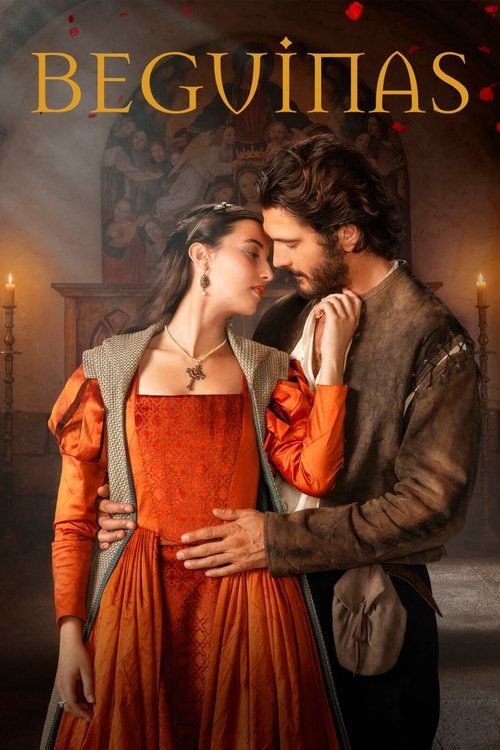
Lucía de Avellaneda begins the story in Segovia in 1559 at her arranged engagement celebration with the Marquis of Peñarrosa, a marriage her brother has chosen to strengthen the family's financial and social position.
During the party, Lucía receives an unexpected letter from a woman claiming to be her mother, who is said to be on her deathbed and summoning Lucía to the beguinage where she lives.
Lucía goes to the beguinage and enters a completely different world from the one she has known, where women live independently and outside direct Church control.
At the beguinage, Lucía confronts the reality that her mother's life has been hidden from her, and this meeting pushes her to question the family, faith, and social expectations that have defined her up to that point.
As Lucía stays in contact with the beguine community, she leaves behind her former life and becomes increasingly drawn into their way of living and thinking, which stands in direct conflict with the world of her engagement and her family's plans.
While inside this new environment, Lucía falls into a forbidden romance with Telmo Medina, a Jewish man who must conceal both his faith and his past because of the danger surrounding him.
Lucía's relationship with Telmo deepens into a central drive of the story, and she chooses to risk her position, safety, and future for him even though the relationship is impossible within the religious and social order of the time.
From that point on, the story follows Lucía as she is pulled between the life arranged for her through her engagement and the new identity she begins building among the beguines, with her love for Telmo forcing her into repeated choices that separate her further from her old world.





What is the ending?
Beguinas ends with Lucía choosing to leave the world of her arranged future behind and moving toward the beguine community, while her relationship with Telmo remains an impossible love shaped by secrecy and division. The ending resolves with Lucía no longer living the life planned for her by her family and social rank, and the story closes on the consequences of that break from duty.
In the final stretch of the story, Lucía's path has already been changed by the letter from her mother and by her contact with the beguines, so the ending follows the consequences of that decision rather than a return to her former life. The series begins with Lucía de Avellaneda at her engagement party to the Marquis of Peñarrosa, and that arranged match is the social order she is expected to accept. Instead, the letter from the woman claiming to be her mother draws her away from that certainty and into the beguine communities. From there, the story carries her further from her former identity and into a life defined by separation, spiritual autonomy, and forbidden feeling.
The final emotional shape of the ending is built around Lucía's refusal to simply return to the role assigned to her. Telmo Medina, the crypto-Jew with whom she forms the central romance, remains tied to that conflict because the relationship is described as impossible, meaning the ending does not offer a clean public union for the two of them. The story leaves their bond marked by constraint rather than resolution, with Lucía's choice placing her outside the marriage arranged for her and outside the safe center of her old life. The main characters at the end are therefore left in this state: Lucía has moved away from her aristocratic future and toward the beguines, Telmo remains the forbidden love she cannot openly claim, and the Marquis of Peñarrosa is left behind as the intended husband who no longer defines her path.
Because the available source material only provides series premises and not a full scene-by-scene finale breakdown, I can only state the ending at the level supported by those sources: Lucía's story ends in separation from her arranged life, her involvement with the beguines, and the continuation of her forbidden relationship with Telmo rather than a conventional happily-ever-after.
Is there a post-credit scene?
There is no evidence that Beguinas (2024) includes a post-credit scene. The search results provided do not contain any episode-specific end-credit information for Beguinas, and the available entries for the series only describe the premise and production details, not a post-credit sequence.
If you want, I can help check whether a specific episode of Beguinas has an after-credits tag or whether any fan/recap sources mention one.
What specific letter does the Marquis receive at Lucía’s engagement party, and who sent it?
At the engagement party, the Marquis of Peñarrosa receives a letter from a woman claiming to be his wife, which immediately disrupts Lucía's celebration and sets the central crisis in motion.
Why does Lucía de Avellaneda’s engagement fall apart so suddenly?
Lucía's engagement unravels because the Marquis is confronted with the letter from a woman claiming to be his wife, turning what should have been a formal celebration into a public rupture with immediate personal consequences for Lucía.
Who is the woman claiming to be the Marquis’s wife, and what does she want?
The available synopsis identifies the sender only as a woman claiming to be the Marquis's wife; it does not provide her name or her full motive in the short summary, but her message is clearly meant to challenge the engagement and assert a prior claim on him.
How does Lucía react when the letter interrupts her engagement party?
The synopsis does not describe Lucía's exact line-by-line reaction, but it establishes that the letter arrives in the middle of her celebration and forces her into a sudden confrontation with a truth that threatens her future with the Marquis.
What is the relationship between Lucía and the Marquis of Peñarrosa before the letter appears?
Before the letter arrives, Lucía de Avellaneda is celebrating her engagement party with the Marquis of Peñarrosa, so the story initially presents them as an intended aristocratic match about to be formalized.
Is this family friendly?
Beguinas is not likely to be fully family-friendly for young children, and it is better suited to older teens or adults who can handle serious historical drama themes. I do not have a complete scene-by-scene parental guide from the available sources, so I can only give a cautious screening based on the show's adult-drama framing and the kinds of content that parental guides typically flag for series like this.
Potentially objectionable or upsetting elements to watch for:
- Serious violence or threats of violence, which can be upsetting for sensitive viewers.
- Sexual content or sexual situations, which are commonly flagged in parental guides for adult dramas.
- Nudity or partial nudity, depending on the episode.
- Strong language, if present in dialogue.
- Religious or emotional conflict, which may be intense even without explicit graphic content.
- Depictions of oppression, coercion, or abuse of power, which can be distressing in historical settings.
If you want, I can also help you by giving a more conservative age recommendation or a "safe for kids / safe for teens / adult only" style judgment for Beguinas.