










Popular
How does the Beheaded first meet Laure Esposito, and why does she decide to travel with him?
What exactly is the Beheaded trying to achieve on the island in Dead Cells: Immortalis?
Who is the King, and what role does he play in the story’s conflict?
What is Laure Esposito’s backstory, and what makes her abilities or motives important?
How does the plague on the island affect specific characters and what do they become?
Should I watch it?
Ask Your Own Question

What is the plot?
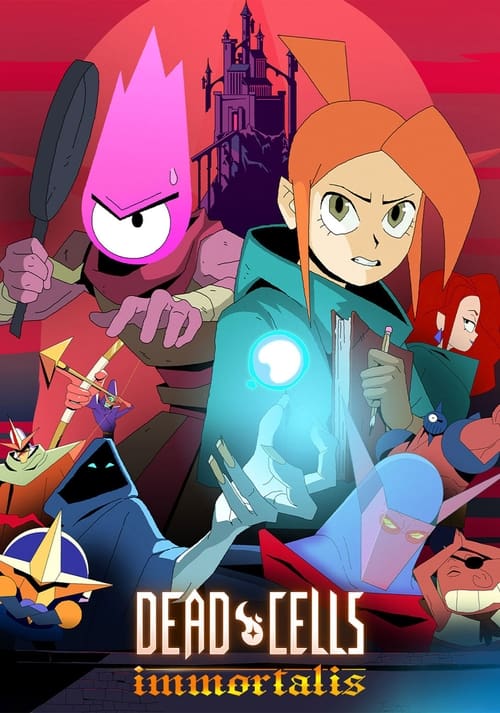
Laure Esposito is first shown as a young Guardian of Truth operating in a world already broken by the Malaise, the strange plague that has devastated the cursed island; she is driven by the prophecy that a fiery-headed Chosen One will kill the King and end the suffering.
The story opens with the island's crisis already established in the past: the people were once living in relative harmony, then the Malaise spread through the kingdom, and the King responded not with rescue but with violent safety measures and abandonment, which shattered public hope. The prophecy then becomes the central political and religious promise: one day, a Chosen One with a flame-like head will fulfill destiny by killing the King and lifting the curse.
Laure is sent to find this supposed savior, but instead she ends up crossing paths with an immortal, fiery-headed prisoner who is not a noble hero at all in the usual sense. He is a reluctant, foul-tempered, death-seeking figure who does not want to carry out the prophecy and would rather be left alone to die; despite this, Laure pushes him into becoming her companion because she believes he is the only real path to stopping the King.
Their early dynamic is defined by conflict: Laure is serious, committed, and mission-driven, while the Chosen One is careless, abrasive, and openly uninterested in destiny. Even so, the two begin traveling together across the island, and the Chosen One slowly develops a bond with Laure while still resisting the role she keeps forcing onto him.
As they move through the island, they are repeatedly told that before the King can be reached, they must destroy the Five Fingers of the Hand, a set of powerful mini-bosses serving as the King's major lieutenants. These enemies are named Indexa, Middleus, Ringalis, Thumbbo, and Pingius, and the story treats their defeat as a required sequence before the final confrontation can happen.
The pair go from one confrontation to the next, fighting their way through the King's forces and the island's dangers while following this order imposed on them from outside. The show presents these battles as stepping-stones toward the real objective, with the Chosen One's reluctance and Laure's determination continuing to shape every choice they make as they proceed deeper into the island's conflict.
As the truth behind the prophecy and the King's plans begins to come into focus, the story also ties back to the broader Dead Cells lore: the King had grown old and sought immortality, assigning the Alchemist to research a way to achieve it. The Alchemist discovered a plant and a substance from Slumbering Sanctuary that might help, and then began experimenting on subjects in pursuit of some form of magical elixir or immortality treatment for the King.
By the end of the season, the main conflict has been pushed to the point where the chosen warrior and the Guardian are no longer just pursuing a legend but are directly entangled with the island's political collapse, the King's obsession with survival, and the consequences of the alchemical research that fed the disaster.

What is the ending?
The ending of Dead Cells: Immortalis follows the Beheaded and Laure through the final push against the island's ruling power, with the conflict centered on the king, the malaise-plagued island, and the prophecy Laure has been chasing from the start. By the end, the story closes on the same basic idea it has built throughout: the chosen warrior is meant to kill the king and bring an end to the island's suffering, but the path to that end is violent, chaotic, and deeply personal.
Laure Esposito, the young Guardian of the Order of Truth, is introduced as the narrator and the person trying to find the fiery-headed chosen hero. The hero, the immortal Beheaded, is the center of the prophecy and the figure who keeps advancing toward the king despite being unable to die. The final outcome follows that setup: the Beheaded reaches the end of the struggle, the king is defeated, and the island's central tyranny is brought down.
The Beheaded survives in the sense that he cannot be permanently killed, but the story's ending frames him as the one who completes the destined act rather than as a conventional victorious hero who simply walks away. Laure's role is that of witness, guide, and narrator, and by the end she has moved from searcher to participant in the final chain of events that leads to the king's fall. The king's fate is the clearest: he is killed at the end of the story, fulfilling the prophecy the series builds toward.
In a more expanded, scene-by-scene telling, the ending moves like this.
The final stretch begins with the Beheaded and Laure having already crossed the island's dangers and reached the point where the prophecy and the king's rule can no longer remain separate problems. The island is still defined by the plague-like malaise, and the king remains the source of the system everyone is trapped inside. Laure's narration keeps the story pointed toward the same destination: the chosen one must reach the king.
As the last conflict unfolds, the Beheaded is driven forward by the force of the prophecy and by his own strange condition as an immortal warrior who cannot stay dead. The king stands as the final obstacle, not only as a ruler but as the man tied to the island's corruption and suffering. The series presents this ending as the completion of the quest that began with Laure seeking the chosen hero and trying to understand what that hero really is.
In the decisive confrontation, the Beheaded kills the king. That is the ending's central event, and it lands as the fulfillment of the prophecy rather than as a surprise twist. The story does not treat the moment as a clean triumph; instead, it reads as the violent end of a long, cursed rule over a broken island.
After the king falls, the story closes with the consequences of that act rather than with a broad explanation of a restored world. Laure remains the human voice of the tale, the one who has carried the audience through the story and given shape to the Beheaded's silent journey. Her fate at the end is to remain alive as the narrator and witness of what has happened, while the king's fate is death and the Beheaded's fate is continued immortality, now tied to having completed the prophecy.
The main characters' end states are these:
- The Beheaded: completes the prophecy by killing the king; remains immortal and cannot be permanently destroyed.
- Laure Esposito: survives and remains the story's narrator and witnessing companion to the Beheaded's journey.
- The King: is killed in the final confrontation.
If you want, I can also give you the ending in an even more cinematic, beat-by-beat retelling focused only on the final episode.
Is there a post-credit scene?
I couldn't verify a post-credit scene for Dead Cells: Immortalis from the available sources. The sources I found confirm the series and its episode releases, but they do not describe any end-credits or post-credits content.
If you want, I can help you check episode-by-episode for any post-credit stinger by reviewing the episode listings and available uploads more closely.
How does the Beheaded first meet Laure Esposito, and why does she decide to travel with him?
The most likely question centers on the first scene where Laure enters the Beheaded's path and what, specifically, draws her into his mission. The series introduces Laure Esposito as a new protagonist alongside the Beheaded, so viewers often want to know how their partnership begins, what each of them wants at the start, and what tension or trust issues shape their early interactions.
What exactly is the Beheaded trying to achieve on the island in Dead Cells: Immortalis?
A common plot-specific question is the Beheaded's concrete goal: whether he is trying to escape, die, kill the king, or change the island's fate. The adaptation follows the game's central figure, described as a lone hero who cannot die, while also placing him in a story about the cursed island and its plague, so this is a natural question about his immediate objective rather than the story's overall plot.
Who is the King, and what role does he play in the story’s conflict?
People are likely to ask about the King because he is the key antagonist figure tied to the island's curse and the characters' motives. The source material describes a king whose kingdom has fallen to a plague and whose actions are connected to the island's suffering, making his identity, power, and relationship to the Beheaded one of the most specific character questions viewers ask.
What is Laure Esposito’s backstory, and what makes her abilities or motives important?
Another likely question is about Laure's personal history and why she matters beyond being a new companion character. The series is explicitly said to introduce Laure Esposito with a mysterious background and abilities, which invites detailed questions about where she came from, what she knows, and how her motives differ from the Beheaded's.
How does the plague on the island affect specific characters and what do they become?
A highly specific story question is how the island's plague changes individual people, especially the king's subjects and anyone the Beheaded encounters. The setting description says the island is afflicted by a strange plague that transforms people into monsters, and the broader Dead Cells lore describes the same kind of mutation-driven catastrophe, so viewers often want to know which characters are infected, altered, or directly shaped by it.
Is this family friendly?
No -- Dead Cells: Immortalis is not especially family friendly for young children or highly sensitive viewers. It is described as a funny, cheeky adult animated series, and its parental-guide entries flag severe violence and gore plus severe profanity.
Potentially upsetting or objectionable elements include: - Frequent violence and gore: the show's content guide rates this as severe. - Strong language: the content guide rates profanity as severe. - Frightening or intense scenes: the guide rates these as moderate, which may still be disturbing for younger viewers. - Dark fantasy tone: the series is set in a cursed, plague-stricken world and centers on death, which may feel unsettling even aside from explicit violence. - Adult-oriented humor and edge: it is presented as an adult animated series rather than a kids' show.
I do not see any reported sex or nudity concerns in the available parental guide, which lists that category as none.