






Popular
Why does Tony become so fixated on Lawrence’s late-night radio show?
What exactly happened to Tony at work that caused his downward spiral?
Who is Rosa, and what role does she play in Tony’s life?
What kind of relationship develops between Tony and Lawrence?
What shocking realization does Tony have about Lawrence?
Should I watch it?
Ask Your Own Question

What is the plot?
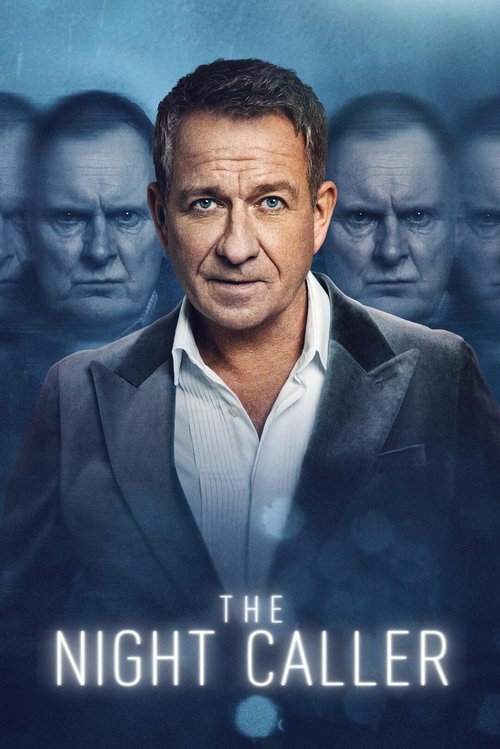
Tony is a lonely Liverpool taxi driver and former teacher who spends his nights listening to Lawrence's late-night radio call-in show, using the broadcast as a private outlet for his frustration and isolation. Through repeated listening and eventually speaking to Lawrence on air, Tony becomes fixated on the sense of connection the host seems to offer, while Lawrence encourages his audience and announces opportunities such as his book launch, which deepens Tony's attachment.
After a night in which Tony commits a crime, he wakes to a stark realization of what he has done and immediately turns his attention to covering it up. He moves through the aftermath in a state of alarm and denial, trying to hide the evidence and contain the consequences before anyone can connect him to it.
As Tony continues to conceal what happened, his relationship with Lawrence feels to him increasingly intimate and stabilizing, and he clings harder to the radio connection as a substitute for real human contact. That false sense of closeness begins to collapse when Tony realizes that the bond he believed he had with Lawrence is not what he thought it was.
At the same time, Tony is pushed into danger by the consequences of his own behavior, and the situation escalates into a violent ambush that interrupts his attempt to keep control of events. The ambush leaves Tony confronted with the reality that his actions have set forces in motion he can no longer manage, and the episode ends with his cover-up effort and his imagined connection to Lawrence both under severe pressure.
More TV Shows Like This
Browse All TV Shows →







What is the ending?
Tony's story ends in collapse and exposure. After everything he has done, he is cornered by the consequences of his crimes, Lawrence is forced to face the truth of what his broadcasts and his silence have helped create, and Tony is ultimately removed from ordinary life and sent away for treatment.
In the final stretch, the story closes in on Tony as the pressure around him tightens and his obsession becomes impossible to contain. Lawrence, by chance, ends up in Tony's cab, and Tony is stunned to find himself face-to-face with the man he has turned into a kind of authority in his mind. The ending then turns on Tony's guilt spilling out in public through a broadcast, with his confession about the dead lad becoming the decisive act that exposes what he has done and what he has become. After that, Lawrence's career moves forward, with the ending indicating that he is rewarded with an award and a transfer from regional radio to a national station in London. Tony, by contrast, does not return to normal life; he is sectioned and taken into a mental asylum, ending the story separated from everyone else and trapped inside the consequences of his actions.
Scene by scene, the ending moves as follows.
Tony reaches the point where the net around him is closing, and the final encounter is set in motion when Lawrence unknowingly gets into the back of Tony's cab. Tony reacts with disbelief because the man whose voice has dominated his nights is suddenly physically present in front of him. The meeting is not presented as a reunion between equals; it is the moment when Tony's private fixation and the real world collide.
The story then pushes toward Tony's breaking point. He retrieves a knife and points it at Lawrence. In that moment, Tony speaks about his past and says that teaching made him happy until it stopped doing so. Lawrence responds by apologizing for misleading Tony. This exchange places both men inside the same conflict that has driven the series: Tony's need for guidance and meaning, and Lawrence's role as the voice Tony has used to justify himself.
After that, Tony's guilt takes over the ending. His confession about the boy's death is broadcast, and that public admission becomes the event that changes the outcome for everyone involved. The ending uses that broadcast as the final proof of Tony's responsibility and as the turning point that ends his ability to keep the truth hidden.
Lawrence's fate is different. The ending indicates that he comes through the crisis and is rewarded rather than destroyed, with his career advancing from regional radio to a national station in London, and with an award attached to that success. He survives the story's emotional wreckage, though the ending leaves him marked by what he has heard and what he has failed to stop.
Tony's fate is the opposite. He is sectioned and sent to a mental asylum, which is the final state the ending gives him. That is where his story lands: not in freedom, not in redemption, but in enforced removal from the life he has been inhabiting.
The main character fates at the end are these: Tony is sectioned and confined in a mental asylum. Lawrence survives and advances professionally, moving to a national London station and receiving an award. The dead boy remains the central absence around which the ending turns, because Tony's broadcast confession makes that death the fact that finally breaks open the whole story.
Is there a post-credit scene?
I can't confirm a post-credit scene for The Night Caller from the results provided. The available result about The Night Caller is a BBFC listing that covers the show's content classification, not whether an episode includes extra scenes after the credits.
The other search results are general references about post-credit scenes in film or about unrelated titles, so they do not establish that The Night Caller has one.
If you want, I can help you verify this episode-by-episode if you provide the specific episode title or platform release.
Why does Tony become so fixated on Lawrence’s late-night radio show?
Tony is drawn to Lawrence because he is lonely, isolated, and desperate for connection after losing his job, marriage, and self-worth. The radio host's voice begins to feel like a real source of companionship, and Tony starts treating the broadcast as if it were a personal relationship rather than a public show.
What exactly happened to Tony at work that caused his downward spiral?
Tony was once a respected science teacher, but a scandal led to what is described as an apparently unjust dismissal from his job. That loss is a major turning point in his life and is part of the collapse that leaves him working as a taxi driver and increasingly withdrawn.
Who is Rosa, and what role does she play in Tony’s life?
Rosa is a café employee whom Tony turns to as he becomes more isolated. She is one of the few real-world connections he tries to maintain while his obsession with Lawrence deepens.
What kind of relationship develops between Tony and Lawrence?
Their relationship becomes a dangerous cat-and-mouse dynamic rather than a genuine friendship. Tony believes he has found someone who understands him, but the story shows that his attachment turns unhealthy and ultimately leads toward violent confrontation between the two men.
What shocking realization does Tony have about Lawrence?
Tony eventually comes to a shocking realization about Lawrence after his fixation has intensified through repeated late-night calls and growing suspicion. The available descriptions do not spell out the exact realization in detail, but they make clear that this discovery is what pushes the story into its final violent conflict.
Is this family friendly?
No -- it is probably not family friendly for young children. IMDb's parent guide rates it as having moderate sex/nudity, mild violence/gore, moderate profanity, and mild frightening/intense scenes.
Potentially upsetting content may include: - Sex/nudity: moderate sexual content is listed, though the guide does not give detailed examples in the snippet. - Violence: brief punching, references to men being shot in the head, and mentions of women being stabbed with scissors or a tomahawk or hit by a car. - Profanity: includes one F-bomb and one use of a stronger vulgar term, plus other mild profanity. - Frightening imagery: a creepy masked figure is reportedly seen in a window more than once.
If you want, I can also give you a plain-language age suitability recommendation for different age groups.







