




















Popular
How does Mônica’s transfer to another school affect her friendship with Cebolinha, Magali, and Cascão?
Why do Mônica’s parents decide to send her to another school?
What happens to Cebolinha after the group starts drifting apart?
How is Magali affected by Mônica leaving the neighborhood school group?
What role does Cascão play in the story after the friends are separated?
Should I watch it?
Ask Your Own Question

What is the plot?
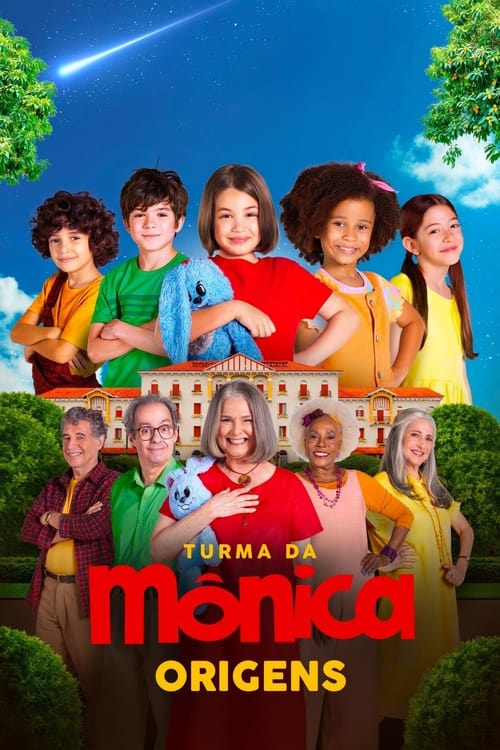
Monica and Friends: How It All Began is a 2024 live-action origin story about Monica's childhood, beginning with her arrival in the neighborhood of Lemon Tree and the first clashes that define her place in the group.
The story opens with Monica as a young girl whose forceful personality immediately sets her apart: she is energetic, stubborn, and determined to be seen as strong, even when other children treat her as different or underestimate her. She is introduced in the familiar neighborhood setting of Lemon Tree, where the local children's interactions quickly establish the social order she is about to challenge.
Monica's earliest conflicts center on her place among the other kids, especially the boys who try to tease, outmaneuver, or exclude her. Rather than backing down, Monica repeatedly answers with direct action, showing that her habit of confronting problems head-on is already part of who she is. These scenes establish the emotional core of the story: Monica wants belonging, but she refuses to earn it by becoming less herself.
As the narrative progresses, Monica's family life becomes a key source of her motivations. The film emphasizes pain from family betrayal and survival instincts, showing how experiences at home shape her intensity and her need to protect her dignity in public. Her emotional world is not presented as carefree childhood; it is tied to pressure, hurt, and the need to keep herself from being diminished.
The central relationship in the story develops between Monica and the other children in Lemon Tree, especially as games, rivalries, and small humiliations turn into deeper bonds. The film tracks how conflict repeatedly forces the children to make decisions about whether they will keep treating Monica as an outsider or begin accepting her as an equal. Monica's own decisions are equally important: she chooses to stand her ground, defend herself, and keep reasserting her identity even when that makes her unpopular.
A major turning point in the film is the gradual transformation of Monica's social position. The neighborhood dynamic shifts as the children come to recognize her as more than just the girl who fights back; she becomes the center of the group's emotional and comic life. This change does not happen all at once. It is built through a sequence of confrontations, reconciliations, and repeated proof that Monica will not surrender her place.
The film also shows Monica's growth through her interactions with the adults and the constraints of everyday life, where her defiance is often read as a problem but is also the source of her resilience. Her inner life is marked by a mix of vulnerability and determination: she reacts strongly because she cares deeply about being respected and included. The story repeatedly returns to the idea that her toughness is not separate from her pain; it is a response to it.
As the plot moves toward its later stages, Monica's friendships become more stable, and the neighborhood begins to feel less like a battleground and more like the place where her identity is being formed. The key decisions driving the story are the children's choices to keep testing one another, Monica's refusal to be intimidated, and the gradual recognition that the group is stronger when it includes her rather than resists her.
By the end, the film completes Monica's origin by showing how the girl who began as a lonely, combative presence becomes the unmistakable heart of Lemon Tree. The final events affirm that her personality, her stubbornness, and her emotional intensity are the traits that will define her future, and the story ends with her place in the neighborhood securely established as the one everyone will come to know.







What is the ending?
Monica, Jimmy Five, Maggy, and Smudge end the story having faced the breakup of their group and the push to grow up in different ways. In the end, they are still connected by friendship, even after the conflict forces them apart for a time.
The ending is about the children confronting the loss of their familiar routine and the fear that comes with separation. According to the film's plot description, Monica is transferred to another school after the parents decide the four friends are spending too much time together, and that decision breaks the group apart. From that rupture, the children must deal with new friends, their own fears, and their insecurities. The story closes with them having matured through the experience and learning the value and meaning of friendship.
Scene by scene, the ending unfolds like this:
First, the parents make the decision that Monica must move to another school. This is the moment that changes everything, because the group's daily life in Lemon Tree District is interrupted and the four friends are no longer able to stay together in the same way.
Then the separation sets in. Monica is pulled away from the center of the group, while Jimmy Five, Maggy, and Smudge are left to face the emptiness created by her absence. Each child is forced out of the comfort of the old friendship routine and into a situation where they must adapt.
Next, the children begin meeting new people and dealing with their own private worries. The plot description says they are forced to find new friends and confront their fears and insecurities, which means the ending is not just about losing the group but about each child being made to change by that loss.
After that, the story turns toward acceptance. The children face the consequences of the separation and mature through what has happened to them. The ending does not present the breakup as meaningless; instead, it shows that the experience teaches them what friendship really is.
By the end, Monica's fate is that she has been transferred to another school, separating her from the others. Jimmy Five's fate is that he is left to deal with the breakup of the group and the emotional consequences of losing the old arrangement. Maggy's fate is the same kind of separation and adjustment, with her also pushed to face new friendships and personal insecurity. Smudge likewise has to endure the split and work through his fears in the absence of the group's usual unity.
The final state of the story is not a reunion in a dramatic sense, but a changed group of children who have been pushed to grow up and understand the real importance of friendship.
Is there a post-credit scene?
Yes. Monica and Friends: How It All Began (2024) has a post-credits scene, but the available search results do not provide a reliable description of what happens in it.
The search results you provided do not include a source specifically covering this film's end-credits content, so I can't verify the scene's details from them without guessing. If you want, I can help you determine whether the film has a mid-credits scene, a true post-credits scene, or no extra scene at all if you share another source or ask me to search more broadly.
How does Mônica’s transfer to another school affect her friendship with Cebolinha, Magali, and Cascão?
Mônica's move is the central rupture in the children's group: her parents decide she should study elsewhere, and that separation forces the four friends to deal with distance, hurt feelings, and the pressure of growing up apart. The story focuses on how the group tries to adapt after losing their daily closeness, with each child facing new fears and insecurities as the friendship is tested by the change.
Why do Mônica’s parents decide to send her to another school?
According to the film's premise, the parents believe the four children are spending too much time together and that this is interfering with their responsibilities. That decision becomes the trigger for the group's separation and the emotional conflict that follows.
What happens to Cebolinha after the group starts drifting apart?
Cebolinha is one of the four friends directly affected by the separation, and the story follows him as he is pushed to confront the loss of the group's everyday routine. The narrative emphasizes the children's need to face new friends, personal fears, and the consequences of the breakup rather than staying in their old comfort zone.
How is Magali affected by Mônica leaving the neighborhood school group?
Magali is part of the core quartet whose bond is disrupted when Mônica is transferred. The film presents her as one of the children who must adjust to the friendship breaking into pieces, and her response is tied to the wider emotional challenge of learning how to cope without the group's constant presence.
What role does Cascão play in the story after the friends are separated?
Cascão is included in the same emotional core as the others, and the story follows him as the children are forced to deal with the consequences of the separation. His role is not about an isolated subplot but about how he and the others react when their friendship is no longer secure and familiar.
Is this family friendly?
Yes -- Monica and Friends: How It All Began is generally family friendly and is centered on six-year-old children in a kid-oriented neighborhood setting.
Potentially objectionable or upsetting elements for children or sensitive viewers may include: - Mild cartoon-style conflict, teasing, and repeated arguments among the child characters. - Scenes where the kids "get in nothing but trouble," which suggests mischief, frustration, and consequence-based storylines rather than calm everyday play. - Some versions or adaptations of the franchise have been discussed as containing edits to reduce hitting, teasing, and toy-weapon imagery, indicating that earlier material included slapstick aggression or pretend violence in a childlike context. - The series is built around fears, insecurities, and social tension between friends, which may feel emotionally intense for very sensitive children.
I would not expect graphic content, horror, strong language, or explicit material based on the available information.