




















Popular
Why does Renars get targeted by the KGB agent Maris in Soviet Jeans?
How does Renars end up in the psychiatric hospital, and what role does that setting play in the story?
Who helps Renars run the underground jeans workshop inside the hospital?
What is Tina’s connection to Renars, and how does she affect his choices?
Why does Maris’s pressure on Renars matter so much to the story’s character dynamics?
Should I watch it?
Ask Your Own Question

What is the plot?
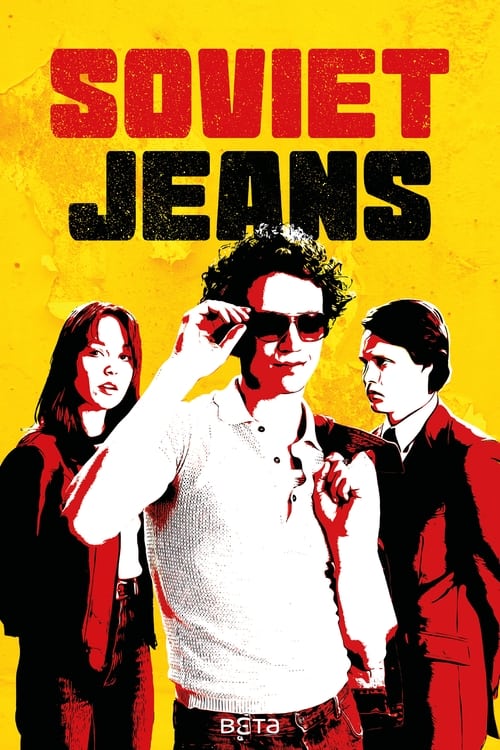
Renārs Rubenis works in Riga in 1979 as a theater tailor and costume designer, and at the start of the story he survives by quietly trafficking banned Western goods on the side, keeping his head down while trying to enjoy music, denim, and a little freedom in a system that punishes both. He is charismatic, restless, and increasingly careless because he wants more than the narrow life allowed to him. The first major pressure on him comes from Māris, a young KGB officer from his past, who discovers Renārs's black-market activity and forces a choice: cooperate as an informant or be exposed.
Renārs tries to stay afloat while also falling for Tina, a Finnish theater director visiting Riga for a residency. Her presence opens up the world Renārs secretly longs for, and his attraction to her makes him more reckless and emotionally exposed. He keeps working the theater and moving contraband, but he is now dividing his attention between survival, desire, and the growing danger around him. Māris keeps tightening the screws, using the threat of exposure to control Renārs's movements and decisions.
Renārs's situation collapses after he crosses a line by singing a rebellious, insulting song about Māris in a setting that is being monitored. The hidden microphones catch him, and that single act of defiance gives Māris what he needs. Renārs is taken away and committed to a psychiatric hospital under political pressure, framed as unstable rather than openly punished. The removal is both humiliating and strategic: it isolates him, cuts him off from the theater world, and places him under the control of a system that can disguise repression as treatment.
Inside the hospital, Renārs quickly realizes that survival depends on turning the place into an opportunity. He begins studying the ward, the workshop, the staff, and the inmates, and he sees that the sewing room can be used for something more than routine hospital work. He persuades Doctor Strautmanis, the hospital director, and Guntis, the shop foreman, to allow an underground jeans operation inside the institution. The arrangement is secret and corrupt from the start: the hospital hierarchy profits, Renārs gets leverage and purpose, and the patients become labor for a hidden factory making imitation Levi's-style jeans.
Renārs recruits the other inmates from Ward 6 and turns them into a working crew. Vilis becomes an important ally, along with Professors, Maniaks, Bebel, and Fisers, each drawn into the operation in different ways by boredom, need, curiosity, or the strange dignity that the work gives them. The workshop becomes noisy, improvisational, and alive with purpose. Fabric, stitching, and pattern-making replace the dead stillness of confinement, and Renārs uses his skill and charm to keep the group functioning while the hospital quietly benefits from the profits.
As the jeans begin to spread beyond the hospital, they attract attention because they are desired, rare, and clearly forbidden in the Soviet environment. The underground production grows into something larger than a side scheme. The jeans become a symbol of Western style, personal freedom, and status, and their popularity turns the hospital into an unlikely center of black-market supply. That success creates new risks, because the more the operation thrives, the harder it becomes to hide from the KGB.
Māris and the authorities start circling the hospital as suspicion builds around the source of the jeans. The operation that began as a desperate attempt to survive and possibly win Renārs's freedom becomes politically dangerous. Renārs is caught between the hospital staff who want profit, the inmates who want meaning and some protection, Tina as the emotional possibility of another life, and Māris, who still wants control. Tina's relationship with Renārs also becomes a point of leverage in the conflict, because Māris's feelings for her can be exploited and used against him.
The pressure eventually forces confrontations over loyalty, information, and power. Renārs has to keep the group together while avoiding exposure, and the hospital's covert profits make Strautmanis and others complicit in ways they can no longer fully contain. At the same time, the KGB investigation closes in on the workshop, making the production line increasingly fragile. The men in the hospital are no longer just sewing clothes; they are participating in an act of resistance, even if it began as a desperate hustle.
By the end, the jeans factory has become a direct challenge to Soviet authority, and the story closes with the operation's subversive significance made clear: what started as one man's attempt to survive blackmail and confinement grows into a collective underground defiance of the system that tried to crush him.






What is the ending?
In the ending of Soviet Jeans, Renars is finally cornered by the KGB and pushed into a brutal choice: freedom, if he agrees to become useful to the Soviet system, or continued punishment if he refuses. Tina remains the emotional promise of escape, while Maris tries to turn Renars into a symbol the state can control. The story closes with Renars trapped between love, survival, and loyalty, with his future tied to the regime's demands.
Renars enters the final stretch already worn down by the hospital, the interrogations, and the suspicion hanging over him. The people around him have started to think he has betrayed them, and that pressure isolates him further. Maris, who has moved from watching Renars to actively controlling his fate, tightens the net around him. He offers Renars a deal: the charges will disappear if Renars agrees to become the face of Soviet propaganda. The promise includes release and the chance to be with Tina, which makes the offer feel both merciful and threatening at once.
Renars stands at the center of that final conflict. He is not simply fighting for his own body and freedom anymore; he is being asked to surrender his identity and let the state use him. Tina's role in the ending is tied to that same impossible bargain. She is the person Renars has hoped to return to, and the offer of seeing her again becomes part of the pressure placed on him. Maris, meanwhile, ends the story as the man who has the power to open or close the door, but only on the state's terms.
By the end, the main outcome is that Renars does not escape cleanly. He is left in the grip of the system that imprisoned him, and his fate is shaped by whether he will accept the role Maris and the Soviet authorities want for him. Tina's fate is bound to Renars's release, since the promise of reunion depends on his compliance. Maris finishes as the agent of that coercion, still serving the state's interests and still trying to convert Renars's life into propaganda.
Is there a post-credit scene?
There is no reliable source in the provided results that confirms a post-credits scene for Soviet Jeans, so I can't state that one exists or describe it with confidence.
The available material only confirms the series' release and basic premise: it is a 2024 Latvian dramedy about a young rock fan who begins illegally producing American-style jeans after being sent to a mental asylum for political reasons. None of the provided episode listings, reviews, or production notes mention an end-credits or post-credits scene.
If you want, I can still help by checking whether any episode-by-episode recap or viewer discussion specifically mentions a post-credits tag.
Why does Renars get targeted by the KGB agent Maris in Soviet Jeans?
Renars is singled out because he is already operating a small black-market trade in prohibited Western goods, which makes him vulnerable to pressure. Maris, a young and ambitious KGB officer and an old acquaintance, uses that illegal side business as leverage to force Renars toward cooperation and informant work.
How does Renars end up in the psychiatric hospital, and what role does that setting play in the story?
Renars is committed after being detained for a rebellious song, and the psychiatric hospital becomes the story's central pressure-cooker. Inside, the institution is not just a place of confinement but a covert production site where Renars turns the sewing workshop into an illicit jeans factory.
Who helps Renars run the underground jeans workshop inside the hospital?
Renars persuades Doctor Strautmanis and the shop foreman Guntis to allow the underground operation, then brings in fellow ward 6 patients to do the work. The group includes Vilis, Professor, Maniaks, Bebel, and Fisers, each drawn into the factory's fragile, improvised ecosystem.
What is Tina’s connection to Renars, and how does she affect his choices?
Tina is a Finnish theatre director invited to Riga for a residency, and Renars is immediately drawn to her. Their relationship gives him an emotional counterweight to the KGB pressure and the hospital confinement, and he tries to hold onto that connection even as the situation around him becomes more dangerous.
Why does Maris’s pressure on Renars matter so much to the story’s character dynamics?
Maris is not just an antagonist; he is a former schoolmate whose authority now comes from the KGB, which makes the conflict personal as well as political. His threats sharpen Renars's sense of humiliation and danger, and they push Renars into increasingly risky acts of defiance and survival.
Is this family friendly?
Soviet Jeans is not really family-friendly for young children, and it is better suited to teens and adults. The series is a comedy-drama set in a Soviet psychiatric hospital and is rated 18+ on HBO Max, which strongly suggests mature content.
Potentially upsetting or objectionable elements include:
- A psychiatric hospital setting, including involuntary confinement and political abuse of mental health institutions.
- Themes of repression, propaganda, and authoritarian control in the late Soviet period.
- Black-market activity and illegal smuggling/production.
- Some sexual content appears to be present, as one content guide lists "sexo."
- Emotional intensity, tension, and "danger" are part of the tone, even though the series is also comedic.
- Possible coarse language or adult material is likely, given the adult rating, though the sources do not itemize it specifically.
If you want, I can also give you a stricter "age-by-age" recommendation, such as whether it is appropriate for 10+, 13+, or 15+ viewers.