
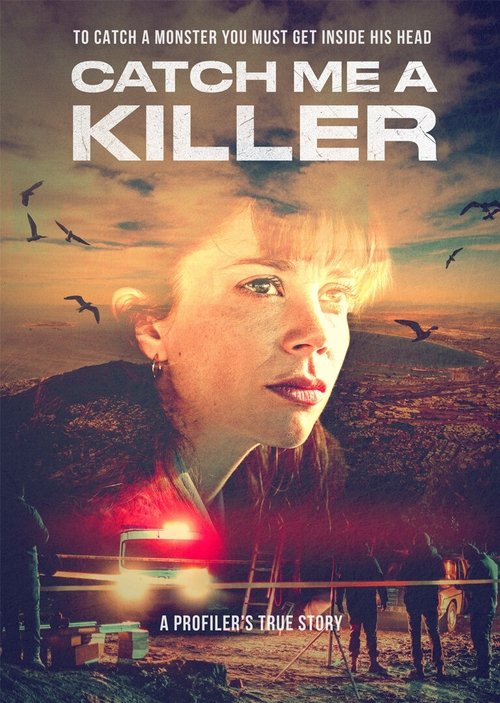









Popular
How does Micki Pistorius become involved in the Station Strangler investigation?
Which case leads Micki Pistorius to help capture Moses Sithole?
What is the story behind Episode 4 and which killer does it focus on?
Is Micki Pistorius related to Oscar Pistorius?
How does the series handle Micki Pistorius’s personal life alongside the murders?
Should I watch it?
Ask Your Own Question

What is the plot?
Micki Pistorius is introduced as a former journalist who has become South Africa's first serial-killer profiler, and the series places her in the 1990s as she begins working cases that require her to enter the minds of violent offenders rather than simply collect physical evidence.
The early part of the story establishes Micki's decision to use psychology as a police tool: instead of treating killings as isolated crimes, she starts looking for behavioral patterns, personal histories, and emotional drivers that connect offenders to their victims. This choice defines every later investigation, because the police increasingly rely on her ability to interpret motives, predict behavior, and identify the kind of man who is likely to strike again.
As the series moves through its case files, Micki is repeatedly sent into scenes where the brutality of the murders forces her to balance detachment with empathy. Each investigation deepens her understanding of serial offenders and also shows how difficult it is for the police establishment to accept a psychological profiler as a practical investigative asset.
One of the central threads in the series is Micki's growing reputation as she helps shape the hunt for killers by building profiles from victimology, crime-scene behavior, and the offenders' visible patterns. The show emphasizes that her work is not abstract theorizing: her assessments are used to narrow suspect pools, guide interviews, and push investigations toward arrests and convictions.
Over time, the personal cost of this work becomes clearer. Micki is not just studying monsters from a distance; she is repeatedly exposing herself to graphic violence, grieving families, and the emotional residue of each case, which the series presents as a burden that changes her professionally and personally.
By the ending, the series resolves around Micki's rise as a proven profiler whose methods help bring serial killers to justice, confirming that she becomes instrumental in securing convictions for multiple offenders. The final material frames her as a trailblazer whose psychological approach to crime helped establish a new kind of investigative practice in South Africa.
More TV Shows Like This
Browse All TV Shows →





What is the ending?
Catch Me a Killer ends with Micki Pistorius having done the work of helping the police understand the killer's mind, but the show does not present a neat, triumphant ending. The final feeling is one of grim closure rather than victory, with the investigation's human cost still hanging over everyone involved.
In the ending, the story stays focused on Micki Pistorius as she continues moving through the final stages of the case with the police task team. She is not shown as a conventional action hero; instead, the ending emphasizes her role as a profiler whose job is to observe, listen, and help shape the investigation through psychological insight. The series, based on her work in South Africa in the 1990s, presents her as the central figure around whom the case turns.
The final events are tied to the serial killer investigation involving the trail of murdered boys, which the Apple TV description says is the case that brings Micki into the task team. By the end, the case is no longer simply an unsolved pattern of violence; it has been examined through Micki's profiling work and pushed toward resolution. The series frames that outcome as part of a larger true-crime story about how profiling enters police work in South Africa for the first time through her.
Micki's fate at the end is not death or disappearance, but continued survival as the profiler who has endured the emotional weight of the investigation and left her mark on the case. The killer's fate, in the true-crime framework of the series, is that the investigation leads toward identification and conviction rather than continued freedom, since the series is based on cases that Pistorius helped bring to conviction. The other main police and task-team figures are left in the position of having carried the case through to its hard-earned end, with the aftermath shaped by what they have seen rather than by a clean sense of relief.
Scene by scene, the ending reads as follows: Micki remains with the investigation as the police close in on the truth; the task team's work narrows around the killer's pattern; the emotional burden of the case stays visible in Micki's presence and in the somber tone of the final stretch; and the story closes by underscoring that this was a case solved through psychological insight as much as police procedure. The series does not end by shifting attention away from the victims, because the murder count and the trail of dead boys remain the moral center of the story right to the end.
If you want, I can also give you the ending episode-by-episode for the final stretch of the series.
Is there a post-credit scene?
There is no reliable evidence in the available sources that Catch Me a Killer has a post-credit scene. The series is described as an 11-part true crime drama about Micki Pistorius, but the sources provided do not mention any end-credits stinger or bonus scene.
If you want, I can also help verify whether the final episode has any extra scene after the credits or summarize the ending instead.
How does Micki Pistorius become involved in the Station Strangler investigation?
In the series, Micki Pistorius joins a task force in 1994 after South Africa's transition to democracy, and her role quickly centers on helping track the Station Strangler, one of the country's most notorious serial killers. The story frames this as the beginning of her deeper work as a forensic psychologist/profiler rather than a detached observer.
Which case leads Micki Pistorius to help capture Moses Sithole?
The series includes a major storyline in which Micki helps investigate and ultimately assist in the capture of Moses Sithole, described as one of South Africa's worst serial killers. The reporting notes that her deductions about the murderer were important to the team's success.
What is the story behind Episode 4 and which killer does it focus on?
Episode 4 specifically tells the story of one of South Africa's most notorious murderers and Micki's role in that capture. The available description does not name the killer in the episode summary itself, but it places Micki at the center of the investigation and the eventual arrest.
Is Micki Pistorius related to Oscar Pistorius?
Yes. The series materials note that Micki Pistorius was Oscar Pistorius's aunt, and that this connection created a media sensation during his trial. This relationship is mentioned as a factual detail about her personal life rather than as part of the main crime investigations.
How does the series handle Micki Pistorius’s personal life alongside the murders?
The show does not keep Micki entirely within the police cases; it also follows her private life, especially her struggle to balance romance and ordinary relationships with the emotional burden of working around murderers every day. This personal tension is presented as an ongoing thread through the series.
Is this family friendly?
No -- Catch Me a Killer is not really family friendly for children, and it is better suited to teens or adults because it centers on serial-killer investigations and includes disturbing crime material.
Potentially upsetting or objectionable elements include: - Dead bodies and murder scenes, including victims shown as corpses or in police evidence photos. - Child-victim material in the early episodes, which IMDb notes may be especially upsetting. - Blood and gore, though IMDb rates it overall as mild rather than graphic. - Sexual content and nudity, including brief nude imagery and sexual references. - Frequent profanity, rated moderate by IMDb. - Alcohol and cigarette smoking shown on screen. - Frightening and intense scenes tied to serial-killer cases and murder investigations.
If you are screening for younger children or very sensitive viewers, this series is best avoided.







