





















Popular
Why does Dawn Kim flee the house after agreeing to the euthanasia program?
Who is Bob, and what is his role in the story?
What happens to Grace Dawson in the film?
Why do the siblings turn on each other during the dinner?
What is the significance of the character Jared York's past with his first wife and son?
Should I watch it?
Ask Your Own Question

What is the plot?






What is the ending?
Short Summary
The York siblings, after learning that their stepmother Dawn has fled the euthanasia program, find themselves forced to choose one of their own to take her place. When the D.O.C.S. agent Bob arrives with armed guards to collect the second body, chaos erupts. The family eventually turns the tables on Bob and the agents, disarming them and taking them hostage. Ashley dies during the struggle with Noah. Rachel volunteers to be euthanized, but Jared argues he should go instead. Noah proposes they kill Bob rather than one of themselves. As Noah prepares to inject Bob with the euthanasia drug, the film cuts to black. In a final scene, it's revealed that Grace and Ashley were announced as voluntary enlistees who died together, while Noah performs a piano recital with Jared, Rachel, and Dawn in the audience.
Expanded Narrative
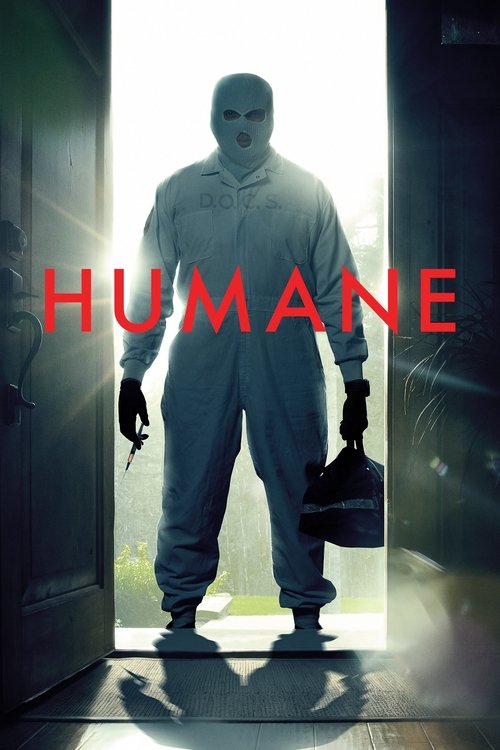
The ending of Humane unfolds across a series of escalating confrontations within the York family home, each moment building toward a violent and morally ambiguous conclusion.
The crisis begins when Charles York has already undergone his euthanasia procedure with Bob present. The D.O.C.S. agent then delivers devastating news to the remaining family members: their stepmother Dawn, who had second thoughts and fled the house, has been tracked down and taken into custody at D.O.C.S. headquarters. Bob informs them coldly that he will not be leaving without a second body to replace her. The family now faces an impossible choice: one of them must volunteer to die, or Bob and his armed agents will force the matter.
This announcement triggers a cascade of emotional and physical conflict among the siblings. The weight of the decision fractures whatever family bonds remained intact. Rachel, the pharmaceutical CEO, steps forward and volunteers to take Dawn's place in the euthanasia program. She makes this sacrifice seemingly out of a sense of responsibility or perhaps guilt over her position in the family hierarchy.
However, Jared, the controversial anthropologist, contests her decision. He argues that he should be the one to go instead, citing his own moral failings. He references abandoning his first wife and his son Lucas, suggesting that his departure would be a form of redemption or atonement for his past actions. The siblings debate who among them is most expendable or most deserving of death, each wrestling with their own sense of culpability and worth.
Noah, the recovering addict and adopted brother, intervenes in this debate with a radical proposal. Rather than allowing one of them to be euthanized, he suggests they kill Bob instead. This pivot transforms the family from victims of circumstance into active agents of violence. The siblings unite around this new objective, abandoning their internal conflict in favor of a collective action against their oppressor.
The family executes a coordinated plan to overpower Bob and the D.O.C.S. agents. They lure Bob and the armed guards deeper into the house, then disarm them and take them hostage. During this violent struggle, Ashley sustains severe injuries while fighting with Noah. She does not survive these injuries. Her death marks a permanent loss within the family, a consequence of their decision to resist.
With Bob now their captive and the agents subdued, Noah prepares to administer the euthanasia drug to Bob himself. As Noah readies the injection, the film cuts to black, leaving the viewer uncertain whether Bob receives the lethal dose or whether some other outcome occurs.
The final scene provides a coda that reframes the entire evening's events. Noah performs a piano recital, suggesting a return to normalcy or perhaps a symbolic rebirth. Jared, Rachel, and Dawn sit in the audience watching him play. This peaceful domestic scene stands in stark contrast to the violence that preceded it. However, the film reveals that Bob has survived and appears on a broadcast announcing the week's voluntary enlistees. He states that Grace, Noah's girlfriend who was shot dead by a D.O.C.S. agent early in the evening, and Ashley, who died during the family's struggle, were long-time friends who chose to enlist together. This announcement is a fabrication, a rewriting of their deaths as voluntary choices rather than the violent outcomes they actually were.
The fates of the main characters at the story's end are as follows: Charles York is dead, having completed his euthanasia procedure. Grace Dawson is dead, shot by a D.O.C.S. agent. Ashley York is dead, having sustained fatal injuries during the family's violent resistance. Noah York survives and is shown performing at a piano recital. Rachel York survives, having been spared from euthanasia. Jared York survives. Dawn York survives, having been retrieved from D.O.C.S. custody. Bob survives, though his ultimate fate at Noah's hands remains ambiguous due to the film's cut to black. The D.O.C.S. agents are subdued and taken hostage, their fates left unclear.
Is there a post-credit scene?
The movie Humane (2024) does not have a post-credits scene. There are no extra scenes or additional footage after the credits roll.
The film ends with a dark and tense conclusion involving the York family and government agents, followed by a cut to black, with no further scenes after the credits.
Why does Dawn Kim flee the house after agreeing to the euthanasia program?
Dawn Kim flees the house after agreeing to the euthanasia program because she experiences a sudden change of heart and is no longer willing to go through with her scheduled euthanasia. Her disappearance creates a crisis, as the Department of Citizen Strategy (D.O.C.S.) agents demand two bodies and refuse to leave without fulfilling their quota, forcing the family to confront the consequences of her decision.
Who is Bob, and what is his role in the story?
Bob is a technician from the Department of Citizen Strategy (D.O.C.S.) who arrives at the York family home to carry out the euthanasia of Charles and Dawn. He is portrayed as matter-of-fact and callous, insisting on strict adherence to protocol and refusing to leave without two bodies, which escalates the tension and forces the family into a violent confrontation.
What happens to Grace Dawson in the film?
Grace Dawson, Noah York's girlfriend, arrives at the house after receiving a text from Noah. Panicking over the situation, she causes a commotion that ends when a D.O.C.S. agent shoots her dead. Her death triggers Noah's violent reaction and further escalates the conflict among the siblings.
Why do the siblings turn on each other during the dinner?
The siblings turn on each other during the dinner because the pressure of the situation--having to choose who will take Dawn's place in the euthanasia program--exposes long-standing resentments, regrets, and personal conflicts. The stress of the government's ultimatum and the fear of death cause them to lash out and argue, leading to physical violence and betrayal.
What is the significance of the character Jared York's past with his first wife and son?
Jared York's past with his first wife and son is significant because it reveals his guilt and sense of responsibility. When the family debates who should volunteer for euthanasia, Jared argues that he should be the one because he abandoned his first wife and his son Lucas, adding a layer of personal remorse to his motivations and the family's moral struggle.
Is this family friendly?
Humane is not family friendly. The film is rated R for strong violence and language throughout, making it unsuitable for children and potentially disturbing for sensitive viewers.
Key content warnings include:
Violence and Gore: The film contains moderate to strong violence with graphic depictions of stabs, slices, and cuts. There are intense moments of brutal body horror and violent encounters between characters that are depicted with considerable gore.
Language: Moderate profanity is present throughout the film.
Intense and Disturbing Scenes: The movie features moderate to intense frightening scenes. Given its premise involving a government-mandated euthanasia program and the escalating chaos that unfolds during a family gathering, the overall tone is dark and psychologically unsettling rather than lighthearted.
Thematic Content: The film deals with heavy themes including death, societal collapse, and moral dilemmas about who lives and who dies, which may be distressing for younger or more sensitive audiences.
The combination of graphic violence, dark subject matter, and psychological tension makes this a film intended exclusively for mature audiences.








