

Popular
In the trawlerman episode, who is the experienced crew member guiding Guy, and what exact tasks does Guy have to master on the rolling deck?
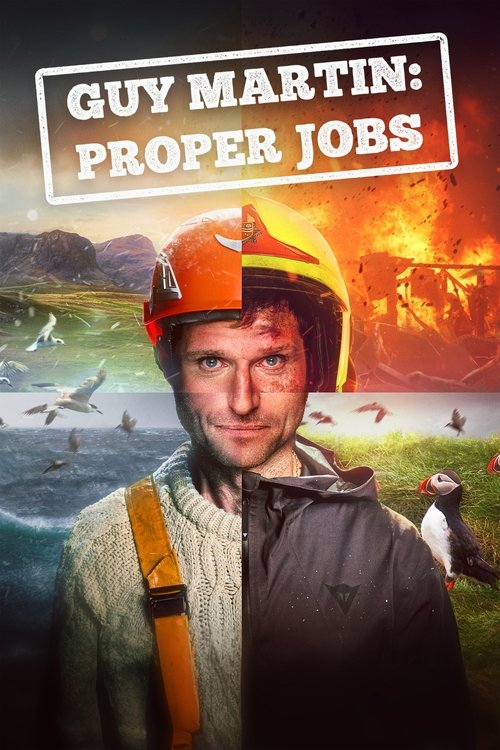
In the wildlife warden episode on Calf of Man, what jobs does Guy perform with the island team, and which staff members are named around that work?
In the firefighter episode, which trainers and fire service personnel work directly with Guy, and what is the nature of the dangerous training he undertakes?
In the mountain rescue dog handler episode, who handles the search and rescue dog, and what role does the dog play in Guy’s training?
Across the series, which specific episode jobs are assigned to Guy, and which of those jobs are identified as especially hazardous or physically punishing?
Should I watch it?
Ask Your Own Question

What is the plot?
Guy Martin begins in Brixham, Devon, because Grimsby no longer has any trawlers working out of the port where he grew up, and he arrives to spend four days on the beam trawler William of Ladram.
On the boat, he is immediately thrown into the hardest parts of the job, including handling heavy, violently swinging nets on the rolling deck while the crew haul in catches that can weigh up to three tons.
Under the close guidance of the most experienced crewman, Lizard, Guy learns the practical rhythm of the work at sea, starting with how to bring the catch aboard safely before he can do anything else.
As the trawl is processed, he is taught how to sort the valuable fish from the worthless ones, with the unusable catch being thrown back into the sea.
He then moves on to the grisly part of the work, learning to gut the fish after sorting them, a task that underscores the physical and unpleasant reality of the job.
Throughout the trip, the emotional weight of the occupation becomes clear as Lizard explains the sobering danger of life on a fishing vessel, giving Guy direct insight into why trawlermen are often described as doing one of the most dangerous jobs in the UK.
The experience begins with Guy deliberately testing himself against the conditions at sea, including eating two fried breakfasts on the first morning, while the boat works through heavy swell and the crew push through the punishing routine.
By the end of the four-day stint, Guy has completed the full round of deckhand work, from learning the ropes and knots to taking part in the messy, exhausting, and risky labor that defines the trawler's daily life.
More TV Shows Like This
Browse All TV Shows →








What is the ending?
The series does not have a single fictional ending in the usual sense, because it is a factual documentary series about Guy Martin taking on real jobs. In the 2025 run, the closing beat is Guy completing the final challenge of the series and leaving with a clearer respect for the people who do these dangerous, physical jobs every day.
In the final episode of the 2025 series, Guy takes on mountain rescue dog handler work. He arrives expecting another hard, hands-on test, but the job quickly becomes about discipline, patience, and trust between people and dogs. He trains alongside the rescue team, watches how carefully the handlers read terrain and weather, and sees how much depends on calm decisions in dangerous conditions. By the end, the episode leaves him having completed the experience rather than "defeated" it, and the rescue team members are shown continuing in their real roles, with Guy stepping back as a temporary participant rather than a permanent member.
Is there a post-credit scene?
There is no evidence in the available episode listings, official show pages, or platform descriptions that Guy Martin: Proper Jobs includes a post-credit scene.
The series is presented as a four-part documentary with standard episode runtimes and no episode notes mentioning any extra stinger, tag, or after-credits content. The available sources describe the individual episodes and the broadcast schedule, but none mention a post-credit scene at the end of any episode.
So, based on the currently available information, the safest answer is: no confirmed post-credit scene is documented for Guy Martin: Proper Jobs.
In the trawlerman episode, who is the experienced crew member guiding Guy, and what exact tasks does Guy have to master on the rolling deck?
This question points to the first episode's central on-the-job relationship: Guy works under Lizard, the boat's most experienced crew member, while learning how to land the catch and manhandle swinging nets to release up to three tons of fish.
In the wildlife warden episode on Calf of Man, what jobs does Guy perform with the island team, and which staff members are named around that work?
This question focuses on Guy's work on Calf of Man, where he does birdwatching, rat catching, and beach cleanup for seals, alongside figures such as Chloe Hurst, Aron Sapsford, and Mike Haigh, who are identified with the island's wardenship and environmental work.
In the firefighter episode, which trainers and fire service personnel work directly with Guy, and what is the nature of the dangerous training he undertakes?
This question centers on the fire-service episode, where Guy trains to become a firefighter and is shown working with instructors and team leaders including Lee Bransby, Darren Gadd, Paul Knox, Colin Nulty, and Matt Stone in scarily real environments where other people's lives could be at risk.
In the mountain rescue dog handler episode, who handles the search and rescue dog, and what role does the dog play in Guy’s training?
This question is about the rescue-dog episode, where Guy joins a mountain rescue team and works with a search-and-rescue dog handled by Paul Noble, with the episode framed around dangerous terrain and the disciplined teamwork needed for rescue work.
Across the series, which specific episode jobs are assigned to Guy, and which of those jobs are identified as especially hazardous or physically punishing?
This question asks about the series' distinct job assignments: trawlerman, wildlife warden, firefighter, and mountain rescue dog handler, with the trawlerman work described as one of the most dangerous jobs in the world and the firefighting and rescue work presented as especially risky and physically demanding.
Is this family friendly?
Probably not ideal for young children, but it is generally a documentary series rather than scripted drama, and the main concerns are the hazards of the jobs Guy Martin tries rather than graphic content.
Potentially upsetting or objectionable elements may include:
- Dangerous work situations and obvious physical risk, because the series focuses on "demanding and often dangerous jobs" in the UK.
- Real-world injury risk, heavy machinery, and harsh working environments, especially in occupations like trawling, firefighting, and wildlife/remote-island work suggested by the episode listings and promos.
- Mildly distressing animal-related content, such as rat catching and beach cleanup for seals in the wildlife warden episode.
- Rough working conditions and perilous circumstances, which may be tense for sensitive viewers even if nothing is staged for shock value.
- Potentially upsetting occupational scenes, for example firefighting and emergency-response work, which can involve smoke, urgency, and danger.
It is likely fine for many older children or teens with supervision, but if a child is sensitive to danger, injuries, animals in distress, or stressful workplace scenes, it may be better to preview first.