









Popular
What challenges do the characters face in their friendships throughout Season 1?
How does Angelica's character evolve in Season 1?
What role does the theme of individuality play in the character arcs of Season 1?
How do the characters deal with the pressures of adolescence in Season 1?
What specific events lead to the conflict between Tommy and Angelica in Season 1?
Should I watch it?
Ask Your Own Question

What is the plot?
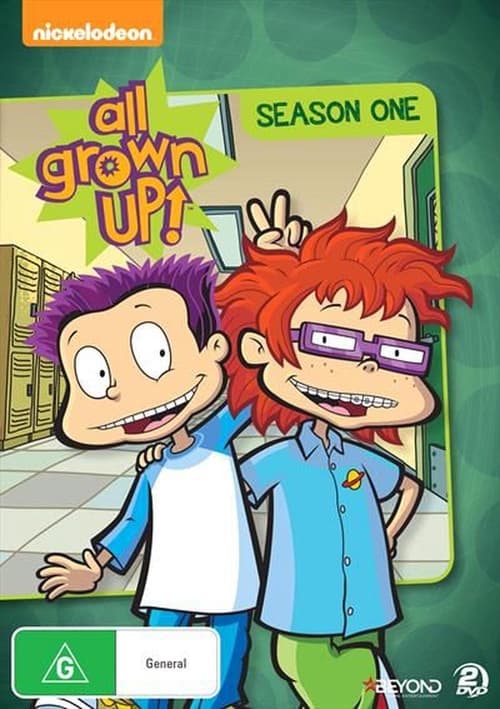
In the first episode of "All Grown Up!", titled "Rugrats: All Grown Up!", the story begins with the main characters, now pre-teens, navigating the complexities of adolescence. The episode opens with Tommy Pickles, Chuckie Finster, Phil and Lil DeVille, and Angelica Pickles, who are all excited about their first day of middle school. The scene is filled with vibrant colors and the bustling energy of kids getting ready for school, showcasing their growth from toddlers to pre-teens.
As they arrive at school, the group is met with the intimidating atmosphere of middle school. Tommy, who is eager to embrace this new chapter, tries to rally his friends, but Chuckie is visibly anxious about the changes. The camera captures Chuckie's fidgeting and worried expressions, highlighting his internal struggle with the idea of fitting in. Meanwhile, Angelica, now more self-assured and bossy, relishes the opportunity to assert her dominance over the younger kids, showcasing her unchanged personality despite their growth.
The plot thickens when the group encounters a popular girl named Kimi, who is new to the school. Kimi's confident demeanor and stylish appearance draw the attention of the group, particularly Tommy, who is intrigued by her. The scene shifts to a lunchroom filled with chatter and laughter, where the dynamics of social hierarchy become apparent. Angelica, feeling threatened by Kimi's popularity, devises a plan to undermine her by spreading rumors.
As the day progresses, Tommy and his friends attempt to navigate their new social landscape. They face various challenges, such as dealing with cliques and trying to find their place among the other students. Chuckie's fear of being bullied becomes a central theme, and he struggles with the idea of standing up for himself. The emotional weight of these moments is palpable, as the characters grapple with their insecurities and the desire to be accepted.
In a pivotal moment, Tommy decides to confront Angelica about her behavior towards Kimi. He expresses his frustration with her mean-spiritedness, which leads to a heated argument. The tension escalates, and the scene is charged with emotion as Tommy stands up for what he believes is right, showcasing his growth into a more assertive character. This confrontation serves as a turning point for both Tommy and Angelica, as they begin to realize the impact of their actions on others.
The climax of the episode occurs during a school assembly where Kimi is set to perform. Tommy, wanting to support Kimi and make amends for Angelica's behavior, encourages his friends to join him in cheering for her. The assembly is filled with excitement, and the atmosphere is electric as Kimi takes the stage. However, Angelica's jealousy leads her to sabotage Kimi's performance, resulting in a chaotic scene that captures the attention of the entire school.
In the aftermath of the assembly, the characters reflect on their actions and the consequences of their choices. Tommy feels a sense of responsibility for standing up for Kimi, while Chuckie learns the importance of facing his fears. The episode concludes with the group coming together, realizing that friendship and support are essential as they navigate the challenges of growing up. The final scene shows them walking home together, laughing and sharing their experiences, solidifying their bond as they embrace their new identities.









What is the ending?
In the ending of "All Grown Up!" Season 1, the characters face the challenges of growing up and the complexities of their friendships. The episode concludes with the group realizing the importance of their bonds and the need to support each other as they navigate their teenage years.
As the episode unfolds, the scene opens in the familiar setting of the kids' neighborhood, where the sun is shining brightly, casting a warm glow over the familiar playground. The camera pans to Tommy, who is sitting on a swing, deep in thought. He is grappling with the pressures of adolescence and the changes that come with it. His expression is a mix of determination and uncertainty, reflecting his internal struggle to maintain his childhood friendships while also embracing the changes of growing up.
Next, we transition to Chuckie, who is nervously pacing in front of his house. He is preparing for a big presentation at school, and his anxiety is palpable. The audience can see his hands fidgeting, and his brow is furrowed with worry. Chuckie's fear of failure is evident, and he confides in his friends about his insecurities. His vulnerability draws the group closer together, as they rally around him, offering encouragement and support.
Meanwhile, Angelica is seen in her room, surrounded by her collection of dolls and fashion magazines. She is trying to project an image of confidence, but her facade begins to crack as she reflects on her relationships with the others. The audience witnesses her internal conflict as she grapples with her desire to be seen as the leader while also feeling isolated. This moment of introspection adds depth to her character, revealing her fears of being left behind as her friends grow and change.
As the story progresses, the group decides to throw a surprise party for Chuckie to celebrate his presentation. The planning scenes are filled with laughter and camaraderie, showcasing the strong bonds of friendship that have developed over the years. The characters work together, each contributing their unique skills to make the party a success. This collaborative effort highlights their growth and maturity, as they learn to support one another in meaningful ways.
The climax of the episode occurs during the party, where Chuckie finally presents his project. The atmosphere is tense, and the audience can feel the weight of his anxiety. However, as he begins to speak, his friends cheer him on, providing the encouragement he needs to overcome his fears. The scene is filled with emotional highs and lows, as Chuckie stumbles but ultimately finds his voice, delivering a heartfelt presentation that earns him applause from his peers.
In the final moments of the episode, the group gathers together, reflecting on the day's events. They share their thoughts and feelings, acknowledging the challenges they face as they grow up. Tommy expresses his gratitude for their friendship, and the others echo his sentiments, reinforcing the theme of unity and support. The camera zooms out, capturing the group in a tight huddle, symbolizing their unbreakable bond.
As the screen fades to black, the audience is left with a sense of hope and optimism for the future. Each character has faced their fears and emerged stronger, ready to tackle the challenges of adolescence together. The episode concludes with a reminder that while growing up can be difficult, the support of friends makes the journey worthwhile.
Is there a post-credit scene?
In the first season of "All Grown Up!", there are no post-credit scenes. The episodes typically conclude with a wrap-up of the storylines presented, focusing on the characters' growth and experiences as they navigate the challenges of adolescence. The show emphasizes the emotional and social dynamics among the characters, but it does not include additional scenes after the credits. Each episode stands alone, providing a complete narrative without the need for post-credit content.
What challenges do the characters face in their friendships throughout Season 1?
Throughout Season 1 of All Grown Up!, the characters face various challenges in their friendships, particularly as they navigate the complexities of growing up. For instance, in the episode 'Rugrats: All Grown Up!', Tommy struggles with the idea of growing apart from his childhood friends as they begin to develop their own interests. This internal conflict is visually represented through scenes where Tommy feels isolated during group activities, highlighting his emotional state of longing for the simplicity of their younger days.
How does Angelica's character evolve in Season 1?
In Season 1, Angelica's character shows significant evolution as she grapples with her identity and relationships. In the episode 'The Big Score', she initially seeks to assert her dominance over the group, but as the plot unfolds, she learns the value of teamwork and friendship. This is depicted through her initial manipulative behavior, which gradually shifts to moments of vulnerability, especially when she realizes that her friends are essential to her happiness.
What role does the theme of individuality play in the character arcs of Season 1?
The theme of individuality is central to the character arcs in Season 1, particularly in episodes like 'The Finster Who Stole Christmas'. Here, Chuckie struggles with his fear of standing out and being different, which is visually represented through his reluctance to participate in a school play. His internal battle is palpable as he grapples with the desire to fit in versus the need to express himself, culminating in a heartfelt moment where he embraces his uniqueness.
How do the characters deal with the pressures of adolescence in Season 1?
In Season 1, the characters deal with the pressures of adolescence in various ways, particularly in the episode 'The Class Clown'. Here, Phil and Lil face the pressure to conform to social expectations while trying to maintain their quirky identities. The emotional tension is evident as they navigate peer pressure, leading to a climactic scene where they must choose between fitting in or staying true to themselves, ultimately opting for authenticity.
What specific events lead to the conflict between Tommy and Angelica in Season 1?
In Season 1, the conflict between Tommy and Angelica is sparked in the episode 'The Big Score', where Angelica feels overshadowed by Tommy's growing popularity. The tension escalates when Angelica attempts to sabotage Tommy's efforts to organize a school event, leading to a series of misunderstandings. The emotional stakes are high as both characters confront their insecurities, culminating in a dramatic confrontation that forces them to reassess their friendship.
Is this family friendly?
"All Grown Up!" is generally considered family-friendly, but there are a few scenes and themes that might be potentially objectionable or upsetting for children or sensitive viewers. Here are some aspects to consider:
-
Emotional Conflicts: The characters often face typical pre-teen issues such as friendship struggles, jealousy, and misunderstandings, which can lead to emotional distress.
-
Peer Pressure: Some episodes explore themes of peer pressure, where characters feel compelled to act against their better judgment to fit in, which might resonate with sensitive viewers.
-
Family Dynamics: There are moments that touch on family relationships and the challenges of growing up, including feelings of inadequacy or disappointment in oneself or family members.
-
Social Anxiety: Characters sometimes experience anxiety in social situations, which could be relatable but also distressing for viewers who struggle with similar feelings.
-
Mild Humor: The show includes some mild humor that may not be suitable for all children, such as jokes about body image or social status.
Overall, while the show addresses relatable themes of growing up, it does so in a way that is generally light-hearted and appropriate for its target audience. However, parents may want to preview episodes to gauge their suitability for younger viewers.