
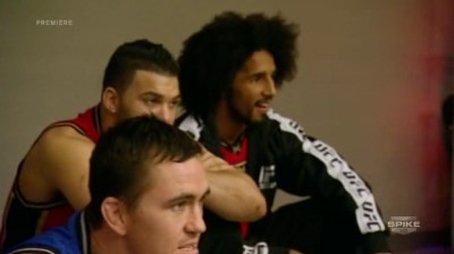


Popular
What challenges do the fighters face in episode 4 of Season 11?
How does the clown box challenge affect the dynamics between the teams?
What is the significance of the clown box in the context of the fighters' training?
Which fighters stand out during the clown box challenge and why?
How do the coaches react to the clown box challenge and its outcomes?
Should I watch it?
Ask Your Own Question

What is the plot?
The episode begins with the fighters settling into the house, and tensions are already palpable among the teams. The focus shifts to Team Liddell, where coach Chuck Liddell is seen interacting with his fighters, emphasizing the importance of teamwork and strategy. The atmosphere is competitive, and the fighters are eager to prove themselves.
As the day progresses, the fighters receive a surprise visit from UFC President Dana White, who announces the next fight. The matchup is between Team Liddell's Kyle Noke and Team Ortiz's Kris McCray. The fighters react with a mix of excitement and anxiety, knowing that this fight could significantly impact their journey in the competition.
In preparation for the fight, both fighters engage in intense training sessions. Kyle Noke is shown working on his striking and grappling techniques, while Kris McCray focuses on his conditioning and mental preparation. The training montages highlight their dedication and the pressure they feel to perform well. Noke expresses confidence in his abilities, while McCray reveals his determination to prove himself after a rocky start in the competition.
The day of the fight arrives, and the atmosphere in the gym is electric. Both fighters make their entrances, and the tension is palpable as they prepare to face off. The fight begins with both fighters cautiously sizing each other up, exchanging jabs and kicks. Noke utilizes his reach advantage, landing several solid strikes that visibly affect McCray.
As the first round progresses, McCray starts to find his rhythm, countering Noke's attacks and landing some effective punches of his own. The round is competitive, with both fighters showcasing their skills. However, Noke's striking appears to be more effective, and he gains the upper hand as the round comes to a close.
In the second round, McCray shows resilience and determination, pushing through the fatigue and landing a series of powerful strikes that catch Noke off guard. The fighters engage in a back-and-forth exchange, with McCray's tenacity shining through. The crowd is on the edge of their seats as the fight intensifies, and both fighters begin to show signs of wear.
As the fight nears its conclusion, Noke manages to take McCray down to the mat, attempting to secure a dominant position. However, McCray demonstrates his grappling skills by reversing the position and gaining top control. The round ends with both fighters exhausted but determined to leave everything in the cage.
The judges' decision is announced, and the tension in the gym is palpable as everyone awaits the outcome. The decision goes in favor of Kyle Noke, who is declared the winner by unanimous decision. McCray is visibly disappointed but shows respect for his opponent, acknowledging Noke's skills.
After the fight, the focus shifts back to the house, where the fighters reflect on the match. McCray expresses his frustration but vows to learn from the experience and come back stronger. Noke celebrates his victory with his teammates, but he remains humble, recognizing the challenges that lie ahead in the competition.
The episode concludes with a teaser for the next fight, building anticipation for the upcoming matchups and the ongoing rivalry between the teams. The emotional rollercoaster of the fighters' journeys continues, setting the stage for future conflicts and developments in the competition.








What is the ending?
In the ending of "The Ultimate Fighter" Season 11, Episode 4 titled "Clown Box," the episode culminates in a dramatic fight between two fighters, with one emerging victorious. The episode concludes with the aftermath of the fight, showcasing the emotional responses of the fighters and their coaches, as well as the ongoing tension within the team dynamics.
As the episode unfolds, the scene opens with the fighters preparing for the upcoming match. The atmosphere is charged with anticipation and anxiety, as each fighter grapples with their own internal fears and motivations. The camera captures the focused expressions of the fighters, highlighting their determination and the weight of the moment.
The fight itself is intense, showcasing the skills and strategies of both competitors. The fighters exchange blows, demonstrating their training and resilience. The audience can feel the tension in the air as each round progresses, with the fighters pushing themselves to their limits. The physicality of the fight is palpable, with sweat and effort evident on their faces.
As the fight reaches its climax, one fighter gains the upper hand, executing a decisive move that leads to a victory. The moment is filled with a mix of relief and elation, as the victor celebrates while the defeated fighter grapples with disappointment and frustration. The camera lingers on the defeated fighter, capturing their emotional turmoil and the realization of what this loss means for their journey in the competition.
Following the fight, the coaches and teammates gather to support their respective fighters. The victorious fighter is met with congratulations and encouragement, while the defeated fighter receives words of comfort, emphasizing the camaraderie and respect that exists among the competitors despite the rivalry. The episode closes with reflections on the journey ahead, as the fighters prepare for the challenges that lie ahead in the competition.
In summary, the episode ends with a clear delineation of victory and defeat, showcasing the emotional highs and lows of the fighters involved. Each character is left to contemplate their next steps, setting the stage for future conflicts and developments in the ongoing competition.
Is there a post-credit scene?
In "Clown Box," the fourth episode of The Ultimate Fighter Season 11, there is no post-credit scene. The episode concludes without any additional content after the credits roll. The focus remains on the main events of the episode, which include the ongoing competition and the dynamics between the fighters and coaches. The narrative wraps up with the outcomes of the fights and the emotional responses of the contestants, leaving no further scenes or teasers beyond the main episode.
What challenges do the fighters face in episode 4 of Season 11?
In episode 4, the fighters face a unique challenge that involves a clown-themed training session, which tests their ability to adapt and perform under unusual circumstances. The challenge is designed to push their mental toughness and creativity.
How does the clown box challenge affect the dynamics between the teams?
The clown box challenge creates tension between the teams, particularly as Team Liddell and Team Ortiz have differing approaches to the task. This leads to rivalries intensifying, as some fighters feel their teammates are not taking the challenge seriously.
What is the significance of the clown box in the context of the fighters' training?
The clown box serves as a metaphor for the unpredictability of fighting and the need for fighters to remain composed and adaptable in chaotic situations. It highlights the importance of mental agility in the sport.
Which fighters stand out during the clown box challenge and why?
During the clown box challenge, fighters like Court McGee and Chris Camozzi stand out due to their ability to embrace the absurdity of the task, showcasing their creativity and willingness to step outside their comfort zones.
How do the coaches react to the clown box challenge and its outcomes?
Coaches Chuck Liddell and Tito Ortiz have mixed reactions to the clown box challenge. Liddell appreciates the humor and creativity involved, while Ortiz is more critical, focusing on the seriousness of the competition and the need for discipline.
Is this family friendly?
"The Ultimate Fighter" Season 11, Episode 4 titled "Clown Box" contains several elements that may not be considered family-friendly. Here are some potentially objectionable or upsetting aspects:
-
Violence and Fighting: The show revolves around mixed martial arts, featuring intense training sessions and fight preparations. The physicality of the sport can be graphic, with scenes of fighters sparring and discussing injuries.
-
Strong Language: There are instances of strong language and profanity used by the fighters and coaches, which may not be suitable for younger audiences.
-
Emotional Tension: The episode includes moments of high emotional stress, with fighters dealing with the pressure of competition, which may be upsetting for sensitive viewers.
-
Conflict and Rivalry: There are interpersonal conflicts and rivalries among the fighters that can lead to heated exchanges, showcasing aggressive behavior and confrontational attitudes.
-
Mental Strain: The psychological aspects of competition, including anxiety and self-doubt, are explored, which may resonate negatively with some viewers.
These elements contribute to a mature atmosphere that may not be appropriate for children or those who are sensitive to such themes.