













Popular
What motivates Frank Underwood to manipulate others in Season 1?
How does Frank Underwood use Zoe Barnes to his advantage?
What role does Claire Underwood play in Frank's schemes?
How does Frank deal with Peter Russo's political ambitions?
What is the significance of the relationship between Frank Underwood and Doug Stamper?
Should I watch it?
Ask Your Own Question

What is the plot?
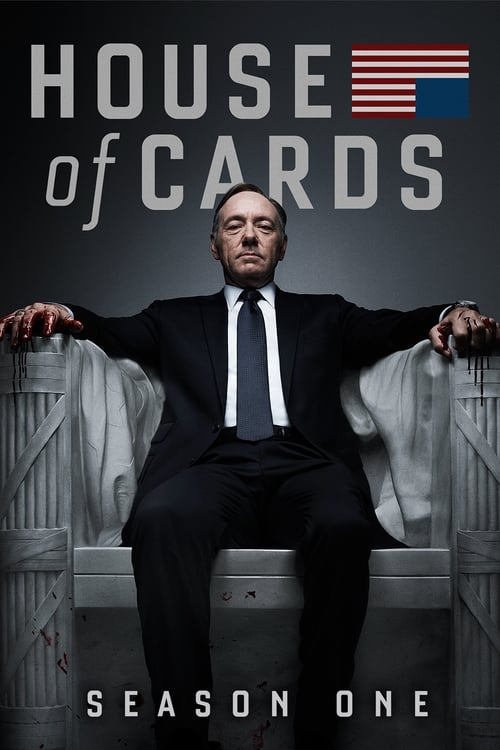
In the opening episode of "House of Cards," we are introduced to Frank Underwood, the House Majority Whip, who is played by Kevin Spacey. The story begins with Frank standing in front of a camera, breaking the fourth wall to address the audience directly. He explains his ambitions and the political landscape in Washington, D.C. He is deeply frustrated after being passed over for the position of Secretary of State, a role he believed he was promised by President Garrett Walker.
Following this, Frank meets with President Walker, who expresses his gratitude for Frank's support during the election. Frank, however, is calculating and manipulative, revealing his true nature as he discusses the political game. He feels betrayed and begins to plot his revenge against those who have wronged him, particularly against Walker and his chief of staff, Doug Stamper.
Frank's first major move is to reach out to Zoe Barnes, a young and ambitious political reporter for the Washington Herald. He sees her as a potential ally and a means to manipulate public perception. Frank invites Zoe to a meeting, where he charms her and offers her insider information in exchange for favorable coverage. This meeting sets the stage for their complicated relationship, as Zoe is eager to advance her career and sees Frank as a powerful source.
Meanwhile, Frank's wife, Claire Underwood, played by Robin Wright, runs a nonprofit organization called the Clean Water Initiative. She is equally ambitious and driven, but her motivations are more altruistic than Frank's. Their relationship is complex, marked by a mutual understanding of each other's ambitions, but also by a lack of emotional connection. Claire is shown to be strong-willed and capable, often working behind the scenes to support Frank's political maneuvers.
As Frank continues to plot, he decides to take down a rival, Congressman Peter Russo, who is struggling with alcoholism and personal issues. Frank sees an opportunity to manipulate Peter, using his vulnerabilities to his advantage. He meets with Peter and offers him a chance to redeem himself by supporting a bill that Frank is pushing. Frank's manipulation is evident as he plays on Peter's insecurities and weaknesses.
In a pivotal scene, Frank orchestrates a meeting with Peter and convinces him to take a more active role in politics, promising him support. However, Frank's true intentions are to use Peter as a pawn in his larger game. He provides Peter with alcohol, knowing it will lead to his downfall, and encourages him to embrace his darker impulses.
As the episode progresses, Frank's machinations begin to unfold. He uses Zoe to leak information about the administration's plans, which creates a stir in the media. This move not only elevates Zoe's career but also allows Frank to manipulate the narrative surrounding the administration. He is calculating and ruthless, willing to sacrifice anyone who stands in his way.
The episode culminates in a tense moment when Frank confronts Peter about his drinking. Frank's manipulation reaches a peak as he pushes Peter to the brink, leading to a public incident that embarrasses Peter and solidifies Frank's control over him. This moment is crucial, as it demonstrates Frank's willingness to exploit others for his gain.
In the final scenes, Frank reflects on his actions and the power dynamics at play. He is shown to be a master manipulator, fully aware of the consequences of his decisions. The episode ends with Frank once again addressing the audience, reinforcing his role as the puppet master in the political arena, setting the stage for the conflicts and power struggles that will unfold throughout the season.








What is the ending?
At the end of Season 1 of House of Cards, Frank Underwood successfully manipulates his way into the position of Vice President of the United States, having orchestrated the downfall of his rival, Peter Russo. Meanwhile, Zoe Barnes, a young reporter, becomes entangled in Frank's schemes but ultimately meets a tragic fate. The season concludes with Frank's ruthless ambition fully realized, setting the stage for further political machinations.
As the season draws to a close, the tension escalates in the political landscape of Washington, D.C. Frank Underwood, played by Kevin Spacey, has been meticulously plotting his ascent to power, and the final episodes reveal the culmination of his schemes.
In the penultimate episode, Frank's machinations lead to the downfall of Peter Russo, portrayed by Corey Stoll. Peter, a once-promising congressman, has succumbed to his demons, battling alcoholism and self-destructive behavior. Frank, who initially saw potential in Peter, now views him as a liability. In a chilling scene, Frank manipulates Peter into a state of despair, leading him to a drunken stupor. Frank then stages a scenario where Peter is found dead in a car, making it look like a suicide. This act is not just a means to eliminate a rival; it is a demonstration of Frank's cold, calculating nature and his willingness to sacrifice anyone for his ambitions.
Simultaneously, Zoe Barnes, played by Kate Mara, is drawn deeper into Frank's web. As a young reporter, she has been seduced by the power and access that Frank offers her. Their relationship is fraught with tension, as Zoe begins to realize the extent of Frank's manipulations. In a pivotal scene, she confronts Frank about the implications of their relationship and the stories she has been writing. Frank, ever the master manipulator, reassures her, but it is clear that he views her as a tool rather than an equal partner.
In the final moments of the season, Frank's ambition reaches its zenith. He is appointed Vice President of the United States, a position he has long coveted. The scene is filled with a sense of triumph as Frank stands before the cameras, a slight smirk on his face, embodying the very essence of political ambition. The weight of his actions hangs heavy in the air, as viewers are left to ponder the moral implications of his rise to power.
However, the season does not end without a final, tragic twist. In a shocking turn of events, Frank decides to eliminate Zoe to protect his secrets. In a dark, foreboding scene, he meets her in a subway station. Their conversation is laced with tension, as Zoe realizes the danger she is in. Frank, with a chilling calmness, pushes her onto the tracks, ensuring her death. This act solidifies Frank's transformation into a ruthless political player, willing to do whatever it takes to maintain his power.
As the credits roll, the fates of the main characters are starkly contrasted. Frank Underwood stands at the pinnacle of his ambitions, now Vice President, while Peter Russo lies dead, a victim of Frank's ruthless strategy. Zoe Barnes, once a promising journalist, is also gone, a casualty of Frank's unyielding quest for power. The season closes with a haunting reminder of the lengths to which Frank will go, leaving viewers eager to see how his story will unfold in the seasons to come.
Is there a post-credit scene?
In "House of Cards" Season 1, there is no post-credit scene. The episodes conclude without any additional content after the credits roll. The focus remains on the intricate political maneuvers and character developments throughout the season, particularly highlighting Frank Underwood's ruthless ambition and manipulation in the world of Washington, D.C.
What motivates Frank Underwood to manipulate others in Season 1?
Frank Underwood, played by Kevin Spacey, is driven by an insatiable ambition and a desire for power. He feels betrayed after being passed over for the position of Secretary of State, which fuels his determination to climb the political ladder by any means necessary. His motivations are deeply rooted in a need for control and recognition, leading him to orchestrate a series of manipulative schemes.
How does Frank Underwood use Zoe Barnes to his advantage?
Frank Underwood recognizes Zoe Barnes, a young political reporter played by Kate Mara, as a means to further his agenda. He seduces her both personally and professionally, providing her with insider information in exchange for favorable media coverage. This relationship exemplifies Frank's strategic manipulation, as he exploits Zoe's ambition to gain leverage in his political maneuvers.
What role does Claire Underwood play in Frank's schemes?
Claire Underwood, portrayed by Robin Wright, is not just Frank's wife but also his confidante and partner in crime. She runs a non-profit organization and is deeply involved in the political landscape. Her ambition and ruthlessness mirror Frank's, and she often assists him in his schemes, showcasing a complex relationship where both support and challenge each other's aspirations.
How does Frank deal with Peter Russo's political ambitions?
Peter Russo, played by Corey Stoll, is a troubled congressman whom Frank sees as a pawn in his larger game. Initially, Frank manipulates Peter's vulnerabilities, encouraging him to run for governor while simultaneously undermining him. Frank's approach is both exploitative and strategic, as he uses Peter's ambition to further his own goals, all while keeping Peter's self-destructive tendencies in check.
What is the significance of the relationship between Frank Underwood and Doug Stamper?
Doug Stamper, played by Michael Kelly, is Frank's loyal chief of staff and enforcer. Their relationship is built on mutual trust and a shared understanding of the ruthless nature of politics. Doug is deeply committed to Frank, often carrying out his dirty work and ensuring that Frank's plans come to fruition. This dynamic highlights the lengths to which both characters will go to maintain power and control, showcasing Doug's unwavering loyalty even in morally questionable situations.
Is this family friendly?
"House of Cards" is not considered family-friendly due to its mature themes and content. Here are some potentially objectionable or upsetting aspects that may occur:
-
Strong Language: The series features frequent use of profanity, which may be inappropriate for younger viewers.
-
Sexual Content: There are several explicit sexual scenes and references throughout the season, including infidelity and manipulation in relationships.
-
Violence: The show includes instances of violence, both physical and psychological, which can be intense and disturbing.
-
Political Manipulation: The portrayal of ruthless political maneuvering and betrayal may be unsettling, especially for sensitive viewers.
-
Substance Abuse: Characters are shown engaging in drinking and drug use, which may not be suitable for all audiences.
-
Moral Ambiguity: The characters often display morally questionable behavior, which can be confusing or troubling for younger viewers.
These elements contribute to the overall tone of the series, which is dark and complex, focusing on the cutthroat nature of politics.