












Popular
What is the significance of the crystal pendant that Sheeta possesses?
How does Pazu's relationship with Sheeta develop throughout the film?
What role do the pirates play in the story, and how do they interact with Sheeta and Pazu?
What is the nature of the conflict between the military and the protagonists?
How does Sheeta's identity and heritage influence her actions in the film?
Should I watch it?
Ask Your Own Question

What is the plot?
Sorry, we aren't able to watch and write up a full detailed plot yet. Check back in a few days.
More Movies Like This
Browse All Movies →




What is the ending?
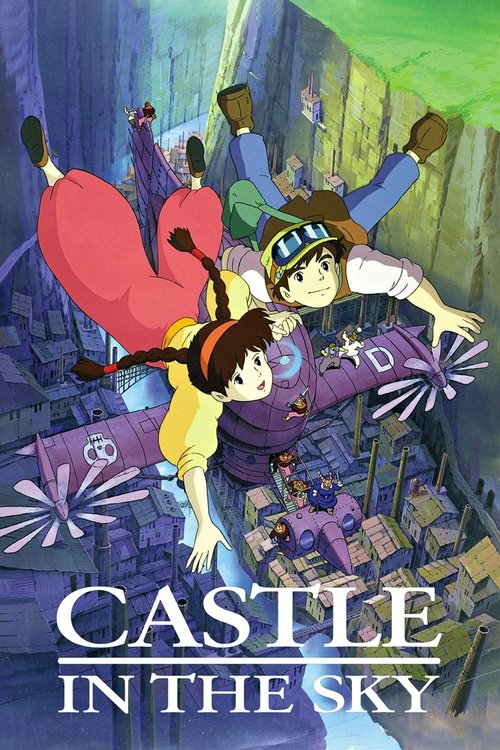
In the ending of "Castle in the Sky," Pazu and Sheeta successfully prevent the power of Laputa from falling into the wrong hands. They manage to destroy the floating castle, ensuring that its advanced technology and the destructive power of the Aetherium are lost forever. The film concludes with Pazu and Sheeta returning to the ground, where they find hope and a new beginning, symbolized by the blooming of flowers.
As the story reaches its climax, Pazu and Sheeta find themselves aboard the ancient floating castle of Laputa. The castle, a magnificent structure filled with lush gardens and advanced technology, is both awe-inspiring and foreboding. They are pursued by the villainous Muska, who seeks to harness the power of Laputa for his own nefarious purposes. Muska, a member of the royal family, believes he is the rightful heir to Laputa and is determined to reclaim its power.
In a tense confrontation, Muska reveals his true intentions to Sheeta, showing her the destructive potential of the Aetherium, the energy source that powers Laputa. He believes that with this power, he can rule the world. Sheeta, however, is resolute in her belief that such power should not be wielded by anyone. As Muska attempts to force Sheeta to use the Aetherium, she resists, drawing on her inner strength and the memories of her ancestors who once lived in harmony with nature.
Pazu, who has been fighting to protect Sheeta and stop Muska, finds himself in a desperate situation. He confronts Muska, and in a moment of bravery, he manages to distract him long enough for Sheeta to take action. Together, they activate the ancient technology of Laputa, which begins to destabilize. The castle starts to tremble, and the once-beautiful gardens begin to wither as the power of the Aetherium is unleashed.
In a final act of defiance, Sheeta and Pazu work together to destroy the Aetherium, causing a massive explosion that engulfs the castle. As the castle begins to crumble, Muska is consumed by his own greed and ambition, unable to escape the consequences of his actions. He is ultimately lost to the destruction, a tragic end for a character who sought power above all else.
As the dust settles, Pazu and Sheeta find themselves falling from the sky, but they are saved by the gentle embrace of the earth below. They land safely, surrounded by the beauty of nature, which has been restored in the absence of Laputa's destructive power. The film closes with a poignant scene of Pazu and Sheeta standing together, looking out over a field of blooming flowers. They share a moment of hope and connection, symbolizing the possibility of a brighter future.
In the end, Pazu and Sheeta emerge as heroes, having protected the world from the dangers of unchecked power. Their journey has forged a deep bond between them, and they look forward to a new beginning, free from the shadows of the past. The film concludes with a sense of renewal, emphasizing the importance of friendship, courage, and the harmony between humanity and nature.
Is there a post-credit scene?
The movie "Castle in the Sky," produced in 1986 by Studio Ghibli and directed by Hayao Miyazaki, does not have a post-credit scene. The film concludes with a poignant ending that wraps up the story of Pazu and Sheeta as they reflect on their adventure and the lessons learned. After the credits roll, there are no additional scenes or content that follow. The focus remains on the themes of friendship, the consequences of greed, and the beauty of nature, leaving the audience with a sense of closure and hope.
What is the significance of the crystal pendant that Sheeta possesses?
The crystal pendant that Sheeta possesses is a key element in the story, as it is a piece of the ancient technology that connects her to the lost floating island of Laputa. It serves as a symbol of her heritage and the power of the Laputian civilization. Throughout the film, the pendant glows when Sheeta is in danger or when she is near Laputa, guiding her and Pazu on their quest.
How does Pazu's relationship with Sheeta develop throughout the film?
Pazu's relationship with Sheeta evolves from a chance encounter to a deep bond built on trust and shared adventure. Initially, Pazu is captivated by Sheeta's mysterious nature and her connection to the pendant. As they face various challenges together, including the pursuit by the military and pirates, their friendship deepens into a protective and romantic affection, culminating in their determination to uncover the secrets of Laputa together.
What role do the pirates play in the story, and how do they interact with Sheeta and Pazu?
The pirates, led by the charismatic Dola, serve as both antagonists and allies throughout the film. Initially, they pursue Sheeta for her pendant, but as they interact with her and Pazu, they become more sympathetic characters. Dola's fierce loyalty to her crew and her eventual support for Sheeta and Pazu's quest highlight the complexity of their motivations, leading to a partnership that helps them confront the true threats posed by the military.
What is the nature of the conflict between the military and the protagonists?
The conflict between the military and the protagonists centers around the pursuit of Laputa and its advanced technology. The military, led by Colonel Muska, seeks to harness the power of Laputa for their own gain, viewing Sheeta and Pazu as obstacles to their ambitions. This conflict escalates as Muska reveals his own connection to Laputa and his desire to control its power, forcing Sheeta and Pazu to fight not only for their lives but for the future of the world.
How does Sheeta's identity and heritage influence her actions in the film?
Sheeta's identity as a descendant of the Laputian royal family profoundly influences her actions throughout the film. Initially, she is unaware of her heritage, but as she learns more about her past and the responsibilities that come with it, she becomes determined to protect the legacy of Laputa. Her internal struggle between her desire for a normal life and her duty to her ancestors drives her character development, ultimately leading her to confront Muska and the military to safeguard the future of both her world and Laputa.
Is this family friendly?
"Castle in the Sky," produced in 1986, is generally considered family-friendly, but it does contain some scenes that may be unsettling for younger viewers or sensitive individuals. Here are a few potentially objectionable aspects:
-
Violence and Threats: There are scenes involving aerial battles, explosions, and characters being threatened with weapons. The presence of pirates and military forces can create tense situations.
-
Kidnapping and Danger: The protagonist, Sheeta, is pursued and kidnapped at various points, which may be distressing for younger audiences. The sense of danger surrounding her character is palpable.
-
Loss and Grief: There are moments that touch on themes of loss, particularly related to Sheeta's family and the history of Laputa, which may evoke sadness.
-
Intimidation and Fear: The character Muska, who serves as an antagonist, exhibits menacing behavior and has a dark agenda, which could be frightening for some children.
-
Environmental Destruction: The film includes scenes that depict the consequences of greed and the destruction of nature, which may be upsetting to sensitive viewers.
Overall, while the film is suitable for most children, parental guidance is recommended for younger viewers to help them process some of the more intense themes and scenes.








