
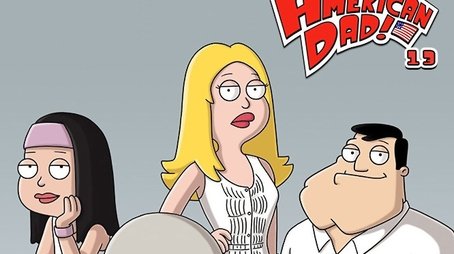


Popular
What happens to Stan when he tries to impress his boss in Season 13?
How does Roger's identity crisis play out in Season 13?
What role does Hayley play in the family dynamics during Season 13?
How does Francine's character develop in Season 13?
What comedic situations arise from Steve's attempts to fit in with his peers in Season 13?
Should I watch it?
Ask Your Own Question

What is the plot?
In the season 13 premiere of American Dad!, titled "The Last Ride of the Dodge City Rambler," Stan Smith is excited about a new Dodge Charger he has purchased. He believes it will help him reclaim his youth and impress his family. However, his excitement quickly turns to frustration when he realizes that his family is not as enthusiastic about the car as he is. Stan's internal conflict begins as he grapples with the idea of being a responsible father versus wanting to relive his glory days.
As Stan takes the car for a spin, he is joined by his friend Roger, who is eager to help him enjoy the vehicle. Roger's antics lead to a series of reckless driving adventures, which only heighten Stan's desire to prove that he can still be fun and adventurous. The two engage in a series of wild escapades, including drag racing and evading the police, which further complicates Stan's relationship with his family.
Meanwhile, Francine, Stan's wife, becomes increasingly concerned about Stan's behavior and the influence Roger has on him. She confronts Stan about his reckless actions, expressing her worries that he is neglecting his responsibilities as a husband and father. This confrontation leads to a heated argument, where Stan insists that he is simply trying to have fun and not lose his identity.
As the episode progresses, Stan's obsession with the car leads him to make a series of poor decisions, including ignoring his family's needs and responsibilities. He becomes more and more consumed by the idea of being the "cool dad," which ultimately alienates him from his family. The tension escalates when Stan decides to take the car on a road trip without informing Francine, further straining their relationship.
During the road trip, Stan and Roger encounter various obstacles, including a run-in with a group of bikers. This confrontation forces Stan to confront the consequences of his reckless behavior. The bikers challenge Stan to a race, and despite his initial hesitation, he accepts, driven by his desire to prove himself. The race is intense, filled with close calls and dangerous maneuvers, showcasing Stan's determination to reclaim his youth.
In the climax of the episode, Stan's reckless driving leads to a crash that damages the car beyond repair. This moment serves as a wake-up call for Stan, forcing him to confront the reality of his actions and the impact they have had on his family. He realizes that his desire to relive his youth has come at a significant cost.
The episode concludes with Stan returning home, where he has a heartfelt conversation with Francine. He apologizes for his behavior and acknowledges the importance of being a responsible husband and father. The family comes together, reaffirming their bond and understanding that while it's important to have fun, it should not come at the expense of their relationships. Stan ultimately decides to let go of the car, symbolizing his acceptance of his role as a family man.









What is the ending?
In the season finale of American Dad! Season 13, titled "Season 13," the episode culminates in a chaotic and humorous resolution involving the Smith family and their various antics. Stan, Francine, Steve, Hayley, and Roger each find themselves in absurd situations that reflect their personalities and relationships. The episode wraps up with a sense of family unity despite the chaos, showcasing the show's signature blend of humor and heart.
As the episode begins, we find Stan Smith in a state of panic as he prepares for a family gathering. He is determined to impress his boss, who is attending, and goes to great lengths to ensure everything is perfect. Stan's anxiety is palpable as he meticulously arranges the house and prepares a lavish meal, driven by his need for approval and validation.
Meanwhile, Francine is caught in a dilemma of her own. She is torn between supporting Stan's ambitions and wanting to enjoy the gathering as a family. Her internal conflict is evident as she tries to balance her role as a supportive wife with her desire for a more relaxed and enjoyable atmosphere.
Steve and Hayley, the Smith children, are also embroiled in their own subplots. Steve is eager to showcase his new talents, hoping to impress his family and gain their recognition. His enthusiasm is infectious, but it also leads to a series of comedic mishaps that threaten to derail the evening. Hayley, on the other hand, is more cynical and skeptical about the gathering, often providing a counterpoint to Steve's optimism. Her interactions with her brother reveal the sibling dynamics at play, filled with both rivalry and affection.
Roger, the alien and the wild card of the family, adds another layer of chaos to the mix. He has his own agenda, which involves a series of outrageous disguises and schemes that complicate the family gathering. His antics serve as a source of both humor and tension, as he often disrupts Stan's carefully laid plans.
As the evening progresses, the family faces a series of escalating challenges, from unexpected guests to culinary disasters. Each character's motivations and emotional states are laid bare as they navigate the chaos together. Stan's desperation for success clashes with Francine's desire for a more genuine family experience, while Steve's eagerness leads to comedic blunders that highlight his youthful naivety.
In the climax of the episode, the family comes together in a moment of realization. Despite the chaos and the mishaps, they find joy in their shared experiences and the love that binds them. The gathering, which initially seemed like a disaster, transforms into a celebration of their unique family dynamic.
By the end of the episode, Stan learns to appreciate the imperfections of family life, realizing that the true value lies in the connections they share rather than external validation. Francine embraces the chaos, finding joy in the unpredictability of their lives. Steve gains confidence from his attempts to impress his family, while Hayley softens her cynicism, recognizing the importance of family support.
Roger, ever the unpredictable element, remains a source of laughter and chaos, but his presence reinforces the idea that family is not just about blood relations but also about the bonds formed through shared experiences.
In conclusion, the season finale of American Dad! Season 13 encapsulates the essence of the Smith family: chaotic, loving, and ultimately united in their quirks and imperfections. Each character's journey throughout the episode highlights their growth and the importance of family, leaving viewers with a sense of warmth and humor as the credits roll.
Is there a post-credit scene?
In the episode "Season 13" of American Dad!, there is indeed a post-credit scene. After the main storyline concludes, the scene shifts to a humorous moment featuring Roger. He is seen in his alien form, sitting in a lavishly decorated room filled with various items that reflect his many personas. Roger is engaged in a comical monologue, expressing his thoughts on the absurdity of the events that just transpired in the episode. His tone is both sarcastic and self-aware, as he often breaks the fourth wall, addressing the audience directly.
As he continues, he humorously critiques the show's own narrative choices, making light of the typical tropes found in animated sitcoms. The scene encapsulates Roger's flamboyant personality and his tendency to be meta-commentary on the series itself. The post-credit moment serves as a light-hearted wrap-up, leaving viewers with a chuckle and a reminder of Roger's unpredictable nature.
What happens to Stan when he tries to impress his boss in Season 13?
In Season 13, Stan Smith goes to great lengths to impress his boss, Avery Bullock. He becomes overly competitive and ends up sabotaging his own efforts. This leads to a series of comedic mishaps that highlight Stan's desperation for approval and his tendency to take things too far.
How does Roger's identity crisis play out in Season 13?
Throughout Season 13, Roger grapples with his various personas and the impact they have on his relationships with the Smith family. He experiences an identity crisis that leads him to question who he truly is, resulting in humorous yet poignant moments as he tries to find a balance between his many alter egos.
What role does Hayley play in the family dynamics during Season 13?
In Season 13, Hayley Smith's character evolves as she navigates her relationship with her father, Stan. She often challenges his conservative views, leading to heated debates that reveal the underlying love and tension in their father-daughter relationship. Her activism and independence are central to her character arc this season.
How does Francine's character develop in Season 13?
Francine Smith experiences significant character development in Season 13 as she confronts her own insecurities and desires. She embarks on a journey of self-discovery, which includes exploring her passions outside of being a housewife, leading to moments of empowerment and growth that affect her relationship with Stan.
What comedic situations arise from Steve's attempts to fit in with his peers in Season 13?
In Season 13, Steve Smith faces various comedic challenges as he tries to fit in with his peers. His awkwardness and lack of social skills lead to a series of humorous situations, including misguided attempts to impress girls and navigate the complexities of teenage life, showcasing his struggles for acceptance and identity.
Is this family friendly?
"American Dad!" is known for its satirical and often edgy humor, which may not be suitable for all audiences, especially children or sensitive viewers. In Season 13, there are several aspects that could be considered objectionable or upsetting:
-
Adult Themes: The show frequently explores themes related to politics, sexuality, and social issues, often in a humorous but provocative manner.
-
Violence and Gore: Some episodes contain cartoonish violence, including slapstick humor that may involve injury or danger, which could be unsettling for younger viewers.
-
Strong Language: While the show does not typically use explicit language, there are instances of mild profanity and suggestive dialogue that may not be appropriate for children.
-
Sexual Content: There are jokes and scenarios that involve sexual innuendos or situations that may be inappropriate for a younger audience.
-
Substance Use: References to alcohol and drug use are present, often depicted in a comedic light but still potentially concerning for sensitive viewers.
-
Dark Humor: The show often employs dark humor that can touch on sensitive subjects, which may not resonate well with all viewers.
These elements contribute to the show's adult-oriented nature, making it less suitable for children or those who are sensitive to such content.