
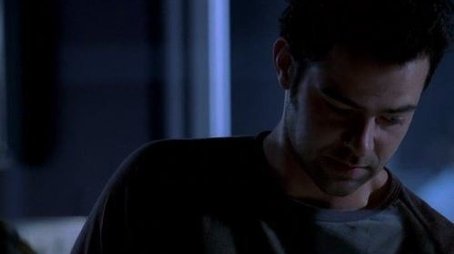


Popular
What role does the character Horatio Caine play in the investigation of the slaughterhouse murders?
How does the character Calleigh Duquesne contribute to the investigation in 'Slaughterhouse'?
What evidence do the CSI team find that leads them to suspect a connection between the victims?
What is the significance of the character Eric Delko's background in the episode?
How does the episode 'Slaughterhouse' explore the theme of justice through the character of Alexx Woods?
Should I watch it?
Ask Your Own Question

What is the plot?
The episode "Slaughterhouse" begins with a gruesome discovery when a group of teenagers exploring an abandoned slaughterhouse stumble upon a body hanging from a meat hook. The victim is identified as a young woman named Angela, who has been brutally murdered. The scene is chaotic, with the teens in shock and the Miami-Dade Police Department quickly arriving to secure the area.
Horatio Caine, the lead investigator, arrives at the scene and assesses the situation. He is visibly disturbed by the brutality of the crime but maintains his composure as he begins to gather evidence. He instructs his team, including Calleigh Duquesne and Eric Delko, to collect samples and document the scene meticulously. The atmosphere is tense as they work, with the stench of decay and the sight of the slaughterhouse adding to the grim setting.
As the investigation unfolds, the team learns that Angela was a waitress at a local diner. They visit the diner to speak with her coworkers and gather more information about her life. The diner staff reveals that Angela had been acting strangely in the days leading up to her death, hinting at possible trouble. They mention a man named Victor, who had been seen with her frequently. This leads the team to suspect that Victor may be involved in her murder.
The investigation takes a turn when they discover that Victor has a criminal record and a history of violence. Horatio and his team track him down, but when they confront him, he denies any involvement in Angela's death. However, his nervous demeanor raises suspicions. The team decides to dig deeper into Victor's background, hoping to find more evidence linking him to the crime.
Meanwhile, Calleigh and Eric analyze the evidence collected from the slaughterhouse. They find traces of blood and hair that do not belong to Angela, suggesting that there may be another suspect involved. This leads them to explore the possibility of a serial killer operating in the area. The tension escalates as they realize that time is of the essence, and they must act quickly to prevent another murder.
As the investigation progresses, the team uncovers a connection between Angela and a group of illegal immigrants who had been working at the slaughterhouse. They learn that Angela had been trying to help them escape their dire situation, which may have put her in danger. This revelation shifts the focus of the investigation, and the team begins to look for anyone who may have wanted to silence her.
In a pivotal moment, Horatio receives a tip about a man who had been seen lurking around the slaughterhouse on the night of Angela's murder. The team sets up a sting operation to catch him. They lay in wait, and when the suspect arrives, they confront him. A tense standoff ensues, but the suspect attempts to flee. A chase breaks out through the darkened streets, with Horatio and his team in pursuit.
The chase culminates in a dramatic confrontation in an alleyway. The suspect, cornered and desperate, pulls a weapon. Horatio, remaining calm, talks him down, urging him to surrender peacefully. After a tense moment, the suspect drops the weapon, and the team apprehends him. They discover that he is connected to the illegal immigrant group and had been trying to protect his own interests by killing Angela.
With the suspect in custody, the team gathers enough evidence to charge him with Angela's murder. The episode concludes with Horatio reflecting on the case, the brutality of the crime, and the lives affected by the tragedy. The emotional weight of the investigation lingers as the team prepares for their next case, knowing that the streets of Miami hold many more secrets.








What is the ending?
In the ending of "Slaughterhouse," the team uncovers the truth behind a series of gruesome murders linked to a slaughterhouse. They confront the killer, leading to a tense standoff. Ultimately, the murderer is apprehended, and the team reflects on the case, highlighting their commitment to justice.
As the episode draws to a close, the scene shifts to the Miami skyline at dusk, casting a warm glow over the city. The camera pans down to the bustling streets, where the aftermath of the investigation lingers in the air.
The narrative begins with Horatio Caine, the lead investigator, standing outside the slaughterhouse, his expression a mix of determination and resolve. He has just pieced together the final clues that connect the murders to the facility. The tension is palpable as he briefs his team, including Calleigh Duquesne and Eric Delko, on the plan to confront the suspect. Each member of the team is focused, their faces reflecting the weight of the case they have been working on.
As they enter the slaughterhouse, the atmosphere is thick with dread. The sounds of machinery and the faint smell of blood create an unsettling backdrop. Horatio leads the way, his instincts sharp, aware that they are walking into a dangerous situation. The team splits up to cover more ground, each member aware of the stakes involved.
Calleigh, with her keen eye for detail, discovers evidence that confirms their suspicions about the suspect's involvement. She finds a hidden room filled with disturbing photographs of the victims, which sends a chill down her spine. Her determination to bring justice for the victims fuels her resolve, and she quickly relays the information to Horatio.
Meanwhile, Eric Delko, who has been tracking the suspect's movements, spots him trying to escape. A tense chase ensues through the dimly lit corridors of the slaughterhouse. Eric's adrenaline surges as he navigates the maze of machinery, his heart racing with the urgency of the moment. He finally corners the suspect, leading to a confrontation that is both physical and psychological. The suspect, a man driven by his own demons, reveals his twisted rationale for the murders, showcasing a chilling glimpse into his psyche.
As the standoff reaches its climax, Horatio arrives just in time to back up Eric. The tension escalates, and with a calm yet authoritative presence, Horatio manages to de-escalate the situation. He speaks to the suspect, appealing to his humanity, which ultimately leads to the suspect's surrender. The moment is heavy with emotion, as the team realizes the gravity of what they have just witnessed.
In the aftermath, the team gathers outside the slaughterhouse, the weight of the case still hanging in the air. Horatio reflects on the lives lost and the impact of the crimes on the community. Calleigh and Eric stand beside him, their expressions somber yet resolute. They understand that their work is far from over, but they take solace in the fact that they have brought a measure of justice to the victims.
As the sun sets over Miami, the team shares a moment of camaraderie, knowing that they have faced darkness together and emerged stronger. Each character is left with a sense of purpose, their commitment to their work reaffirmed. Horatio, with his unwavering dedication to justice, leads the way as they prepare for the next case, ready to confront whatever challenges lie ahead.
Is there a post-credit scene?
In the episode "Slaughterhouse" from season 1 of CSI: Miami, there is no post-credit scene. The episode concludes without any additional scenes or content after the credits roll. The focus remains on the resolution of the case and the emotional arcs of the characters throughout the episode.
What role does the character Horatio Caine play in the investigation of the slaughterhouse murders?
Horatio Caine, portrayed by David Caruso, takes on the role of the lead investigator in the slaughterhouse murders. He is determined and focused, showcasing his leadership skills as he guides his team through the complex case. His emotional state is one of resolve, as he is driven by a strong sense of justice and a desire to protect the victims' families.
How does the character Calleigh Duquesne contribute to the investigation in 'Slaughterhouse'?
Calleigh Duquesne, played by Emily Procter, contributes significantly to the investigation by utilizing her expertise in ballistics. She examines the evidence found at the crime scene, including bullet casings, and works to connect the dots between the victims and the potential suspects. Her emotional state reflects a mix of determination and empathy, as she is deeply affected by the brutality of the crimes.
What evidence do the CSI team find that leads them to suspect a connection between the victims?
The CSI team discovers that the victims all have ties to the same slaughterhouse, which serves as a critical piece of evidence linking them together. They find personal items and traces of blood that suggest a pattern of violence associated with the location. This revelation heightens the tension and urgency of the investigation, as the team realizes they are dealing with a serial killer.
What is the significance of the character Eric Delko's background in the episode?
Eric Delko, portrayed by Adam Rodriguez, has a background in law enforcement that plays a crucial role in the investigation. His knowledge of the criminal underworld and his connections help the team gather information about the suspects. Delko's emotional state is one of frustration and determination, as he grapples with the violent nature of the case while trying to maintain his professionalism.
How does the episode 'Slaughterhouse' explore the theme of justice through the character of Alexx Woods?
Alexx Woods, played by Khandi Alexander, serves as the medical examiner in the episode, and her character embodies the theme of justice through her dedication to uncovering the truth behind the murders. She performs autopsies with a sense of compassion for the victims, emphasizing the importance of giving them a voice even in death. Her emotional state is one of sorrow and resolve, as she seeks to ensure that the victims receive the justice they deserve.
Is this family friendly?
"CSI: Miami," season 1, episode 8, titled "Slaughterhouse," contains several elements that may not be considered family-friendly. Here are some potentially objectionable or upsetting aspects:
-
Graphic Crime Scenes: The episode features detailed depictions of crime scenes, including blood and violence, which may be disturbing for children or sensitive viewers.
-
Murder Investigation: The central theme revolves around a murder investigation, which includes discussions of death and the impact on victims' families.
-
Animal Cruelty: There are references to animal slaughter and the treatment of animals, which could be upsetting for viewers who are sensitive to such topics.
-
Intense Emotional Reactions: Characters display strong emotional responses to the events, including grief and anger, which may be intense for younger audiences.
-
Mature Themes: The episode touches on themes of morality and the darker aspects of human nature, which may not be suitable for all viewers.
These elements contribute to a tone that is more appropriate for mature audiences rather than children.