


Popular
How does Horatio Caine's leadership style influence the investigation in this episode?
What is the significance of the blood found at the crime scene in 'Blood Brothers'?
What role does Eric Delko play in the investigation of the murder?
How does the relationship between the two brothers impact the investigation?
What emotional struggles does Calleigh Duquesne face during the episode?
Should I watch it?
Ask Your Own Question

What is the plot?
The episode "Blood Brothers" begins with a dramatic scene at a Miami nightclub where a shooting occurs. The camera pans through the chaotic environment filled with flashing lights and loud music. As patrons scream and scatter, the focus shifts to a young man named Eric Delko, who is seen trying to help a victim on the ground. The victim, a man named Jesse, is bleeding heavily from a gunshot wound. Eric's urgency is palpable as he attempts to apply pressure to the wound, but Jesse dies in his arms, leaving Eric devastated.
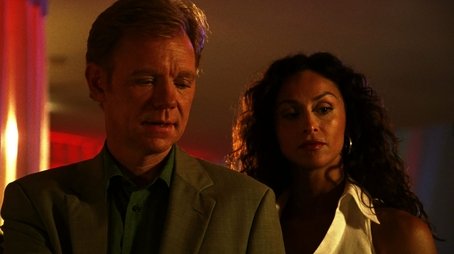
Following the nightclub incident, the scene transitions to the Miami-Dade Crime Lab, where Horatio Caine and his team are called to investigate the shooting. Horatio, with his calm demeanor, reassures Eric that they will find out who is responsible for Jesse's death. The team begins to gather evidence from the crime scene, including bullet casings and witness statements. The emotional weight of the situation is evident on Eric's face as he grapples with the loss of his friend.
As the investigation unfolds, the team discovers that Jesse was involved in a gang-related conflict. They learn that he was a member of a local gang, which leads them to suspect that the shooting was a targeted hit. The team interviews witnesses who provide conflicting accounts of the events leading up to the shooting. Tension builds as they realize that the gang's influence in the area complicates their investigation.
Meanwhile, Eric is personally affected by the case, feeling a deep sense of guilt and anger over Jesse's death. He begins to take risks in his pursuit of justice, pushing the boundaries of the investigation. His emotional state becomes increasingly volatile, leading to friction with his colleagues, particularly with Horatio, who tries to keep him grounded.
The investigation takes a turn when the team identifies a suspect, a rival gang member named Carlos. They track him down and confront him, but Carlos denies any involvement in the shooting. The confrontation escalates, and Carlos attempts to flee, leading to a tense chase through the streets of Miami. Eric, fueled by his emotions, is determined to catch Carlos, but Horatio intervenes, reminding him to stay focused on the evidence rather than personal vendettas.
As the episode progresses, the team uncovers more details about the gang's operations and the underlying tensions between rival factions. They discover that Jesse was trying to leave the gang life behind, which adds complexity to the case. The emotional stakes rise as Eric learns more about Jesse's struggles and the choices that led to his tragic end.
In a pivotal moment, the team finds a key piece of evidence: a surveillance video from the nightclub that captures the shooting. They analyze the footage and identify the shooter, confirming Carlos's involvement. This revelation reignites Eric's determination to bring Carlos to justice, but it also puts him at odds with Horatio, who emphasizes the importance of following protocol.
The climax of the episode occurs when the team sets up a sting operation to apprehend Carlos. They use Eric as bait, knowing that Carlos will likely come after him. The tension is palpable as Eric prepares for the confrontation, grappling with his fear and anger. When Carlos arrives, a violent altercation ensues. Eric and Carlos engage in a physical fight, with Eric using his training to subdue Carlos. The struggle is intense, with both men exchanging blows, but ultimately, Eric gains the upper hand and restrains Carlos.
In the aftermath of the confrontation, Carlos is arrested, and the team reflects on the case. Eric is left to process his emotions regarding Jesse's death and the choices he made during the investigation. Horatio offers support, reminding Eric of the importance of justice and the impact of their work. The episode concludes with Eric standing alone, contemplating the loss of his friend and the harsh realities of the world they navigate as crime scene investigators.








What is the ending?
In the ending of "Blood Brothers," the team uncovers the truth behind the murder of a young man named Eric, which leads them to a shocking revelation about the victim's brother, who is involved in a gang. The episode concludes with the resolution of the case, but it leaves the characters reflecting on the complexities of family loyalty and the consequences of choices made in the heat of the moment.
As the episode draws to a close, the scene shifts to the Miami-Dade Crime Lab, where Horatio Caine and his team gather to discuss the case's resolution. They have successfully identified the murderer, who is revealed to be the brother of the victim, driven by a mix of loyalty and desperation. The emotional weight of the case hangs heavily in the air as the team contemplates the tragic circumstances that led to the crime.
The final moments show Horatio standing outside, looking out over the Miami skyline. He reflects on the nature of brotherhood and the choices that bind people together, even when those choices lead to devastating outcomes. The camera pans away, leaving viewers with a sense of the ongoing struggle between familial loyalty and moral responsibility.
In a more detailed narrative, the ending unfolds as follows:
The investigation reaches its climax in the Miami-Dade Crime Lab, where Horatio Caine, played by David Caruso, gathers his team to piece together the final elements of the case. The atmosphere is tense, filled with a mix of relief and sorrow as they discuss the evidence that has led them to the truth. The team has uncovered that Eric, the victim, was killed by his own brother, who was trying to protect him from a life of crime and violence.
As they delve deeper into the motivations behind the murder, the emotional stakes rise. The brother, who had been trying to steer Eric away from gang life, ultimately succumbs to the very violence he sought to escape. The team grapples with the implications of this revelation, recognizing the tragic irony of a brother's love manifesting in such a destructive way.
In a poignant scene, Horatio stands alone outside the lab, gazing at the vibrant Miami skyline. The sun sets in the background, casting a warm glow over the city, contrasting with the dark themes of the case. He reflects on the nature of family bonds and the choices that can lead to both protection and destruction. The weight of the case lingers in his mind, as he considers how loyalty can sometimes lead to tragic outcomes.
The episode concludes with a sense of unresolved tension. While the case is solved, the emotional scars remain. Horatio's expression reveals a deep understanding of the complexities of human relationships, particularly the ties that bind brothers together, even when those ties lead to heartache. The camera slowly pulls away, leaving viewers with a haunting reminder of the fragility of life and the consequences of our choices.
As the credits roll, the fate of the main characters is clear: Horatio continues his role as a protector of justice, forever changed by the cases he encounters. The brother, now facing the consequences of his actions, is left to grapple with the loss of his sibling and the life he chose. The episode closes on a note of reflection, emphasizing the ongoing struggle between love, loyalty, and the harsh realities of life in Miami.
Is there a post-credit scene?
In the episode "Blood Brothers" from season 2 of CSI: Miami, there is no post-credit scene. The episode concludes without any additional scenes or content after the credits roll. The focus remains on the resolution of the main storyline involving the investigation of a murder that ties back to a complex relationship between two brothers. The episode wraps up with the characters reflecting on the case and the emotional weight it carries, but there are no further scenes or teasers following the credits.
How does Horatio Caine's leadership style influence the investigation in this episode?
Horatio Caine's leadership style is characterized by his calm demeanor and strong moral compass. In 'Blood Brothers', he guides his team with a focus on justice and empathy, which helps to motivate them and fosters a sense of unity as they navigate the emotional challenges of the case.
What is the significance of the blood found at the crime scene in 'Blood Brothers'?
The blood found at the crime scene is crucial as it leads the CSI team to uncover a deeper connection between the victims and the suspects. It serves as a key piece of evidence that helps to unravel the complex relationships and motivations behind the crime.
What role does Eric Delko play in the investigation of the murder?
Eric Delko plays a pivotal role in the investigation as he utilizes his expertise in forensics to analyze the evidence. His determination to uncover the truth drives him to take risks, and his personal connection to the case adds emotional depth to his character.
How does the relationship between the two brothers impact the investigation?
The relationship between the two brothers is central to the plot, as it reveals themes of loyalty, betrayal, and the complexities of familial bonds. Their dynamic complicates the investigation, as personal feelings and past grievances come to the forefront, influencing the actions of those involved.
What emotional struggles does Calleigh Duquesne face during the episode?
Calleigh Duquesne faces emotional struggles as she grapples with the moral implications of the case. Her dedication to her work is tested as she confronts the darker aspects of human nature, leading her to reflect on her own values and the impact of the crime on the victims' families.
Is this family friendly?
"CSI: Miami" Season 2, Episode 1, titled "Blood Brothers," contains several elements that may not be suitable for children or sensitive viewers. Here are some potentially objectionable or upsetting aspects:
-
Graphic Crime Scenes: The episode opens with a murder investigation, featuring detailed depictions of a crime scene that may be disturbing to younger audiences.
-
Violence: There are scenes that involve discussions of violence and the aftermath of violent acts, which can be intense and unsettling.
-
Mature Themes: The episode explores themes of betrayal, revenge, and familial conflict, which may be complex and heavy for younger viewers to process.
-
Emotional Turmoil: Characters experience significant emotional distress, including grief and anger, which may be intense for sensitive viewers.
-
Language: There may be instances of strong language or adult dialogue that could be inappropriate for children.
These elements contribute to the overall tone of the show, which is geared more towards an adult audience due to its mature content.