
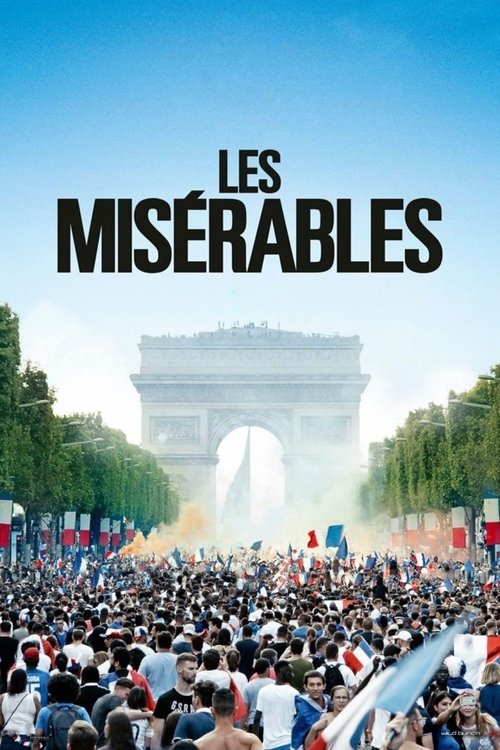





















Popular
What motivates Stéphane to join the anti-crime unit in Montfermeil?
How does the character of Issa influence the events in the film?
What role does the character of Chris play in the dynamics of the police unit?
How does the film depict the relationship between the police and the community?
What is the significance of the drone footage in the film?
Should I watch it?
Ask Your Own Question

What is the plot?
Sorry, we aren't able to watch and write up a full detailed plot yet. Check back in a few days.







What is the ending?
In the ending of the 2019 film "Les Misérables," the story culminates in a violent confrontation between the police and the residents of a Parisian suburb. The main characters, including Stéphane, Pento, and the young boy Issa, face the consequences of their actions as tensions rise. The film concludes with a sense of unresolved conflict, highlighting the ongoing struggles of the marginalized in society.
As the film approaches its climax, the atmosphere in the suburb becomes increasingly charged. Stéphane, who has been trying to navigate the complexities of his new role as a police officer, finds himself caught between his duty and his empathy for the community. The tension escalates when a video of a police officer's violent act against a young boy, Issa, circulates, igniting outrage among the residents.
In a pivotal scene, the community gathers, fueled by anger and a desire for justice. Stéphane, witnessing the unrest, feels the weight of his position as a police officer. He is torn between his colleagues, who are prepared to respond with force, and the residents, who are demanding accountability. The conflict reaches a boiling point when the police decide to take action against the protesters.
As the confrontation unfolds, chaos erupts. The police clash with the residents, and the violence escalates. Stéphane, trying to mediate, finds himself in a precarious situation. He is aware that his actions could either protect or endanger the very people he has come to empathize with. In the midst of the turmoil, Pento, a friend of Stéphane, becomes increasingly aggressive, driven by his own frustrations and anger towards the police.
In a heartbreaking moment, Issa, the young boy who was initially at the center of the conflict, becomes a casualty of the violence. His fate serves as a tragic reminder of the consequences of systemic oppression and the cycle of violence that ensues when communication breaks down. The community's grief and anger are palpable, and the film captures the raw emotions of loss and despair.
As the dust settles, the film leaves viewers with a haunting image of the aftermath. Stéphane, now deeply affected by the events, reflects on the futility of the violence and the ongoing struggles faced by the marginalized. The film concludes without a clear resolution, emphasizing the persistent issues of inequality and injustice that continue to plague society.
In the end, Stéphane is left grappling with his role in the conflict, Pento's aggressive actions have led to further division, and Issa's tragic fate serves as a poignant reminder of the stakes involved. The film closes on a note of ambiguity, leaving the audience to ponder the complexities of justice, community, and the human condition.
Is there a post-credit scene?
The 2019 film "Les Misérables," directed by Ladj Ly, does not feature a post-credit scene. The film concludes with a powerful and poignant ending that encapsulates the themes of social injustice and the struggles of the marginalized in contemporary France. The narrative wraps up with a focus on the characters' fates and the ongoing cycle of violence and hope, leaving the audience with a lasting emotional impact without any additional scenes after the credits.
What motivates Stéphane to join the anti-crime unit in Montfermeil?
Stéphane, a new member of the anti-crime unit, is motivated by a desire to protect his community and uphold the law. He is also driven by a personal sense of justice, having recently moved to Montfermeil and wanting to establish himself in his new role. His initial idealism is challenged as he witnesses the complexities and tensions within the community.
How does the character of Issa influence the events in the film?
Issa, a young boy from the neighborhood, becomes a pivotal character when he steals a lion cub from a circus. His actions set off a chain reaction of events that escalate tensions between the local youth and the police. His vulnerability and the consequences of his actions highlight the struggles of youth in a marginalized community, ultimately leading to a violent confrontation.
What role does the character of Chris play in the dynamics of the police unit?
Chris, a member of the anti-crime unit, embodies a more aggressive and confrontational approach to policing. His character is driven by a desire for power and control, often resorting to intimidation and violence. This creates a stark contrast with Stéphane's more cautious and empathetic approach, leading to internal conflict within the unit and raising questions about the ethics of their methods.
How does the film depict the relationship between the police and the community?
The film portrays a fraught relationship between the police and the community of Montfermeil, characterized by mistrust and hostility. The police are seen as an occupying force rather than protectors, leading to escalating tensions. This dynamic is illustrated through various confrontations, highlighting the systemic issues of inequality and the impact of police brutality on the lives of the residents.
What is the significance of the drone footage in the film?
The drone footage serves as a critical narrative device that captures the unfolding chaos and violence from an omniscient perspective. It symbolizes the surveillance and scrutiny faced by the community, while also providing a stark contrast to the ground-level experiences of the characters. The footage ultimately plays a crucial role in documenting the events that lead to the climax, emphasizing the themes of visibility and accountability.
Is this family friendly?
The 2019 film "Les Misérables" is a contemporary adaptation inspired by Victor Hugo's classic novel, set in the suburbs of Paris. While it addresses significant social issues, it contains several elements that may be objectionable or upsetting for children or sensitive viewers.
-
Violence and Tension: The film features scenes of civil unrest and violence, including clashes between police and protestors. These moments can be intense and may evoke feelings of fear or anxiety.
-
Police Brutality: There are depictions of aggressive police behavior, which can be disturbing and may raise questions about authority and justice.
-
Social Injustice: The film explores themes of poverty, inequality, and desperation, which may be heavy for younger audiences to process.
-
Emotional Distress: Characters experience significant emotional turmoil, including loss, betrayal, and hopelessness, which can be quite intense and may resonate deeply with sensitive viewers.
-
Language: The dialogue includes strong language that may not be suitable for younger audiences.
-
Substance Use: There are references to drug use and the impact of addiction on individuals and families, which may be troubling for some viewers.
Overall, while the film is a powerful narrative about social issues, its mature themes and intense scenes may not be appropriate for all audiences, particularly children.








