


Popular
What is the relationship between Frank and his brother, and how does it affect the group dynamics?
How does the gang react to the arrival of Frank's brother?
What role does Charlie play in the episode regarding Frank's brother?
How does Dee's character develop in this episode in relation to Frank's brother?
What is the significance of the 'family' theme in the interactions between Frank and Gordon?
Should I watch it?
Ask Your Own Question

What is the plot?
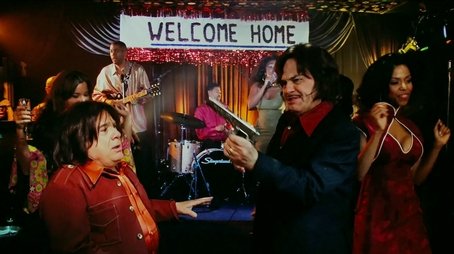
The episode begins with Frank revealing to the gang that he has a brother named "Gino" who is a successful businessman. Frank expresses a mix of pride and jealousy, indicating that Gino has always overshadowed him. The gang is intrigued and encourages Frank to invite Gino to Philadelphia, hoping to exploit the situation for their own gain.
Frank decides to invite Gino over for dinner, and the gang prepares for his arrival. They are excited about the prospect of meeting someone who is successful and wealthy, contrasting with their own chaotic lives. As they set the table, each member of the gang shares their expectations and hopes for Gino, revealing their motivations for wanting to impress him.
When Gino arrives, he is portrayed as a polished and sophisticated individual, which immediately puts Frank on edge. The gang is enamored with Gino, showering him with compliments and attention. Frank, feeling insecure, tries to one-up Gino but only ends up embarrassing himself. The tension between the brothers becomes palpable as Gino effortlessly charms everyone around him.
During dinner, the gang engages in a series of increasingly ridiculous conversations, showcasing their usual antics. Gino remains composed, while Frank grows more agitated. The gang's attempts to impress Gino backfire, leading to awkward moments and misunderstandings. Frank's jealousy escalates, and he begins to act out, trying to sabotage Gino's image in front of the gang.
As the night progresses, Frank's behavior becomes more erratic. He starts to reveal embarrassing stories about Gino from their childhood, attempting to diminish Gino's status. However, Gino takes it in stride, further frustrating Frank. The gang, caught in the middle, is entertained by the sibling rivalry but also starts to feel uncomfortable with Frank's increasingly desperate attempts to regain control of the situation.
In a pivotal moment, Frank challenges Gino to a series of competitions to prove who is the better brother. The gang enthusiastically supports this idea, eager to see the showdown. They set up a series of ridiculous challenges, including a drinking contest and a physical challenge, which only serve to highlight Frank's insecurities and Gino's superiority.
As the competitions unfold, Frank struggles to keep up with Gino, who excels in every challenge. The gang cheers for Gino, further alienating Frank. In a moment of desperation, Frank resorts to cheating in the drinking contest, but it backfires, leading to a chaotic scene where Frank ends up embarrassing himself in front of everyone.
The episode reaches its climax when Frank, feeling completely defeated, confronts Gino about their past and the reasons for his jealousy. Gino reveals that he has always admired Frank for his wild spirit and carefree attitude, which Frank had never realized. This moment of vulnerability shifts the dynamic between the brothers, as Frank begins to understand that Gino's success does not diminish his own worth.
In the final scenes, the gang reflects on the events of the night. They express their mixed feelings about Gino, realizing that while he is successful, he is also somewhat boring compared to Frank. Frank, having had a moment of clarity, decides to embrace his own identity rather than compete with Gino. The episode ends with the gang returning to their usual antics, leaving the tension between the brothers unresolved but with a newfound understanding.








What is the ending?
In the ending of "Frank's Brother," the gang's plans to exploit Frank's brother, who is a successful businessman, backfire. Frank's brother, who is revealed to be a more competent and morally upright person than Frank, ultimately rejects the gang's schemes. The episode concludes with Frank feeling a mix of pride and disappointment in his brother, while the rest of the gang is left frustrated and empty-handed.
As the episode progresses towards its conclusion, the gang's initial excitement about Frank's brother, who they believe can help them financially, turns into a series of misadventures. They attempt to manipulate him for their own gain, but their plans unravel as Frank's brother proves to be more savvy and principled than they anticipated.
In the final scenes, Frank's brother confronts the gang about their intentions, leading to a tense moment where the gang realizes they have underestimated him. Frank, caught between his loyalty to his brother and his desire for the gang's approval, experiences a conflict of emotions. Ultimately, Frank's brother decides to cut ties with the gang, leaving Frank to grapple with his feelings of inadequacy and familial loyalty.
The episode closes with the gang reflecting on their failed attempts, each character dealing with their own sense of loss and frustration. Frank is left to ponder his relationship with his brother, while the rest of the gang is left without the financial windfall they had hoped for, highlighting their perpetual cycle of schemes and failures.
Is there a post-credit scene?
In the episode "Frank's Brother" from season 7 of "It's Always Sunny in Philadelphia," there is no post-credit scene. The episode concludes without any additional content after the credits roll. The focus remains on the main storyline throughout the episode, which revolves around Frank's estranged brother, who is introduced and creates tension among the gang. The lack of a post-credit scene keeps the emphasis on the chaotic dynamics and emotional conflicts that unfold during the episode.
What is the relationship between Frank and his brother, and how does it affect the group dynamics?
Frank's brother, who is revealed to be a successful and wealthy man named 'Gordon', has a strained relationship with Frank. Gordon's success highlights Frank's own failures and insecurities, leading to tension within the group as they navigate their feelings about wealth and family. The gang's interactions with Gordon reveal their own motivations and desires, particularly as they try to exploit his wealth.
How does the gang react to the arrival of Frank's brother?
The gang is initially excited about Frank's brother, Gordon, because of his wealth and success. However, as they spend more time with him, their excitement turns to jealousy and resentment, particularly from Frank, who feels overshadowed by Gordon's accomplishments. This leads to a series of comedic and chaotic interactions as they try to one-up each other.
What role does Charlie play in the episode regarding Frank's brother?
Charlie becomes enamored with Gordon, seeing him as a father figure due to his own complicated family dynamics. He is drawn to Gordon's success and charm, which creates a humorous contrast to Frank's more chaotic and irresponsible nature. Charlie's loyalty to Frank is tested as he navigates his admiration for Gordon.
How does Dee's character develop in this episode in relation to Frank's brother?
Dee is initially excited about the prospect of being associated with someone wealthy like Gordon. However, as the episode progresses, her insecurities surface, particularly when she realizes that Gordon is not interested in her. This leads to comedic moments where Dee tries to impress Gordon, ultimately highlighting her desperation for validation.
What is the significance of the 'family' theme in the interactions between Frank and Gordon?
The family theme is central to the episode, as Frank's feelings of inadequacy and jealousy towards Gordon's success are explored. Their interactions reveal deep-seated issues of abandonment and rivalry, showcasing how their family history has shaped their current lives. This theme resonates throughout the episode, influencing the gang's behavior and decisions.
Is this family friendly?
"It's Always Sunny in Philadelphia" is known for its dark humor and adult themes, and "Frank's Brother" is no exception. Here are some potentially objectionable or upsetting aspects that may not be suitable for children or sensitive viewers:
-
Strong Language: The episode features frequent use of profanity, which may be inappropriate for younger audiences.
-
Substance Abuse: There are references to alcohol and drug use, which are depicted in a comedic but potentially troubling manner.
-
Dark Humor: The show often tackles sensitive topics with a satirical edge, which may not resonate well with all viewers.
-
Family Dysfunction: The episode explores themes of family conflict and dysfunction, which could be upsetting for some.
-
Violence and Threats: There are moments of implied violence and aggressive behavior among characters, which may be disturbing.
-
Sexual Content: The episode includes suggestive themes and innuendos that are not suitable for children.
These elements contribute to the show's adult-oriented nature and may not be appropriate for a family-friendly viewing experience.