


Popular
Should I watch it?
Ask Your Own Question

What is the plot?
The episode begins with the Gang sitting in Paddy's Pub, where they are discussing the recent allegations of sexual misconduct that have surfaced in the media. The conversation quickly turns to their own past behaviors, with each member reflecting on their questionable actions. Dennis, feeling particularly defensive, insists that he has never done anything wrong, while the others begin to recount various incidents that could be considered inappropriate.
As the discussion escalates, the Gang decides to hold a meeting to address their past actions and to create a "code of conduct" to ensure that they behave appropriately moving forward. They gather in the back room of the bar, where they attempt to establish rules. Charlie suggests that they should all share their stories of misconduct, but the others are hesitant. Dee, feeling particularly vulnerable, shares a story about a time when she was objectified, which leads to a heated debate about the nature of consent and accountability.
The meeting takes a chaotic turn when Frank, who is largely unconcerned about the topic, suggests that they should just ignore the issue and continue with their lives. This infuriates the others, especially Mac, who is trying to take the situation seriously. Mac proposes that they should all apologize for their past actions, but the group struggles to come to a consensus on what constitutes an apology and who should apologize to whom.
As tensions rise, the Gang decides to role-play various scenarios to better understand the impact of their actions. They take turns acting out different situations, which leads to absurd and exaggerated portrayals of their past behaviors. This exercise quickly devolves into chaos, with each member becoming increasingly defensive and combative about their roles and the accusations being thrown around.
In a moment of clarity, the Gang realizes that they are not making any progress and that their attempts to address the issue are futile. They begin to turn on each other, with accusations flying and personal grievances coming to the forefront. The atmosphere becomes increasingly hostile, and the Gang members start to question their friendships and the dynamics of their relationships.
As the meeting reaches a breaking point, they decide to take a break and step outside for some fresh air. However, the tension remains palpable, and they continue to bicker and argue about their past actions. Each member expresses their frustrations, and the conversation shifts to how they can move forward without addressing the underlying issues.
Ultimately, the Gang returns to the bar, where they attempt to put the meeting behind them. They agree to go back to their usual antics and forget about the serious discussions they had. The episode ends with them engaging in their typical reckless behavior, highlighting the futility of their earlier attempts to confront their past. The cycle of denial and avoidance continues, leaving the audience with a sense of unresolved tension among the characters.









What is the ending?
In the ending of "Time's Up for the Gang," the characters find themselves in a chaotic situation as they confront the consequences of their past actions. After a series of confrontations and revelations, they ultimately decide to take a group photo to commemorate their time together, despite the tension and unresolved issues among them. The episode concludes with the gang's usual disregard for the seriousness of their actions, leaving their fates ambiguous and their relationships intact yet strained.
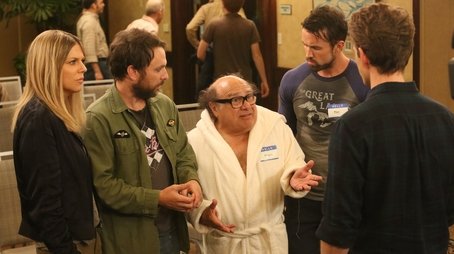
As the episode nears its conclusion, the gang gathers in the bar, the atmosphere thick with tension. They have just participated in a sexual harassment seminar, which has forced them to confront their past behaviors and the impact of their actions on others. The seminar, led by a stern facilitator, has left them feeling defensive and uncomfortable, each member grappling with their own guilt and denial.
Charlie, visibly anxious, fidgets in his seat, trying to process the information presented. He struggles to understand the implications of the seminar, often misinterpreting the facilitator's points. Meanwhile, Dee, who has always sought validation, feels particularly attacked by the seminar's content, leading her to lash out at the others. Her frustration is palpable as she tries to assert her worth in the group.
Dennis, ever the narcissist, attempts to deflect blame, insisting that he is misunderstood and that his actions are often misinterpreted. His arrogance shines through as he tries to manipulate the conversation to focus on his own experiences rather than acknowledging the group's collective issues. Mac, on the other hand, is caught in a whirlwind of confusion, trying to reconcile his identity with the harsh truths being laid bare. He feels the weight of the seminar's message but struggles to articulate his feelings.
As the gang's discussions escalate, they begin to turn on one another, revealing deep-seated resentments and insecurities. The tension reaches a boiling point when they start to share their own stories, each one more outrageous than the last, showcasing their inability to take the seminar seriously. The facilitator's attempts to steer them back to the topic at hand are met with resistance and mockery.
In a moment of clarity, the gang realizes that they need to document this chaotic experience. They decide to take a group photo, a symbolic gesture that encapsulates their dysfunctional bond. As they gather for the picture, the mood shifts slightly; there is a sense of camaraderie, albeit a twisted one. They pose together, their smiles forced but genuine in their own way, capturing the essence of their relationship.
The episode closes with the gang standing together, the camera clicking as they freeze in that moment. Despite the unresolved issues and the serious nature of the seminar, they revert to their usual antics, showcasing their inability to change. The final shot lingers on their faces, a mix of pride and ignorance, leaving viewers with a sense of the gang's perpetual cycle of dysfunction.
In the end, each character remains largely unchanged: Charlie continues to be oblivious, Dee is still seeking validation, Dennis is entrenched in his narcissism, Mac is confused about his identity, and Frank remains the chaotic force that binds them all together. Their fates are intertwined, and while they may have faced the consequences of their actions, they ultimately return to their old ways, highlighting the show's dark humor and commentary on their inability to grow.
Is there a post-credit scene?
In the episode "Time's Up for the Gang," there is indeed a post-credit scene. After the main credits roll, the scene opens with the gang sitting in the bar, still reeling from the events of the episode. They are discussing the fallout from their recent sexual harassment seminar, which they attended in an attempt to address their problematic behavior.
As they talk, the conversation quickly devolves into their usual bickering and self-justifications. Each member of the gang tries to downplay their actions and shift blame onto one another, showcasing their inability to genuinely reflect on their behavior. The scene captures their characteristic lack of self-awareness and highlights the absurdity of their attempts to navigate the serious topic of harassment.
The post-credit scene serves as a humorous reminder of the gang's dysfunction and their refusal to change, leaving viewers with a mix of laughter and disbelief at their antics.
What is the main issue the Gang faces in 'Time's Up for the Gang'?
The main issue the Gang faces is a sexual harassment seminar that they are required to attend after a series of complaints about their behavior. This forces them to confront their past actions and the toxic culture they have created.
How does Charlie react to the sexual harassment seminar?
Charlie is largely oblivious to the seriousness of the seminar. He struggles to understand the concept of consent and often makes inappropriate comments, showcasing his naivety and lack of awareness regarding the topic.
What role does Dee play during the seminar?
Dee attempts to assert herself as a victim of the Gang's behavior, trying to gain sympathy and attention. However, her attempts are often undermined by the Gang's dismissive attitudes and her own contradictory actions.
How does Mac's character evolve during the episode?
Mac grapples with his identity and the way he has treated women. He tries to take the seminar seriously, but his internal conflict about his sexuality and how it relates to his past behavior complicates his understanding of the issues being discussed.
What is Dennis's reaction to the seminar and how does it reflect his character?
Dennis is initially dismissive and defensive about the seminar, believing he has done nothing wrong. His reaction highlights his narcissism and inability to accept responsibility for his actions, ultimately leading to a breakdown as he confronts the reality of his behavior.
Is this family friendly?
"It's Always Sunny in Philadelphia" is known for its dark humor and adult themes, and "Time's Up for the Gang" is no exception. Here are some potentially objectionable or upsetting aspects that may not be suitable for children or sensitive viewers:
- Sexual Harassment Themes: The episode deals with issues of sexual harassment in a satirical manner, which may be uncomfortable for some viewers.
- Inappropriate Humor: The gang's discussions and jokes often cross lines of decency, including crude language and sexual innuendos.
- Manipulative Behavior: Characters engage in morally questionable actions and manipulative behavior, which may not be suitable for younger audiences.
- Violent Undertones: There are moments that suggest violence or aggressive behavior, typical of the show's tone.
- Substance Use: References to alcohol and drug use are prevalent, consistent with the show's themes.
Overall, the episode contains mature content that is not family-friendly and may be upsetting to some viewers.