
























Popular
What is the significance of the comet-shaped birthmark in Cloud Atlas?
How does the character of Sonmi-451 evolve throughout the film?
What role does the character of Robert Frobisher play in the narrative?
How does the character of Zachry navigate his world in the post-apocalyptic future?
What is the relationship between Adam Ewing and Dr. Henry Goose?
Should I watch it?
Ask Your Own Question

What is the plot?
Sorry, we aren't able to watch and write up a full detailed plot yet. Check back in a few days.


What is the ending?
In the ending of "Cloud Atlas," the interconnected stories culminate in a series of resolutions across different timelines. The characters face their destinies, with some achieving redemption and others meeting tragic ends. The film emphasizes themes of reincarnation, the impact of actions across time, and the enduring nature of love and connection.
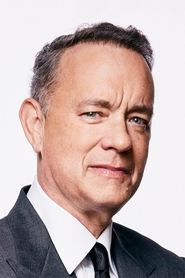
As the narrative unfolds, we see the final moments of each character's journey. In the distant future, the character of Zachry, played by Tom Hanks, confronts his fears and ultimately chooses to protect Meronym, a woman from a more advanced civilization. Their bond signifies hope for humanity's future. Meanwhile, in the past, the composer Frobisher's legacy is preserved through the music he created, which continues to resonate through time. The film closes with a sense of continuity, suggesting that the actions of individuals ripple through the ages, influencing future lives.
Now, let's delve into the ending in a more detailed, chronological narrative.
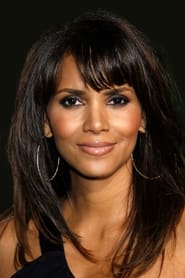
The film's conclusion begins in the post-apocalyptic future, where Zachry, portrayed by Tom Hanks, is living in a primitive society. He is haunted by visions of the "Old Man," a representation of his fears and the darker aspects of his past. As he grapples with his internal struggles, he encounters Meronym, played by Halle Berry, who represents hope and knowledge from a more advanced civilization. Their relationship is pivotal; it symbolizes the potential for humanity to rise above its past mistakes.
In a climactic moment, Zachry must confront the cannibalistic tribe that threatens Meronym. He is initially paralyzed by fear, but as he recalls the lessons learned from his experiences and the sacrifices made by others, he finds the courage to fight for her. This act of bravery signifies a turning point for Zachry, as he chooses to protect rather than succumb to despair. The scene is charged with tension, showcasing the raw emotions of fear, love, and the instinct to survive.
As the conflict unfolds, we see flashes of other characters' stories. In the 1930s, the composer Robert Frobisher, played by Ben Whishaw, is seen in a moment of reflection. He has completed his masterpiece, the "Cloud Atlas Sextet," which serves as a bridge between the past and the future. His music is a testament to his struggles and aspirations, and it resonates through time, influencing the lives of others. Frobisher's fate is bittersweet; he ultimately takes his own life, but his legacy lives on through his work, which is discovered by others in later timelines.
In the 1970s, journalist Luisa Rey, portrayed by Halle Berry, has successfully exposed the corruption surrounding the energy company. Her determination and bravery lead to a significant victory against corporate greed, ensuring that the truth prevails. Luisa's story emphasizes the importance of standing up for justice, and her character embodies resilience and the fight for a better world.
In the 19th century, Adam Ewing, played by Jim Sturgess, experiences a transformation as he confronts the realities of slavery. His journey leads him to reject the oppressive systems of his time, and he vows to fight against injustice. Ewing's fate is one of enlightenment; he becomes an advocate for change, symbolizing the potential for individuals to alter the course of history through their choices.
As the film draws to a close, the narrative weaves together these threads, illustrating how each character's actions resonate across time. The final scenes depict Zachry and Meronym standing together, looking towards a brighter future. Their connection signifies hope and the possibility of redemption for humanity. The film ends on a poignant note, suggesting that love and the choices we make are what truly define us, transcending the boundaries of time and space.
In summary, the ending of "Cloud Atlas" encapsulates the interconnectedness of human experiences, highlighting the enduring impact of our actions and the relationships we forge throughout our lives. Each character's journey concludes with a sense of resolution, underscoring the film's central themes of love, sacrifice, and the quest for a better world.
Is there a post-credit scene?
The movie "Cloud Atlas," produced in 2012, does not have a post-credit scene. After the credits roll, there are no additional scenes or content that follow. The film concludes with its final moments, leaving the audience to reflect on the interconnectedness of the characters and the themes of reincarnation, love, and the impact of individual actions across time. The absence of a post-credit scene aligns with the film's narrative structure, which emphasizes the cyclical nature of life and the enduring connections between souls throughout different eras.
What is the significance of the comet-shaped birthmark in Cloud Atlas?
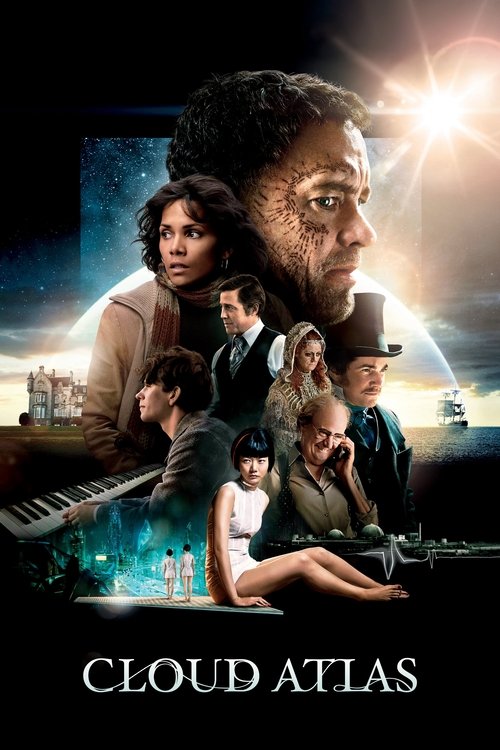
The comet-shaped birthmark serves as a recurring motif throughout the film, symbolizing the interconnectedness of the characters across different timelines. It appears on several characters, including Adam Ewing, Sonmi-451, and Zachry, suggesting that their souls are linked through time and space, and that their actions resonate across different lives.
How does the character of Sonmi-451 evolve throughout the film?
Sonmi-451 begins as a genetically engineered fabricant in a dystopian future, living a life of servitude. As she gains consciousness and awareness of her oppression, she becomes a revolutionary figure, ultimately inspiring a movement against the oppressive regime. Her journey reflects her transformation from a passive being to an active agent of change, culminating in her sacrifice for the greater good.
What role does the character of Robert Frobisher play in the narrative?
Robert Frobisher is a young composer in the 1930s who seeks to create a masterpiece, the 'Cloud Atlas Sextet.' His story is intertwined with that of the aging composer, Vyvyan Ayrs, whom he works for. Frobisher's ambition and desire for recognition drive him to betray Ayrs, but his emotional struggles and longing for love, particularly with Rufus Sixsmith, add depth to his character. His narrative explores themes of artistic aspiration and the cost of creativity.
How does the character of Zachry navigate his world in the post-apocalyptic future?
Zachry lives in a primitive society where survival is paramount. He is torn between his loyalty to his tribe and the influence of the mysterious Meronym, who represents a more advanced civilization. His internal conflict is marked by fear, superstition, and a desire for knowledge. As he learns from Meronym, he evolves from a fearful, superstitious individual to someone who embraces hope and the possibility of a better future.
What is the relationship between Adam Ewing and Dr. Henry Goose?
Adam Ewing is a young American lawyer traveling in the South Pacific in the 19th century, and Dr. Henry Goose is a physician who initially appears to be a friend and ally. However, as the story unfolds, it is revealed that Goose is actually exploiting Ewing's naivety for his own gain, attempting to poison him to steal his wealth. This betrayal highlights themes of trust and deception, as Ewing's journey ultimately leads him to a moral awakening regarding slavery and exploitation.
Is this family friendly?
"Cloud Atlas," produced in 2012, is a complex film that weaves together multiple narratives across different time periods and genres. While it is visually stunning and thematically rich, it contains several elements that may not be suitable for children or sensitive viewers. Here are some potentially objectionable or upsetting aspects:
-
Violence: The film features various scenes of violence, including physical confrontations, battles, and executions. Some sequences are intense and may be distressing.
-
Death and Suffering: Characters experience significant suffering, including death, betrayal, and loss. The emotional weight of these moments can be heavy and may be upsetting.
-
Sexual Content: There are scenes that include sexual situations, nudity, and suggestive themes. These moments may not be appropriate for younger audiences.
-
Racial Themes: The film explores themes of slavery and oppression, which are depicted through harsh realities that may be difficult for some viewers to process.
-
Existential Themes: The narrative delves into complex philosophical ideas about reincarnation, fate, and the interconnectedness of lives, which may be challenging for younger viewers to understand.
-
Disturbing Imagery: Some scenes contain unsettling imagery, including dystopian settings and the portrayal of a post-apocalyptic world that may evoke fear or anxiety.
Overall, while "Cloud Atlas" is a thought-provoking film, its mature themes and content may not be suitable for all audiences, particularly children or those who are sensitive to such material.









