


Popular
What was the audience's reaction to the discussions in this episode?
What humorous segments or monologues did Bill Maher include in this episode?
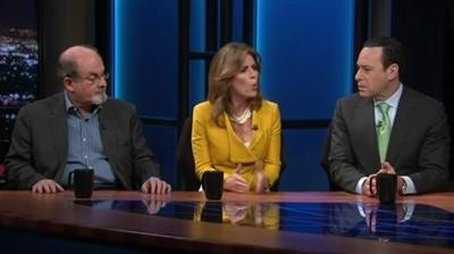
Who were the guests on the panel during this episode?
What specific political issues were discussed in this episode?
How did Bill Maher address the topic of the Arizona immigration law?
Should I watch it?
Ask Your Own Question

What is the plot?
In the episode of "Real Time with Bill Maher" that aired on May 7, 2010, Bill Maher opens the show with his signature monologue, addressing current events and political issues with his characteristic humor and sharp wit. He discusses the ongoing oil spill in the Gulf of Mexico, expressing outrage over the environmental disaster and criticizing the government and BP for their handling of the situation. Maher's tone is a mix of frustration and sarcasm, as he highlights the incompetence of those in power.
Following the monologue, Maher introduces his first guest, former New York City Mayor Rudy Giuliani. The conversation quickly turns to the topic of terrorism and national security. Maher challenges Giuliani on his views regarding the effectiveness of the Patriot Act and the balance between security and civil liberties. Giuliani defends the measures taken post-9/11, arguing that they are necessary for protecting the country. The discussion becomes heated, with Maher pressing Giuliani on the implications of such policies on personal freedoms.
Next, Maher welcomes his second guest, author and political commentator Andrew Sullivan. Sullivan shares his insights on the political landscape, particularly focusing on the Tea Party movement and its impact on American politics. The dialogue shifts to the role of media in shaping public opinion, with Maher and Sullivan critiquing how sensationalism often overshadows substantive political discourse. Sullivan expresses concern over the polarization of American politics, and Maher agrees, emphasizing the need for more rational discussions.
The third guest, actress and activist Janeane Garofalo, joins the panel. The conversation takes a more comedic turn as Garofalo shares her experiences in Hollywood and her views on activism. Maher and Garofalo engage in a playful banter, discussing the absurdities of celebrity culture and its intersection with politics. Garofalo's passionate stance on social issues resonates with Maher, and they both express frustration over the lack of genuine political engagement among the public.
In the final segment of the show, Maher opens the floor to his audience for the "New Rules" segment. He presents a series of humorous and satirical rules that critique various aspects of society, including politics, media, and social behavior. Each rule is delivered with Maher's trademark wit, and the audience responds with laughter and applause. The segment serves as a comedic wrap-up to the discussions held throughout the episode, reinforcing Maher's perspective on the absurdities of contemporary life.
As the episode concludes, Maher thanks his guests and encourages viewers to stay informed and engaged in political discourse. The show ends with Maher's signature sign-off, leaving the audience with a mix of humor and thought-provoking commentary on the state of the nation.









What is the ending?
In the ending of "Real Time with Bill Maher," Season 8, Episode 11, Bill Maher wraps up the episode with a series of closing remarks that reflect on the discussions held throughout the show. He emphasizes the importance of political discourse and the need for open dialogue in a polarized society. The episode concludes with Maher thanking his guests and the audience, leaving viewers with a sense of contemplation about the topics discussed.
As the episode draws to a close, the camera focuses on Bill Maher, who sits at his desk, a slight smile on his face as he prepares to summarize the evening's discussions. The studio lights dim slightly, creating an intimate atmosphere. Maher begins by reflecting on the various topics covered, including the political climate, social issues, and the role of media in shaping public opinion. His tone is both serious and light-hearted, striking a balance that invites viewers to engage with the material.
He acknowledges the guests who participated in the discussions, each of whom brought unique perspectives to the table. The audience, a mix of laughter and applause, responds positively to Maher's commentary, indicating their engagement with the issues at hand. Maher's ability to weave humor into serious topics creates a dynamic atmosphere, allowing for a deeper exploration of the subjects discussed.
As he thanks his guests, the camera pans to each one, capturing their expressions of appreciation and camaraderie. The guests, including political commentators and activists, nod in agreement, reflecting a shared understanding of the importance of dialogue in addressing societal challenges. Maher's closing remarks serve as a reminder of the ongoing nature of political discourse, encouraging viewers to remain informed and involved.
The episode concludes with Maher's signature sign-off, a blend of wit and sincerity, leaving the audience with a final thought to ponder. The lights in the studio brighten as the credits begin to roll, and the audience's applause fills the air, marking the end of another thought-provoking episode. Each character, having contributed to the conversation, exits the stage with a sense of purpose, having engaged in a meaningful exchange that resonates beyond the confines of the studio.
Is there a post-credit scene?
In the episode "May 07, 2010" of Real Time with Bill Maher, there is no post-credit scene. The episode concludes with the usual format, wrapping up the discussions and commentary without any additional scenes or content after the credits roll. The focus remains on the live audience interaction and the political and social commentary that Bill Maher and his guests provide throughout the episode.
What was the audience's reaction to the discussions in this episode?
The audience reacted with laughter and applause during the humorous segments, but there were also moments of tension and serious contemplation during the discussions on immigration and environmental issues, reflecting a mix of emotions in response to the topics.
What humorous segments or monologues did Bill Maher include in this episode?
Bill Maher included a humorous monologue that critiqued various political figures and current events, using satire to highlight the absurdities in the political landscape, particularly focusing on the oil spill and the reactions from politicians.
Who were the guests on the panel during this episode?
The guests on the panel during the episode included former New York City Mayor Rudy Giuliani, journalist and author Fareed Zakaria, and actress and activist Janeane Garofalo.
What specific political issues were discussed in this episode?
In this episode, the discussion focused on the aftermath of the 2010 oil spill in the Gulf of Mexico, the implications of the Arizona immigration law, and the ongoing debates surrounding healthcare reform.
How did Bill Maher address the topic of the Arizona immigration law?
Bill Maher expressed his concerns about the Arizona immigration law, emphasizing the potential for racial profiling and the broader implications for civil rights, while engaging the panel in a heated discussion about immigration policy.
Is this family friendly?
"Real Time with Bill Maher" is a political talk show that often features discussions on controversial topics, which may not be suitable for children or sensitive viewers. In Season 8, Episode 11, titled "May 07, 2010," the following potentially objectionable aspects may arise:
-
Strong Language: The show frequently includes profanity and adult language, which may not be appropriate for younger audiences.
-
Political Commentary: The discussions often involve sharp critiques of political figures and policies, which can be intense and may upset some viewers.
-
Controversial Topics: The episode may cover sensitive subjects such as religion, sexuality, and social issues, which could be distressing for some.
-
Satire and Humor: The use of satire can sometimes be biting or harsh, potentially leading to discomfort for those who are sensitive to humor that targets specific groups or beliefs.
-
Guest Opinions: Guests may express strong or polarizing opinions that could provoke strong emotional reactions.
Overall, the content is geared towards an adult audience and may not be suitable for children or those who prefer family-friendly programming.