

































Popular
What motivates Benny to return to Mexico after years in the United States?
How does Benny's relationship with his family evolve throughout the film?
What role does the character of 'El Chivo' play in Benny's journey?
How does Benny's perception of the drug trade change throughout the film?
What are the consequences of Benny's actions in the drug trade for his family?
Should I watch it?
Ask Your Own Question

What is the plot?
Sorry, we aren't able to watch and write up a full detailed plot yet. Check back in a few days.








What is the ending?
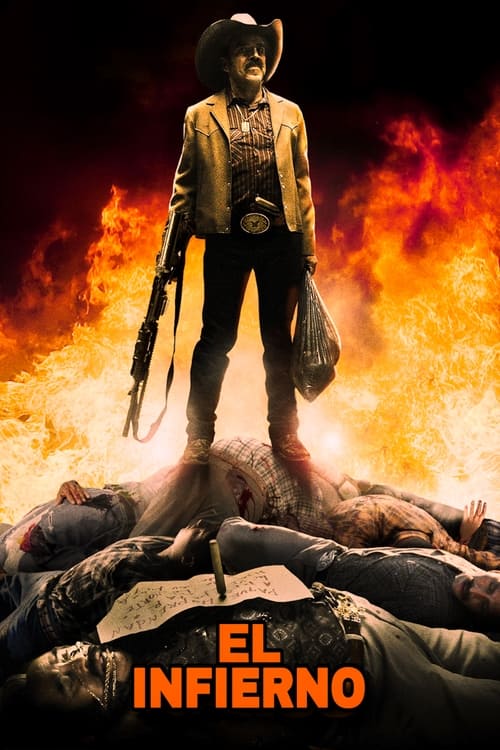
In the ending of "El Infierno," Benny, the protagonist, faces the consequences of his choices as he becomes embroiled in the violent world of drug trafficking. After a series of betrayals and confrontations, he ultimately finds himself in a desperate situation, leading to a tragic conclusion that underscores the brutal reality of the drug trade.
As the film approaches its climax, Benny, having returned to Mexico after years in the United States, is drawn deeper into the drug cartel's violent world. He witnesses the brutalities of the drug war, including the loss of friends and family. The emotional weight of his decisions weighs heavily on him, and he grapples with feelings of guilt and despair.
In the final scenes, Benny's life spirals out of control. He is confronted by the cartel members, and in a tense standoff, he realizes that there is no escape from the cycle of violence he has become a part of. The film culminates in a violent confrontation where Benny's fate is sealed. He is ultimately killed, a victim of the very world he tried to navigate, leaving behind a legacy of pain and loss.
The ending serves as a stark reminder of the consequences of the drug trade, illustrating the inescapable cycle of violence and the toll it takes on individuals and families.
As the final act of "El Infierno" unfolds, the atmosphere is thick with tension and despair. Benny, having been pulled back into the chaotic life of drug trafficking, finds himself at a crossroads. The once vibrant streets of his hometown are now marred by violence and fear, a reflection of the drug war that has consumed the lives of many.
Scene by scene, the narrative reveals Benny's internal struggle. He is haunted by the ghosts of his past decisions, particularly the impact they have had on his family and friends. The weight of his choices becomes unbearable as he witnesses the brutal realities of the cartel's power. The camera captures his expressions of anguish and regret, emphasizing his emotional turmoil.
In a pivotal scene, Benny confronts his former friend, who has now become a ruthless enforcer for the cartel. Their exchange is fraught with tension, as old loyalties clash with the harsh realities of their current lives. Benny's desperation is palpable; he seeks redemption but is met with cold indifference. The dialogue is sharp, revealing the deep rifts that have formed between them due to the drug trade.
As the climax approaches, Benny's world begins to unravel. He is betrayed by those he thought he could trust, leading to a series of violent confrontations. The cinematography captures the chaos of the drug war, with gunfire echoing through the streets and bodies falling in the wake of the violence. Benny's heart races as he navigates this treacherous landscape, desperately trying to find a way out.
In the final confrontation, Benny is cornered by cartel members. The tension is palpable as he realizes that there is no escape from the life he has chosen. The camera lingers on his face, capturing the fear and resignation that wash over him. In a moment of clarity, he understands that he is trapped in a cycle of violence that offers no redemption.
The climax erupts in a flurry of gunfire, and Benny's fate is sealed. He is shot, falling to the ground in a final act of defiance. The scene is haunting, with the sounds of the city fading into silence as he takes his last breath. The camera pulls away, revealing the devastation left in the wake of the drug trade, a stark reminder of the lives lost and the families shattered.
As the credits roll, the film leaves the audience with a lingering sense of sorrow and reflection. Benny's tragic end serves as a powerful commentary on the inescapable nature of the drug war, illustrating the profound impact it has on individuals and communities. The fates of other characters, such as his family and friends, are left to the imagination, but their suffering is palpable, echoing the film's central themes of loss and despair.
Is there a post-credit scene?
In the movie "El Infierno," there is no post-credit scene. The film concludes with a powerful and impactful ending that encapsulates the themes of violence, corruption, and the consequences of a life intertwined with drug trafficking. The narrative wraps up without any additional scenes after the credits, leaving the audience to reflect on the grim realities portrayed throughout the film.
What motivates Benny to return to Mexico after years in the United States?
Benny returns to Mexico after being deported from the United States. His motivation is primarily driven by a desire to reconnect with his family and to find a way to survive in a country he thought he had left behind. He is also seeking a sense of belonging and purpose, which he feels he lost while living in the U.S.
How does Benny's relationship with his family evolve throughout the film?
Benny's relationship with his family is strained upon his return. Initially, he is welcomed by his mother, but he struggles to connect with his brother, who is deeply entrenched in the drug trade. As the story progresses, Benny's involvement in the cartel complicates his family dynamics, leading to tension and conflict, especially as he becomes more embroiled in the violent world of drug trafficking.
What role does the character of 'El Chivo' play in Benny's journey?
El Chivo serves as a mentor and a cautionary figure for Benny. He represents the darker side of the drug trade and the consequences of a life of crime. As Benny becomes more involved in the cartel, El Chivo's warnings about the dangers and moral implications of their lifestyle resonate with Benny, creating an internal conflict about his choices and the path he is on.
How does Benny's perception of the drug trade change throughout the film?
Initially, Benny views the drug trade as a means to achieve financial stability and success. However, as he witnesses the violence, betrayal, and loss that accompany this lifestyle, his perception shifts. He becomes increasingly aware of the moral decay and the impact of his choices on his family and community, leading to a profound internal struggle.
What are the consequences of Benny's actions in the drug trade for his family?
Benny's involvement in the drug trade leads to dire consequences for his family. His choices result in violence and tragedy, affecting not only his immediate family but also the broader community. The repercussions of his actions create a cycle of suffering, as loved ones are drawn into the chaos and danger of the drug world, ultimately leading to heartbreak and loss.
Is this family friendly?
"El Infierno," produced in 2010, is not considered family-friendly due to its mature themes and graphic content. The film delves into the harsh realities of drug trafficking in Mexico, and as such, it contains several potentially objectionable or upsetting scenes, including:
-
Violence: The film features graphic depictions of violence, including shootings, beatings, and other forms of brutality associated with drug cartels.
-
Drug Use: There are scenes that depict drug use and the impact of addiction, which may be distressing for younger viewers or sensitive individuals.
-
Death and Murder: The narrative includes numerous instances of murder, often portrayed in a brutal and unflinching manner, which can be quite disturbing.
-
Corruption: The film explores themes of corruption within law enforcement and government, showcasing morally ambiguous characters and situations that may be unsettling.
-
Sexual Content: There are instances of sexual situations and suggestive themes that may not be appropriate for children.
-
Emotional Turmoil: Characters experience significant emotional distress, including loss, betrayal, and despair, which may resonate deeply and evoke strong feelings.
Overall, the film's intense subject matter and graphic content make it unsuitable for children and potentially upsetting for sensitive viewers.









