










Popular
Should I watch it?
Ask Your Own Question

What is the plot?
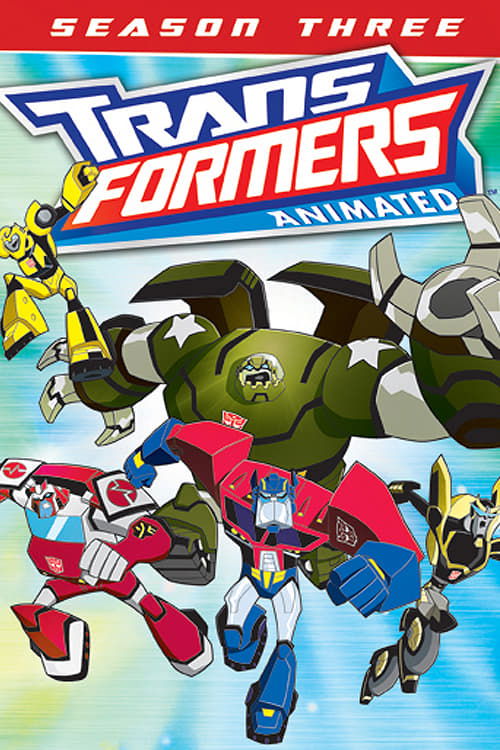
The third season of Transformers: Animated begins with the aftermath of the previous season's events. The Autobots, led by Optimus Prime, are dealing with the fallout from the battle against the Decepticons and the emergence of new threats. The season opens with a focus on the return of the AllSpark, which has been a central element throughout the series. The Autobots are determined to protect it from falling into the wrong hands, particularly those of Megatron and his Decepticon forces.
In the first episode, "The Elite Guard," the Autobots are visited by the Elite Guard, a group of high-ranking Autobots led by Sentinel Prime. They arrive to investigate the recent Decepticon activity and to assess the situation on Earth. Sentinel Prime is arrogant and dismissive of the Earth Autobots, particularly Bumblebee, which creates tension. The Autobots are tasked with proving their worth to the Elite Guard, leading to a series of challenges and tests. During this time, they also learn about the existence of a new Decepticon threat, the Constructicons, who are building a massive weapon.
As the Autobots work to thwart the Constructicons, they face internal conflicts, particularly between Sentinel Prime and Optimus Prime. Sentinel's condescending attitude pushes the Autobots to prove themselves, leading to a climactic battle against the Constructicons. The Autobots manage to defeat the Constructicons and save the day, but not without significant challenges and teamwork. This victory helps to earn the respect of the Elite Guard, though tensions remain high.
In the following episodes, the focus shifts to the return of Megatron, who has been resurrected and is more powerful than ever. He seeks revenge against the Autobots and aims to reclaim the AllSpark. The Autobots must prepare for his return, leading to a series of strategic battles. Megatron's resurrection is marked by a dramatic confrontation with the Autobots, showcasing his new abilities and determination. The Autobots, particularly Optimus, struggle with the weight of leadership and the responsibility of protecting Earth.
As the season progresses, the Decepticons, led by Megatron, launch a series of attacks on Earth, targeting key locations and resources. The Autobots respond with their own countermeasures, leading to intense battles filled with action and strategy. Each confrontation reveals more about the characters' motivations, particularly Bumblebee's desire to prove himself and Ratchet's struggle with his past. The emotional stakes rise as the Autobots face losses and victories, each shaping their resolve to protect their home.
Midway through the season, the plot thickens with the introduction of new characters, including the Dinobots, who add a new dynamic to the Autobots' team. The Dinobots, initially seen as a threat, eventually join forces with the Autobots after a series of misunderstandings and battles. Their unique abilities and personalities bring fresh energy to the team, but also create new challenges as they learn to work together.
As the season nears its climax, the Autobots discover a hidden Decepticon base where Megatron is planning his ultimate attack. The Autobots devise a plan to infiltrate the base and gather intelligence. This leads to a high-stakes mission filled with suspense and danger. The Autobots face numerous obstacles, including traps set by the Decepticons and fierce battles against Megatron's forces. Each character's skills and growth are highlighted as they work together to overcome these challenges.
In the penultimate episodes, the conflict escalates as Megatron launches a full-scale assault on Earth, using the weapon created by the Constructicons. The Autobots rally together, showcasing their growth and unity as they prepare for the final confrontation. The emotional weight of their journey culminates in a battle that tests their limits and resolve. Key decisions made by Optimus and his team lead to a climactic showdown with Megatron, where sacrifices are made, and the true strength of their bonds is revealed.
The season concludes with a dramatic finale where the Autobots face off against Megatron in an epic battle. The stakes are higher than ever, with the fate of Earth hanging in the balance. The Autobots utilize everything they have learned throughout the season, combining their strengths to confront Megatron. In a final showdown, they manage to defeat him, but not without significant cost. The emotional toll of the battle leaves the Autobots reflecting on their journey and the sacrifices made along the way.
As the dust settles, the Autobots are left to rebuild and reflect on their experiences. The season ends with a sense of hope and determination, as they prepare for whatever challenges may come next, solidifying their roles as protectors of Earth and each other.









What is the ending?
In the ending of Transformers: Animated, Season 3, the Autobots face their final battle against the Decepticons, culminating in a confrontation with the powerful Unicron. The series concludes with the Autobots successfully defeating Unicron, but at a great cost. Optimus Prime sacrifices himself to save Cybertron and his team, leading to a bittersweet farewell. The remaining Autobots, including Bumblebee, Ratchet, and Prowl, mourn their leader but resolve to carry on his legacy. The series ends with a sense of hope for the future of Cybertron and the Autobots' mission.
As the final episodes of Transformers: Animated unfold, the tension escalates dramatically. The Autobots, led by Optimus Prime, prepare for their ultimate confrontation with the Decepticons, who have allied with the ancient and malevolent force known as Unicron. The atmosphere is thick with anticipation and dread as the Autobots gather in their base, strategizing their next moves. Each character is acutely aware of the stakes; the fate of Cybertron hangs in the balance.
Scene 1: The Autobots are seen in their command center, the mood somber yet determined. Optimus Prime stands at the forefront, his expression a mix of resolve and concern. He addresses his team, reminding them of their mission to protect Cybertron and its inhabitants. Bumblebee, filled with youthful exuberance, tries to lighten the mood with a joke, but the gravity of the situation weighs heavily on everyone. Ratchet, the seasoned medic, expresses his worries about the impending battle, revealing his deep care for his comrades.
Scene 2: The Decepticons, led by Megatron, are shown rallying their forces. The dark, foreboding environment of their base contrasts sharply with the Autobots' headquarters. Megatron, filled with ambition and rage, speaks of the power they will wield once they control Unicron. Starscream, ever the opportunist, eyes the situation with a mix of ambition and trepidation, aware that Megatron's plans could lead to his own downfall.
Scene 3: The battle begins as the Autobots launch an assault on the Decepticon stronghold. The animation captures the chaos of the fight, with explosions and the clash of metal ringing out. Prowl, agile and strategic, uses his skills to outmaneuver Decepticon forces, while Bumblebee showcases his bravery, charging into the fray despite the odds. Ratchet provides support, using his medical expertise to keep his teammates in fighting shape.
Scene 4: As the battle rages on, Unicron awakens, a massive and terrifying presence looming over the battlefield. The Autobots realize that they must confront this ancient evil directly. Optimus Prime, understanding the gravity of the situation, makes the difficult decision to confront Unicron himself. He rallies his team, instilling them with hope and courage, even as he prepares for the ultimate sacrifice.
Scene 5: In a climactic showdown, Optimus Prime faces Unicron. The visuals are stunning, with the colossal form of Unicron dwarfing the Autobots. Optimus fights valiantly, using all his strength and skill. The emotional weight of the moment is palpable as he reflects on his journey and the bonds he has formed with his team. In a final act of bravery, he channels all his energy into a powerful strike against Unicron, causing a massive explosion that engulfs them both.
Scene 6: The aftermath is somber. The remaining Autobots gather, their faces etched with grief and loss. They mourn the loss of Optimus Prime, their leader and friend. Bumblebee, usually the light-hearted one, struggles to hold back tears, while Ratchet's stoic demeanor cracks as he acknowledges the sacrifice made for their future. Prowl, ever the strategist, begins to formulate a plan to rebuild and protect Cybertron in honor of Optimus's legacy.
Scene 7: The series concludes with a poignant moment as the Autobots stand together, looking out over the horizon of Cybertron. They vow to continue the fight for peace and justice, carrying forward the ideals that Optimus Prime instilled in them. The final shot captures the hope that remains, even in the face of loss, as they prepare to face whatever challenges lie ahead.
In the end, Bumblebee, Ratchet, and Prowl are left to carry on the mission, each changed by the events that transpired. Bumblebee, now more mature, takes on a leadership role, while Ratchet finds renewed purpose in healing and protecting. Prowl, with his strategic mind, becomes a key figure in rebuilding their world. The series closes on a note of resilience, emphasizing the enduring spirit of the Autobots and their commitment to a brighter future.
Is there a post-credit scene?
In "Transformers: Animated," Season 3, there is indeed a post-credit scene that serves as a poignant conclusion to the series.
As the episode wraps up, the screen fades to black, and then we see a serene landscape on Cybertron, where the sun is setting, casting a warm glow over the metallic terrain. The camera pans down to reveal a group of Autobots gathered around a memorial. The atmosphere is somber yet hopeful, filled with a sense of closure and reflection.
Optimus Prime stands at the forefront, his expression a mix of pride and sorrow. He addresses the gathered Autobots, speaking about the sacrifices made and the importance of their mission to protect the universe. His voice is steady, but there's an underlying emotion as he acknowledges the fallen and the bonds formed during their battles.
As he speaks, the camera shifts to show individual Autobots, each lost in their thoughts. Bumblebee looks contemplative, recalling the adventures and friendships forged. Prowl stands with a quiet intensity, reflecting on his journey and the lessons learned. Bulkhead, with a gentle smile, seems to find comfort in the camaraderie of his friends.
The scene transitions to a close-up of the memorial, which features symbols representing their fallen comrades, including a tribute to Sentinel Prime. The camera lingers on the memorial, emphasizing the weight of their legacy and the hope for a brighter future.
Finally, the scene fades out, leaving viewers with a sense of resolution and the enduring spirit of the Autobots, hinting at the ongoing fight for peace and justice in the universe. The post-credit scene encapsulates the themes of sacrifice, friendship, and the enduring battle between good and evil, providing a fitting end to the series.
What happens to Optimus Prime in Season 3 of Transformers: Animated?
In Season 3, Optimus Prime faces significant challenges as he grapples with the consequences of his leadership and the looming threat of the Decepticons. He is determined to protect Earth and his team, but he also struggles with the weight of his responsibilities. His character evolves as he confronts the return of Megatron and the emergence of new threats, leading to intense battles and moments of self-reflection.
How does Megatron's character develop in Season 3?
Megatron's character in Season 3 is marked by a resurgence of power and ambition. He returns with a new plan to conquer Earth and eliminate the Autobots. His interactions with other characters, particularly Starscream and Shockwave, reveal his ruthless nature and desire for dominance. Megatron's motivations are driven by a need to reclaim his status and assert his authority, leading to dramatic confrontations with Optimus Prime.
What role does Sentinel Prime play in Season 3?
Sentinel Prime plays a pivotal role in Season 3 as he returns to Earth, bringing with him a sense of authority and a complicated relationship with Optimus Prime. His character is marked by arrogance and a desire to prove himself as a leader, often clashing with the Autobots. Sentinel's motivations are rooted in his need for recognition and respect, which leads to tension within the team and challenges in their fight against the Decepticons.
How does the relationship between Bumblebee and Bulkhead evolve in Season 3?
In Season 3, the relationship between Bumblebee and Bulkhead deepens as they face various challenges together. Their bond is tested through battles and personal growth, showcasing their loyalty and friendship. Bumblebee's playful nature contrasts with Bulkhead's more serious demeanor, but they learn to rely on each other, highlighting themes of teamwork and camaraderie as they confront the Decepticon threat.
What is the significance of the AllSpark in Season 3?
The AllSpark holds significant importance in Season 3 as it becomes a central element in the Autobots' struggle against the Decepticons. Its power is sought after by both factions, leading to intense conflicts and strategic maneuvers. The AllSpark's role symbolizes hope and the potential for creation, while also representing the dangers of unchecked power, influencing the characters' decisions and the overall narrative arc.
Is this family friendly?
"Transformers: Animated" Season 3 is generally considered family-friendly, but there are a few scenes and themes that might be potentially objectionable or upsetting for children or sensitive viewers. Here are some aspects to consider:
-
Violence and Battles: The series features frequent battles between Autobots and Decepticons, which include explosions, combat scenes, and the destruction of property. While not graphic, the action can be intense.
-
Character Loss: There are moments that involve the loss of characters or the threat of losing friends, which can evoke feelings of sadness or fear.
-
Dark Themes: Some episodes explore themes of betrayal, sacrifice, and the consequences of war, which may be heavy for younger viewers to process.
-
Emotional Conflict: Characters experience internal struggles, such as feelings of inadequacy, fear, and the burden of responsibility, which may resonate deeply with sensitive audiences.
-
Mild Scares: Certain scenes may include suspenseful or frightening moments, particularly involving villains or dangerous situations that could be unsettling for younger children.
Overall, while the show is designed for a younger audience, these elements may require parental guidance for sensitive viewers.