









Popular
What challenges does Kaito face in Season 3 of Phi Brain?
How does the relationship between Kaito and Nonoha evolve in Season 3?
What role does the character of Gammon play in Season 3?
What is the significance of the 'Puzzles of God' in Season 3?
How does the character of Rook influence the events of Season 3?
Should I watch it?
Ask Your Own Question

What is the plot?
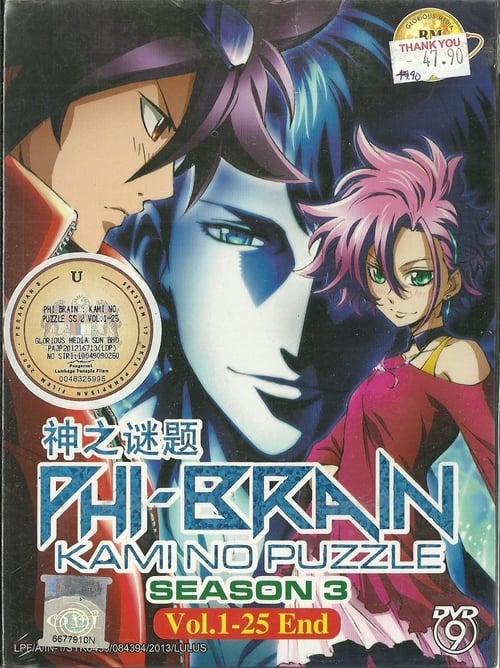
In the third season of Phi Brain: Puzzle of God, the story picks up with Kaito Daimon and his friends, who are now facing a new and formidable opponent known as the "Puzzles of God." The season begins with Kaito and his team, including Nonoha and Gammon, continuing their journey to solve complex puzzles while dealing with the emotional aftermath of their previous battles. Kaito is determined to protect his friends and prove himself as a Phi Brain, a title given to those who can solve the most challenging puzzles.
The first major event occurs when Kaito and his friends are invited to a mysterious tournament called the "Phi Brain Tournament." This tournament is organized by a shadowy figure known as the "Puzzle Master," who has a personal vendetta against Kaito. The stakes are high, as the winner of the tournament will gain immense power and the ability to control the fate of the Phi Brain community. Kaito, motivated by his desire to protect his friends and prove his worth, decides to enter the tournament despite the risks involved.
As the tournament progresses, Kaito faces a series of increasingly difficult puzzles, each designed to test not only his intellect but also his emotional resilience. One of the first puzzles involves a labyrinthine structure filled with traps and illusions. Kaito must navigate through the maze while confronting his fears and doubts. With the support of Nonoha and Gammon, he manages to solve the puzzle, but not without experiencing moments of self-doubt and anxiety.
During the tournament, Kaito encounters other skilled Phi Brains, including a rival named Rook, who is cunning and manipulative. Rook's presence adds tension to the competition, as he often taunts Kaito and tries to undermine his confidence. Kaito's determination to overcome Rook's challenges becomes a driving force in the narrative, pushing him to dig deeper into his own abilities and motivations.
As the tournament continues, Kaito and his friends uncover a deeper conspiracy involving the Puzzle Master. They learn that the tournament is not just a test of skill but a means for the Puzzle Master to gather powerful Phi Brains to execute a larger plan. This revelation heightens the stakes, as Kaito realizes that the fate of not only his friends but the entire Phi Brain community hangs in the balance.
In a pivotal moment, Kaito faces a puzzle that forces him to confront his past and the loss of his mentor, who had previously guided him in his journey. This emotional confrontation leads to a breakthrough for Kaito, allowing him to harness his grief and transform it into strength. He successfully solves the puzzle, gaining newfound confidence and resolve.
As the climax of the tournament approaches, Kaito and Rook face off in a final showdown. The puzzle they must solve is a complex riddle that intertwines their personal histories and motivations. The tension is palpable as both characters push their limits, with Kaito drawing on the support of his friends and the lessons he has learned throughout the season. In a dramatic turn, Kaito manages to outsmart Rook, solving the puzzle just in time and securing victory.
However, the victory is bittersweet, as the Puzzle Master reveals his true intentions. He had been manipulating events from the shadows, and his ultimate goal is to create a world where only the strongest Phi Brains survive. This revelation leads to a confrontation between Kaito and the Puzzle Master, culminating in a battle of wits and strategy. Kaito, fueled by his desire to protect his friends and the Phi Brain community, devises a plan to thwart the Puzzle Master's scheme.
In the final moments of the season, Kaito and his friends band together to confront the Puzzle Master, using their combined skills and knowledge to outmaneuver him. The battle is intense, with high stakes and emotional turmoil as Kaito faces the consequences of his choices. Ultimately, they succeed in defeating the Puzzle Master, but not without significant sacrifices and challenges along the way.
The season concludes with Kaito and his friends reflecting on their journey, the bonds they have formed, and the challenges that lie ahead. Kaito's growth as a character is evident, as he embraces his role as a Phi Brain and the responsibilities that come with it. The final scene hints at new adventures and puzzles waiting for them, setting the stage for future challenges and the ongoing evolution of their relationships.









What is the ending?
In the ending of "Phi Brain: Puzzle of God" Season 3, the main characters face their final challenges against the enigmatic and powerful antagonist, the "Phi Brain" known as the "God of Puzzles." The climax revolves around a high-stakes puzzle that tests their resolve and intellect. Ultimately, they confront their fears and insecurities, leading to a resolution where they reaffirm their bonds of friendship and the importance of their shared experiences. The series concludes with a sense of closure for the characters, particularly for Kaito, who embraces his role as a puzzle solver and leader.
As the final episodes unfold, the tension escalates. The scene opens with Kaito and his friends, including Nonoha, Gammon, and the rest of the Phi Brain team, preparing for their ultimate confrontation with the God of Puzzles. The atmosphere is thick with anticipation and anxiety, as they know that this challenge will not only test their skills but also their very identities.
In the first scene, Kaito stands at the edge of a vast, ominous arena, the setting designed to reflect the complexity of the puzzles they are about to face. The arena is filled with intricate mechanisms and shifting platforms, symbolizing the chaotic nature of their final challenge. Kaito's heart races as he recalls the journey that brought him here, filled with moments of doubt and triumph. His determination to protect his friends fuels his resolve.
As the puzzle begins, the God of Puzzles appears, a figure cloaked in mystery and power. The challenge is revealed: a multi-layered puzzle that requires not only intellect but also teamwork and trust. Kaito, Nonoha, and Gammon quickly strategize, each member playing to their strengths. Nonoha's analytical mind, Gammon's physical prowess, and Kaito's leadership come together in a seamless display of collaboration.
The tension rises as they encounter obstacles that test their emotional states. Each character faces personal fears--Kaito grapples with the weight of his responsibilities, Nonoha confronts her insecurities about her abilities, and Gammon struggles with his past mistakes. These moments are interspersed with flashbacks that highlight their growth throughout the series, reinforcing the bonds they have formed.
As they progress through the puzzle, the stakes become higher. The God of Puzzles taunts them, revealing their vulnerabilities and attempting to sow discord among the group. However, Kaito's unwavering belief in his friends acts as a beacon of hope. He encourages them to remember their shared experiences and the strength they draw from one another.
In a climactic moment, they reach the final stage of the puzzle, where they must make a choice that will determine their fates. Kaito, embodying the spirit of a true leader, makes a selfless decision that puts the well-being of his friends above his own desires. This act of sacrifice resonates deeply, and the group rallies together, solving the final puzzle through sheer will and unity.
As the dust settles, the God of Puzzles is defeated, and the arena transforms into a serene landscape, symbolizing their victory and growth. Each character reflects on their journey, with Kaito emerging as a more confident and self-assured individual. Nonoha realizes her worth and potential, while Gammon finds redemption and acceptance of his past.
In the final scenes, the group stands together, looking out over the horizon. They share a moment of camaraderie, laughing and reminiscing about their adventures. Kaito, now fully embracing his role as a puzzle solver, expresses gratitude for his friends, acknowledging that their bonds are what truly make them strong.
The series concludes with a sense of hope and renewal, as the characters look forward to new challenges, ready to face whatever comes next together. Each character's fate is intertwined with the lessons they have learned, solidifying their growth and the enduring power of friendship.
Is there a post-credit scene?
In "Phi Brain: Puzzle of God" Season 3, there is indeed a post-credit scene that adds an intriguing layer to the narrative. After the main events of the final episode, the scene opens with a serene view of the sky transitioning from dusk to night, stars beginning to twinkle.
The camera then shifts to a quiet, dimly lit room filled with various puzzles and intricate designs scattered across a large table. In the center, a familiar figure, Kaito, is seen deep in thought, his brow furrowed as he examines a complex puzzle. The atmosphere is tense yet contemplative, reflecting Kaito's internal struggle and determination to continue pushing the boundaries of his abilities.
As he works, flashes of memories from his past adventures with his friends and rivals flicker through his mind, showcasing moments of triumph, despair, and the bonds he has formed. The emotional weight of these memories is palpable, highlighting Kaito's growth and the sacrifices made along the way.
Suddenly, the door creaks open, and a silhouette appears. It's Nonoha, her expression a mix of concern and encouragement. She steps forward, breaking the silence, and asks Kaito if he's ready for the next challenge. This moment signifies not only their enduring friendship but also the unending pursuit of knowledge and puzzles that lies ahead.
The scene closes with Kaito looking up, a determined smile breaking through his earlier concentration. He nods, and the screen fades to black, leaving viewers with a sense of hope and anticipation for what future challenges await the characters. This post-credit scene encapsulates the essence of the series: the relentless quest for understanding and the importance of companionship in overcoming obstacles.
What challenges does Kaito face in Season 3 of Phi Brain?
In Season 3, Kaito faces a series of increasingly complex puzzles that test not only his intellect but also his emotional resilience. The season introduces new antagonists, including the enigmatic and powerful 'Puzzles of God' that challenge Kaito's understanding of puzzles and his own abilities. Each challenge forces Kaito to confront his fears and insecurities, particularly regarding his role as a leader and his relationships with his friends.
How does the relationship between Kaito and Nonoha evolve in Season 3?
Throughout Season 3, the relationship between Kaito and Nonoha deepens as they face numerous trials together. Nonoha's unwavering support for Kaito becomes a crucial emotional anchor for him, especially as he grapples with the weight of his responsibilities. Their bond is tested during high-stakes puzzles, where Nonoha's faith in Kaito helps him push through moments of doubt, ultimately leading to a more profound understanding of each other's feelings.
What role does the character of Gammon play in Season 3?
Gammon serves as a significant antagonist in Season 3, embodying the darker aspects of puzzle-solving. His motivations are rooted in a desire to prove his superiority over Kaito and the other Phi Brain members. Gammon's complex personality is revealed through his interactions with Kaito, showcasing a blend of rivalry and a twisted sense of admiration. His presence challenges Kaito to not only solve puzzles but also to confront the moral implications of their outcomes.
What is the significance of the 'Puzzles of God' in Season 3?
The 'Puzzles of God' in Season 3 represent the ultimate test for Kaito and his friends, pushing them to their limits both intellectually and emotionally. These puzzles are intricately designed to reflect the characters' inner struggles and fears, forcing them to confront their pasts and the consequences of their actions. The stakes are higher than ever, as failure could lead to dire consequences, making each puzzle a pivotal moment in their development.
How does the character of Rook influence the events of Season 3?
Rook plays a crucial role in Season 3 as both an ally and a rival to Kaito. His unpredictable nature adds tension to the group dynamics, as he often challenges Kaito's decisions and approaches to puzzles. Rook's character development throughout the season reveals his own struggles with identity and purpose, ultimately leading to moments of unexpected camaraderie and conflict that shape the overall narrative.
Is this family friendly?
"Phi Brain: Puzzle of God" Season 3 contains several elements that may not be suitable for younger audiences or sensitive viewers. Here are some potentially objectionable aspects:
-
Intense Psychological Themes: The series delves into complex themes of competition, obsession, and the psychological toll of high-stakes puzzles, which may be distressing for some viewers.
-
Dark Imagery: There are scenes that feature dark and ominous visuals, including depictions of despair and existential dread, which could be unsettling.
-
Violence and Threats: While not graphic, there are moments of implied violence and threats that create a tense atmosphere, as characters face dangerous situations.
-
Emotional Turmoil: Characters experience significant emotional struggles, including feelings of betrayal, loss, and desperation, which may resonate deeply and evoke strong emotions.
-
Mature Themes: The series touches on themes of sacrifice and the moral implications of one's choices, which may be complex for younger viewers to fully grasp.
These elements contribute to a narrative that, while engaging and thought-provoking, may not be appropriate for all audiences, particularly children.