
















Popular
What motivates Kiritsugu Emiya in his quest for the Holy Grail?
How does the relationship between Kiritsugu and Saber evolve throughout the season?
What is the significance of the contract between Caster and Ryuunosuke?
What role does the concept of 'Heroic Spirits' play in the motivations of the Servants?
How does the character of Kirei Kotomine influence the events of the Holy Grail War?
Should I watch it?
Ask Your Own Question

What is the plot?
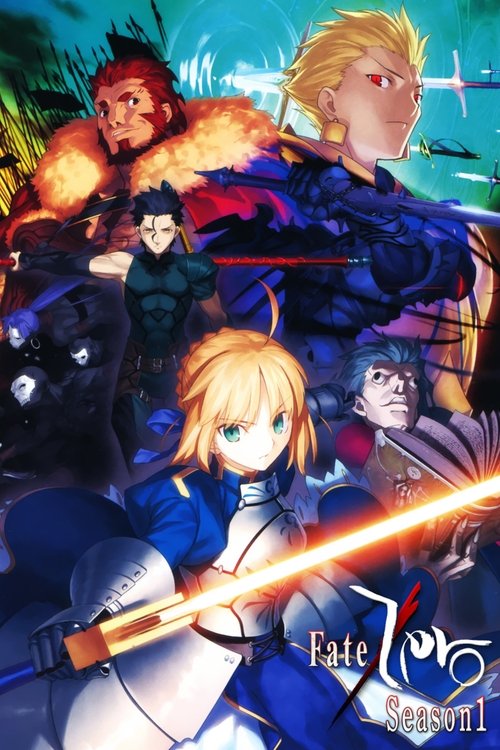
The story begins in Fuyuki City, where the Fourth Holy Grail War is about to commence. Seven mages, known as Masters, summon powerful heroic spirits called Servants to compete for the Holy Grail, a powerful artifact that grants wishes. The narrative introduces Kiritsugu Emiya, a skilled mage and assassin, who is determined to win the Grail to save humanity. He is haunted by his past and driven by a desire to eliminate the concept of suffering.
Kiritsugu summons Saber, who is revealed to be King Arthur, a legendary figure from British history. Saber is initially confused about her summoning and her new Master, but she quickly recognizes Kiritsugu's resolve. Their relationship is complex, as Kiritsugu's ruthless methods clash with Saber's ideals of chivalry and honor.
Meanwhile, we meet other Masters and their Servants. Kirei Kotomine, a priest with a mysterious past, is paired with Gilgamesh, the King of Heroes, who possesses immense power and a vast treasury of noble phantasms. Kirei struggles with his own identity and purpose, feeling a lack of fulfillment in his life. Gilgamesh, on the other hand, is arrogant and dismissive of the other participants, viewing the Grail War as a mere game.
Another key player is Waver Velvet, a young mage who summons Rider, the legendary figure known as Alexander the Great. Waver is initially insecure and inexperienced, but he grows more confident as he learns from Rider's charismatic and bold personality. Their bond develops as they face challenges together.
The first major confrontation occurs when Kiritsugu and Saber encounter Lancer, who is summoned by the Master, Kayneth El-Melloi Archibald. Lancer, a noble and honorable warrior, engages Saber in battle. The fight is intense, showcasing their skills and abilities. Kiritsugu intervenes, using his tactical mind to outmaneuver Lancer, but the battle ends in a stalemate, with both sides retreating.
As the war progresses, Kiritsugu's ruthless tactics come to the forefront. He employs a strategy of sabotage, targeting other Masters and their Servants to eliminate competition. He uses a magical device called the "Time Alter" to manipulate time, allowing him to gain the upper hand in battles. This leads to a series of confrontations, including an ambush on the Master of Berserker, who is revealed to be the legendary hero Heracles.
Berserker proves to be a formidable opponent, and Kiritsugu struggles to defeat him. The battle is chaotic, with Kiritsugu using explosives and traps to weaken Berserker. Ultimately, Kiritsugu manages to exploit a weakness in Berserker's abilities, leading to a hard-fought victory.
Meanwhile, Kirei's internal conflict deepens as he grapples with his role in the war. He becomes increasingly intrigued by Kiritsugu's methods and motivations, leading to a complex relationship between the two. Kirei's interactions with Gilgamesh also reveal his growing discontent with his own existence, as he seeks meaning in the chaos of the Holy Grail War.
As the war escalates, alliances and betrayals become common. Waver and Rider form a temporary alliance with Kiritsugu and Saber, but tensions rise as their differing philosophies clash. Waver's growth as a character is highlighted as he learns to assert himself and make decisions for the greater good.
The climax of the season occurs during a major confrontation at the Fuyuki Church, where multiple Masters and Servants gather. Kirei reveals his true intentions, manipulating events to create chaos. The battle is fierce, with multiple Servants clashing in a display of power. Kiritsugu faces off against Kirei, leading to a tense showdown that tests their ideologies and resolve.
In the aftermath of the battle, the consequences of the war begin to take their toll. Kiritsugu's actions lead to significant losses, and he is forced to confront the moral implications of his choices. The season ends with a sense of foreboding, as the remaining Masters and Servants prepare for the next phase of the Holy Grail War, setting the stage for further conflict and revelations in the story.









What is the ending?
In the ending of Fate/Zero, season 1, the battle for the Holy Grail intensifies, leading to significant confrontations and the deaths of key characters. Kiritsugu Emiya faces off against Kirei Kotomine, resulting in a climactic showdown. The season concludes with Kiritsugu's victory over Kirei, but at a great personal cost, as he is left to grapple with the consequences of his choices and the nature of his ideals.
As the final episodes unfold, the tension escalates in the Holy Grail War. The scene opens with Kiritsugu Emiya, the protagonist, standing amidst the ruins of the battlefield, his expression a mix of determination and despair. He has just witnessed the devastating effects of the Grail War, where alliances have crumbled, and blood has been shed. Kiritsugu's internal conflict is palpable; he is a man driven by the desire to save others, yet he is forced to make morally ambiguous decisions that weigh heavily on his conscience.
In a pivotal moment, Kiritsugu confronts Kirei Kotomine, the enigmatic priest who has been a thorn in his side throughout the war. The two engage in a fierce battle, their ideologies clashing as they fight. Kiritsugu, wielding his signature weapon, the Thompson Contender, is relentless, fueled by the memories of those he has lost and the burden of his mission. Kirei, on the other hand, embodies a cold, detached philosophy, reveling in the chaos and destruction that the Grail War brings.
As the fight progresses, Kiritsugu's desperation becomes evident. He is not just fighting for victory; he is fighting to uphold the ideals he believes in, even as he questions their validity. The emotional stakes are high, and the animation captures the intensity of their duel, with each blow resonating with the weight of their respective beliefs.
In a climactic moment, Kiritsugu manages to gain the upper hand, delivering a decisive blow to Kirei. However, the victory is bittersweet. As Kirei lies defeated, he reveals the emptiness of his own existence, prompting Kiritsugu to reflect on the futility of their conflict. This moment encapsulates the overarching theme of the series: the struggle between ideals and the harsh realities of human nature.
The season concludes with Kiritsugu standing alone, the battlefield strewn with the remnants of the war. He is left to ponder the cost of his victory and the sacrifices he has made. The final scenes depict him grappling with the implications of his actions, setting the stage for the moral dilemmas that will continue to haunt him.
As the credits roll, the fates of the main characters are laid bare. Kiritsugu, though victorious, is left emotionally scarred and questioning the very purpose of his fight. Kirei, despite his defeat, remains a complex figure, embodying the darkness that lurks within the human soul. The season ends on a note of uncertainty, leaving viewers to contemplate the true nature of heroism and the consequences of ambition in the pursuit of one's ideals.
Is there a post-credit scene?
In "Fate/Zero," Season 1, there is no post-credit scene. The episodes conclude without any additional content after the credits roll. The focus remains on the unfolding narrative and character development throughout the episodes, with each ending leading directly into the next part of the story. The series emphasizes the intense and often dark themes of the Holy Grail War, leaving viewers to reflect on the events and character arcs presented in the main episodes.
What motivates Kiritsugu Emiya in his quest for the Holy Grail?
Kiritsugu Emiya is driven by a deep desire to save as many lives as possible, stemming from his traumatic childhood experiences during the Second World War. He believes that the Holy Grail can grant him the power to achieve this goal, despite the moral compromises he must make along the way. His internal conflict is palpable as he grapples with the consequences of his actions and the sacrifices he must endure.
How does the relationship between Kiritsugu and Saber evolve throughout the season?
Initially, Kiritsugu and Saber have a strained relationship due to their differing ideals. Saber, who embodies the chivalric code, is often at odds with Kiritsugu's pragmatic and ruthless approach to achieving victory. As the season progresses, they begin to understand each other's motivations, leading to a reluctant respect. This evolution is marked by moments of tension and collaboration, particularly during battles, where they must rely on each other's strengths.
What is the significance of the contract between Caster and Ryuunosuke?
The contract between Caster and Ryuunosuke is significant as it highlights the theme of manipulation and the darker aspects of the Holy Grail War. Ryuunosuke, a twisted individual with a penchant for sadism, uses Caster to fulfill his desires for chaos and destruction. Their relationship is marked by Caster's loyalty to Ryuunosuke, despite his own ambitions, showcasing the complexities of their bond and the moral depravity that can arise from the pursuit of power.
What role does the concept of 'Heroic Spirits' play in the motivations of the Servants?
The concept of 'Heroic Spirits' is central to the motivations of the Servants, as each one is summoned from history with their own ideals, regrets, and desires. For instance, Saber, who is King Arthur, seeks to uphold her ideals of chivalry and honor, while other Servants like Gilgamesh are driven by their own egos and desires for dominance. This clash of motivations creates intense conflicts and alliances throughout the season, as each Servant's past influences their actions in the present.
How does the character of Kirei Kotomine influence the events of the Holy Grail War?
Kirei Kotomine serves as a complex antagonist whose motivations are shrouded in ambiguity. As a priest, he struggles with his own sense of purpose and morality, often finding himself drawn to the chaos of the Holy Grail War. His interactions with other characters, particularly with Kiritsugu and his own master, Tokiomi, reveal his internal conflict and desire for meaning. Kirei's actions, often manipulative and calculated, significantly impact the course of the war, as he seeks to understand the nature of his own existence through the suffering of others.
Is this family friendly?
Fate/Zero, while a compelling narrative, contains several elements that may not be suitable for children or sensitive viewers. Here are some potentially objectionable aspects:
-
Violence and Gore: The series features intense battles and graphic violence, including bloodshed and injuries that may be disturbing to younger audiences.
-
Death and Mortality: Characters frequently face death, and the emotional weight of loss is a recurring theme, which can be heavy and upsetting.
-
Mature Themes: The show explores complex themes such as betrayal, ambition, and the moral implications of one's choices, which may be difficult for younger viewers to fully grasp.
-
Psychological Distress: Characters experience significant emotional turmoil, including despair, madness, and existential crises, which can be unsettling.
-
Dark Atmosphere: The overall tone of the series is dark and brooding, with a sense of foreboding that permeates the narrative.
-
Adult Language and Situations: There are instances of strong language and adult situations that may not be appropriate for younger audiences.
These elements contribute to the series' mature rating and may not be suitable for all viewers, particularly children.