














Popular
What motivates Marco Polo to travel to the court of Kublai Khan?
How does Kublai Khan's character develop throughout the season?
What role does the character of Hundred Eyes play in Marco Polo's journey?
What is the significance of the relationship between Marco Polo and Kublai Khan?
How does the conflict between the Mongols and the Song Dynasty affect the characters?
Should I watch it?
Ask Your Own Question

What is the plot?
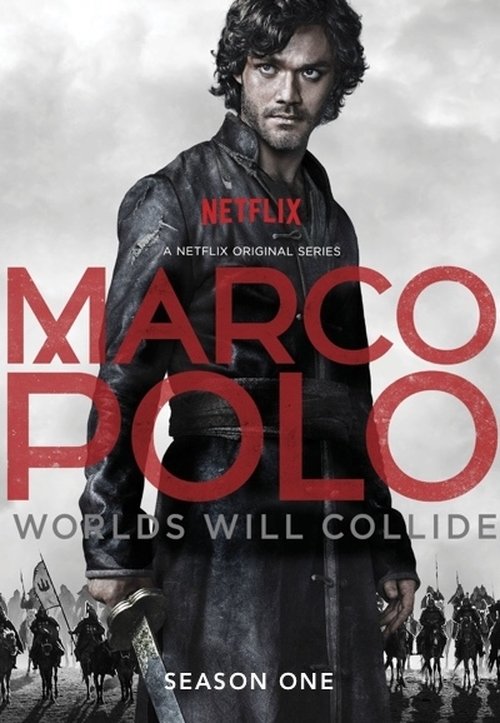
The series begins with a young Marco Polo, who is captured by the Venetian merchant's enemies while traveling with his father and uncle on a trade expedition to China. They are taken to a distant land, where Marco's father and uncle are eventually released, but Marco is left behind. He is taken to the court of Kublai Khan, the Mongol emperor, who is intrigued by the boy's potential and decides to keep him as a servant.
As Marco adjusts to life in the Khan's court, he witnesses the power struggles and political machinations that define the Mongol Empire. Kublai Khan is focused on expanding his empire and faces opposition from his brother, Ariq Böke, who believes that Kublai's methods are weakening their traditional ways. Marco becomes a keen observer of the court's dynamics, learning the language and customs of the Mongols while also grappling with his own identity as a foreigner.
Marco befriends a young woman named Kokachin, who is a captive and a potential bride for Kublai Khan. Their relationship grows as they share moments of vulnerability and connection, but Kokachin is also caught in the political games of the court. Kublai Khan's desire for Kokachin complicates Marco's feelings, as he is drawn to her but knows she is not truly his to have.
Tensions rise when Kublai Khan decides to wage war against the Song Dynasty, which leads to a series of brutal battles. Marco is sent on missions to gather intelligence and act as a liaison between Kublai and his allies. During one such mission, he witnesses the devastation of war and the impact it has on the common people, which weighs heavily on his conscience.
As the war progresses, Marco's loyalty is tested. He is torn between his allegiance to Kublai Khan and his desire to return to Venice. He learns of a plot against Kublai by his brother Ariq Böke and must decide whether to inform Kublai, risking his own safety and the trust he has built. Ultimately, Marco chooses to warn Kublai, solidifying his position in the court but also deepening the conflict between the brothers.
The political intrigue escalates when Kublai Khan's advisors begin to question Marco's loyalty due to his foreign origins. Marco must navigate the treacherous waters of court politics, using his intelligence and resourcefulness to prove his worth. He becomes a key player in Kublai's plans, but the pressure mounts as he realizes that his life is at stake.
In a climactic moment, Kublai Khan faces a significant betrayal from within his ranks, leading to a violent confrontation. Marco finds himself in the midst of the chaos, forced to make quick decisions to survive. He witnesses the brutal reality of power struggles as allies turn against each other, and he must rely on his wits to escape the fallout.
As the season progresses, Marco's relationship with Kokachin deepens, but their love is fraught with complications. Kublai's interest in Kokachin creates a rift between them, and Marco grapples with feelings of jealousy and helplessness. Their bond is tested as they navigate the dangers of the court and the looming threat of war.
The season culminates in a series of battles that determine the fate of Kublai Khan's empire. Marco plays a crucial role in strategizing and executing plans that lead to victories, but the cost of war becomes increasingly apparent. The emotional toll weighs heavily on him as he witnesses the suffering of those caught in the crossfire.
In the final episodes, Marco's journey comes to a head as he confronts his own identity and the choices he has made. He must decide whether to remain loyal to Kublai Khan or seek a way back to his family in Venice. The season ends with a sense of uncertainty, leaving Marco at a crossroads as he contemplates his future in a world defined by power, loyalty, and betrayal.
🔥 Trending TV Shows Now
Browse All TV Shows →





What is the ending?
At the end of "Marco Polo" Season 1, the story culminates in a series of intense confrontations and shifting allegiances. Kublai Khan faces betrayal from within his ranks, while Marco Polo finds himself caught in the middle of the power struggles. The season concludes with significant character developments and unresolved tensions, setting the stage for future conflicts.
As the final episodes unfold, we see Kublai Khan grappling with the threat posed by his brother, Ariq Böke, who seeks to undermine his rule. The tension escalates as Kublai's loyal followers, including the fierce warrior Jingim, prepare for the impending conflict. Marco Polo, who has been navigating the treacherous political landscape, finds himself increasingly entangled in the Khan's ambitions and the rivalries that threaten to tear the empire apart.
In a pivotal scene, Kublai Khan confronts Ariq Böke, leading to a fierce battle that showcases the brutal realities of power and loyalty. The clash is not just physical but also deeply emotional, as Kublai must confront the betrayal of his own blood. The stakes are high, and the outcome will determine the future of the Mongol Empire.
Meanwhile, Marco's relationship with the Khan deepens, as he becomes a trusted advisor, yet he is also aware of the precariousness of his position. His internal conflict grows as he grapples with his loyalty to Kublai and his desire for freedom. The season ends with Marco standing at a crossroads, torn between his allegiance to the Khan and his longing for home.
As the dust settles from the battle, Kublai emerges victorious but at a great cost. The emotional toll of the conflict weighs heavily on him, and he realizes that ruling an empire is fraught with sacrifices. Ariq Böke's fate is sealed as he is defeated, but the implications of his rebellion linger, hinting at future strife.
Jingim, who has fought valiantly alongside his father, Kublai, begins to understand the complexities of leadership and the burdens that come with it. His character evolves as he witnesses the harsh realities of war and the sacrifices made for power.
In the final moments, Marco Polo stands before Kublai Khan, who acknowledges his loyalty and the role he has played in the Khan's rise. However, the unresolved tensions and the looming threats suggest that the journey is far from over. Marco's fate remains uncertain, as he contemplates his next move in a world where alliances can shift in an instant.
The season concludes with a sense of foreboding, as the characters are left to navigate the intricate web of loyalty, betrayal, and ambition that defines their lives in the Mongol Empire. The stage is set for further exploration of these themes in the seasons to come.
Is there a post-credit scene?
In the first season of "Marco Polo," there is no post-credit scene. The season concludes with the final episode, "The Way of the Wise," which wraps up the main story arcs without any additional scenes after the credits. The focus remains on the resolution of the conflicts and character developments throughout the season, particularly highlighting Marco's journey and his evolving relationship with Kublai Khan and the political landscape of the Mongol Empire. The absence of a post-credit scene allows the audience to reflect on the events that have transpired without any additional content.
What motivates Marco Polo to travel to the court of Kublai Khan?
Marco Polo is motivated by a mix of curiosity, adventure, and a desire to escape the confines of his life in Venice. His father and uncle, who are merchants, have traveled to Asia and returned with tales of wealth and opportunity. This instills in Marco a longing for exploration and a chance to prove himself beyond the mundane life he knows.
How does Kublai Khan's character develop throughout the season?
Kublai Khan is portrayed as a powerful yet complex ruler. Initially, he is seen as a confident leader, determined to expand his empire and consolidate power. However, as the season progresses, his vulnerabilities emerge, particularly in his relationships with his family and advisors. His internal struggles with loyalty, betrayal, and the burden of leadership reveal a more human side to his character.
What role does the character of Hundred Eyes play in Marco Polo's journey?
Hundred Eyes serves as a mentor to Marco Polo, teaching him the ways of the Mongol warriors and the philosophy of life. He is a blind martial arts master who imparts wisdom and skills to Marco, helping him navigate the treacherous political landscape of the Mongol court. Hundred Eyes embodies the themes of loyalty and honor, influencing Marco's growth and understanding of the world around him.
What is the significance of the relationship between Marco Polo and Kublai Khan?
The relationship between Marco Polo and Kublai Khan is central to the narrative, representing a blend of admiration, tension, and cultural exchange. Marco becomes a trusted advisor to Kublai, which allows him to witness the intricacies of Mongol politics and culture. This dynamic also highlights Marco's internal conflict as he balances his loyalty to Kublai with his Venetian heritage and the expectations of his family.
How does the conflict between the Mongols and the Song Dynasty affect the characters?
The conflict between the Mongols and the Song Dynasty creates a backdrop of tension and danger that affects all characters. It drives Kublai Khan's ambitions and influences his decisions, while also impacting Marco's journey as he navigates the loyalties and rivalries within the court. Characters like Jia Sidao, the Song Chancellor, and his machinations against the Mongols add layers of intrigue and personal stakes, forcing Marco and others to confront their allegiances and moral choices.
Is this family friendly?
"Marco Polo," season 1, contains several elements that may not be suitable for children or sensitive viewers. Here are some potentially objectionable aspects:
-
Violence and Gore: The series features numerous scenes of battle, including sword fights, executions, and bloodshed. The violence is often graphic and can be intense.
-
Sexual Content: There are scenes that depict sexual situations, nudity, and suggestive themes. These moments may be inappropriate for younger audiences.
-
Mature Themes: The show explores themes of betrayal, power struggles, and political intrigue, which may be complex and unsettling for children.
-
Cultural and Religious Conflicts: The series portrays various cultural practices and conflicts that may be disturbing, including the treatment of prisoners and the harsh realities of life in the 13th century.
-
Emotional Turmoil: Characters experience significant emotional distress, including loss, betrayal, and moral dilemmas, which may be heavy for younger viewers to process.
Overall, while "Marco Polo" offers a rich historical narrative, its mature content may not be suitable for all audiences.