












































Popular
What motivates Ki Seung-nyang to rise from a commoner to an empress?
How does the relationship between Ki Seung-nyang and Wang Yu evolve throughout the season?
What role does the character of Ta Hwan play in Ki Seung-nyang's life?
What are the key conflicts that Ki Seung-nyang faces in the Yuan court?
How does the character of Empress Dowager influence the plot and Ki Seung-nyang's journey?
Should I watch it?
Ask Your Own Question

What is the plot?
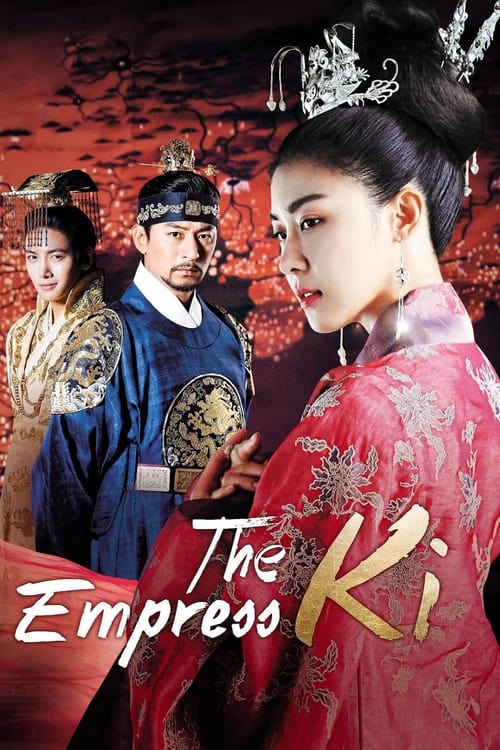
In the first episode of "Empress Ki," we are introduced to Ki Seung-nyang, a young girl living in Goryeo during the 14th century. The story begins with her witnessing the brutal treatment of her family by the Mongol invaders. Her father, a loyal Goryeo official, is executed, and her mother is taken away. Seung-nyang manages to escape and is taken in by a group of bandits.
As she grows up, Seung-nyang becomes a skilled fighter, determined to avenge her family. She adopts a male disguise to navigate the dangerous world around her. During a raid, she encounters Wang Yu, the son of the Goryeo king, who is also fighting against the Mongol oppression. They form a bond, and he becomes a source of hope for her.
The narrative shifts to the Mongol court, where we meet the powerful and ambitious Empress Dowager, who is determined to maintain her influence over the Mongol Empire. She is concerned about the rising power of the Goryeo and seeks to eliminate any threats. The Mongol prince, Togon, is introduced as a conflicted character, torn between his duties and his feelings for Seung-nyang.
Seung-nyang's journey takes her to the Mongol capital, where she becomes embroiled in the political machinations of the court. She is forced to navigate the treacherous waters of Mongol politics while trying to maintain her identity. Her skills as a fighter and her intelligence help her gain the attention of Togon, who is captivated by her strength and determination.
As the story progresses, Seung-nyang's relationship with Wang Yu deepens, but their love is complicated by the political landscape. Wang Yu is determined to reclaim his throne and protect his people, while Seung-nyang is torn between her loyalty to him and her desire for revenge against the Mongols.
In a pivotal moment, Seung-nyang is captured by the Mongols and brought to the court. There, she must use her wits to survive and find a way to escape. She cleverly manipulates the court's dynamics, gaining favor with Togon while secretly plotting her revenge. Her internal struggle is palpable as she grapples with her feelings for Togon and her mission to avenge her family.
The tension escalates when Seung-nyang learns of a plot against Wang Yu. She risks everything to warn him, showcasing her bravery and loyalty. Their reunion is fraught with emotion, as they both realize the sacrifices they must make for their respective causes.
As the season progresses, Seung-nyang's position in the Mongol court becomes more precarious. She faces numerous challenges, including betrayal from those she thought were allies. The Empress Dowager sees her as a threat and schemes to eliminate her. Seung-nyang's resilience shines through as she navigates these dangers, using her cunning to outsmart her enemies.
In a dramatic turn of events, Seung-nyang is forced to confront her feelings for Togon. Their relationship becomes increasingly complicated as Togon struggles with his loyalty to his mother and his growing affection for Seung-nyang. The emotional stakes rise as Seung-nyang must decide whether to pursue her revenge or embrace a new life with Togon.
The season culminates in a series of intense confrontations. Seung-nyang's true identity is at risk of being exposed, and she must fight to protect herself and those she loves. The political landscape shifts dramatically as alliances are formed and broken, leading to a climactic showdown between the Goryeo and the Mongol forces.
In the final moments of the season, Seung-nyang makes a bold decision that will change the course of her life forever. She embraces her role in the Mongol court, determined to wield her power to protect her people and seek justice for her family. The season ends on a cliffhanger, leaving viewers eager to see how her journey will unfold in the next installment.









What is the ending?
In the ending of "Empress Ki," the story culminates in a dramatic confrontation between the main characters, leading to significant shifts in power and emotional resolutions. Ki, having navigated the treacherous political landscape, faces the consequences of her choices, while the fates of the men in her life, including the Yuan Emperor and her first love, are sealed in a tragic yet poignant manner.
As the narrative unfolds, Ki stands at the center of a power struggle between the Goryeo and Yuan dynasties. The tension escalates as she confronts the Yuan Emperor, who has become increasingly tyrannical and paranoid. In a climactic moment, Ki's loyalty is tested, and she must choose between her love for the Emperor and her duty to her people. The emotional weight of her decisions is palpable, as she grapples with the sacrifices she has made and the lives affected by her rise to power.
In the final scenes, the Emperor's downfall is marked by betrayal and loss. Ki's first love, Wang Yu, who has been a constant source of strength and conflict, faces his own tragic fate as he is caught in the crossfire of political machinations. The story closes with Ki standing resolute, embodying the complexities of her journey as she embraces her role as Empress, fully aware of the burdens that come with it.
Expanding on the ending in a chronological and narrative fashion:
The final episodes of "Empress Ki" are charged with tension as the political landscape shifts dramatically. Ki, now fully entrenched in the court of the Yuan dynasty, finds herself at a crossroads. The Emperor, once enamored with her, has become increasingly unstable, driven by jealousy and paranoia. His obsession with Ki leads him to suspect betrayal from all sides, particularly from Wang Yu, Ki's first love and a symbol of her past.
In a pivotal scene, Ki is summoned to the Emperor's chamber, where the atmosphere is thick with unease. The Emperor, his demeanor dark and erratic, confronts Ki about her loyalties. Ki, torn between her feelings for the Emperor and her commitment to her homeland, stands firm. Her internal struggle is evident as she recalls the sacrifices she has made to rise to this position of power. The weight of her choices hangs heavily on her shoulders, and the audience can feel her resolve as she navigates this dangerous terrain.
As tensions escalate, Wang Yu makes a desperate move to save Ki and protect Goryeo from the Emperor's wrath. He confronts the Emperor, leading to a fierce confrontation that underscores the tragic love triangle at the heart of the story. The stakes are high, and the emotional stakes are even higher as both men fight for Ki's heart and the future of their nations.
In a heart-wrenching climax, the Emperor's paranoia leads to a catastrophic decision. He orders Wang Yu's arrest, believing him to be a traitor. Ki, witnessing the unfolding tragedy, is torn apart by the realization that her rise to power has come at a devastating cost. The scene is filled with raw emotion as Ki pleads for Wang Yu's life, her desperation palpable. The Emperor, blinded by jealousy, refuses to relent, sealing Wang Yu's fate.
The final moments of the series are marked by a sense of inevitability. Ki, now fully embracing her role as Empress, stands alone in the palace, the weight of her choices heavy upon her. The camera lingers on her face, capturing the mix of determination and sorrow as she gazes out over the kingdom she has fought so hard to protect. The audience is left with a poignant image of a woman who has gained power but lost much in the process.
As the credits roll, the fates of the main characters are sealed. The Emperor, consumed by his own demons, faces the consequences of his tyranny. Wang Yu, a tragic hero, becomes a martyr for his love and his country. Ki, now Empress, embodies the complexities of leadership, fully aware of the sacrifices that come with her title. The story concludes, leaving viewers to reflect on the intricate web of love, power, and betrayal that has defined Ki's journey.
Is there a post-credit scene?
In "Empress Ki," there is no post-credit scene following the episodes of Season 1. The series focuses on the intense and dramatic narrative of Ki Seung-nyang, her rise from a commoner to an empress, and the political intrigue surrounding her life in the Yuan dynasty. Each episode concludes with a focus on the unfolding storylines, character development, and emotional stakes, without any additional scenes after the credits. The emphasis remains on the main plot and character arcs throughout the series.
What motivates Ki Seung-nyang to rise from a commoner to an empress?
Ki Seung-nyang, originally a commoner, is driven by her desire for revenge against the Goryeo dynasty for the injustices her family faced. Her fierce determination to protect her loved ones and her ambition to change her fate propel her to navigate the treacherous political landscape of the Yuan dynasty.
How does the relationship between Ki Seung-nyang and Wang Yu evolve throughout the season?
Initially, Ki Seung-nyang and Wang Yu share a bond rooted in their shared struggles against the oppressive Goryeo regime. As they face numerous challenges, their relationship deepens, marked by moments of tenderness and conflict. Wang Yu's unwavering support for Seung-nyang contrasts with her growing entanglement in the political machinations of the Yuan court, creating a poignant tension between love and ambition.
What role does the character of Ta Hwan play in Ki Seung-nyang's life?
Ta Hwan, the young emperor of the Yuan dynasty, becomes a pivotal figure in Ki Seung-nyang's life. His initial naivety and vulnerability draw her in, but as he becomes more aware of the political games around him, he develops a complex relationship with Seung-nyang. His infatuation with her and his reliance on her intelligence create a dynamic where Seung-nyang must balance her ambitions with her growing influence over Ta Hwan.
What are the key conflicts that Ki Seung-nyang faces in the Yuan court?
In the Yuan court, Ki Seung-nyang faces multiple conflicts, including navigating the treacherous power struggles among the nobles, dealing with the manipulative Empress Dowager, and confronting her own feelings for both Wang Yu and Ta Hwan. Each conflict tests her resolve and cunning, forcing her to make difficult choices that impact her rise to power.
How does the character of Empress Dowager influence the plot and Ki Seung-nyang's journey?
The Empress Dowager is a formidable antagonist in Ki Seung-nyang's journey, representing the entrenched power and corruption of the Yuan court. Her manipulative tactics and desire to maintain control over the emperor create significant obstacles for Seung-nyang. The Empress Dowager's actions force Seung-nyang to adapt and strategize, ultimately shaping her into a more formidable player in the political arena.
Is this family friendly?
"Empress Ki" is a historical drama that contains several elements that may not be suitable for children or sensitive viewers. Here are some potentially objectionable or upsetting aspects:
-
Violence and Warfare: The show depicts battles, sword fights, and scenes of war, which can be graphic and intense. There are moments of bloodshed and injury that may be distressing.
-
Political Intrigue and Betrayal: The narrative involves complex political maneuvering, betrayal, and power struggles, which can be heavy themes for younger audiences to grasp.
-
Emotional Turmoil: Characters experience significant emotional pain, including loss, betrayal, and heartbreak. These themes may resonate deeply and could be upsetting for sensitive viewers.
-
Romantic Tension: There are romantic relationships that involve manipulation and emotional conflict, which may not be appropriate for younger viewers.
-
Depictions of Oppression: The show addresses themes of servitude and oppression, particularly regarding the main character's struggles, which can be heavy and thought-provoking.
-
Mature Themes: The series touches on themes of loyalty, sacrifice, and the harsh realities of life in a historical context, which may be complex for children to understand.
Overall, while "Empress Ki" is a richly woven tale of ambition and resilience, its mature themes and intense scenes may not be suitable for all audiences, particularly children.