


Popular
What is the significance of the hybrid mentioned in Series 9?
How does the relationship between the Doctor and Clara evolve in Series 9?
What role does Ashildr play in Series 9, and how does she impact the Doctor?
What is the significance of the Zygons in Series 9?
How does the episode 'Heaven Sent' explore the Doctor's character?
Should I watch it?
Ask Your Own Question

What is the plot?
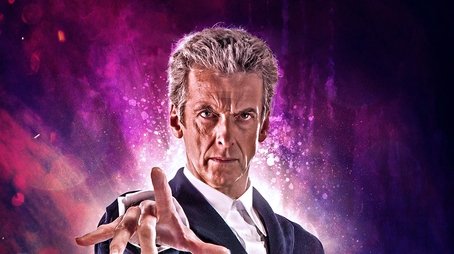
The season opens with "The Magician's Apprentice," where the Doctor, played by Peter Capaldi, is on the planet Skaro, facing the Daleks. He is trying to save a young boy named Davros, the creator of the Daleks, who is lying in a field. The Doctor is conflicted about whether to help Davros, knowing the evil he will unleash. He ultimately decides to leave the boy to his fate, but he is soon captured by the Daleks. Meanwhile, Clara Oswald, portrayed by Jenna Coleman, is back on Earth, trying to find the Doctor. She is approached by a mysterious figure who reveals that the Doctor is in danger.
The narrative shifts to the present day, where Clara is trying to locate the Doctor. She is contacted by a soldier named UNIT, who informs her that the Doctor is in trouble. Clara, determined to save him, uses a device to locate the TARDIS. She arrives just in time to witness the Doctor's confrontation with the Daleks. The Doctor is faced with a choice: to kill Davros or to save him. He chooses to save Davros, which leads to a series of events that culminate in the Doctor being captured by the Daleks.
In the second episode, "The Witch's Familiar," the Doctor is trapped in the Dalek city, and Clara is forced to confront her own fears. The Doctor uses his wits to escape, manipulating the Daleks and using their own technology against them. He manages to reach Davros, who is now in a vulnerable state. The Doctor confronts Davros about his past and the creation of the Daleks. In a moment of compassion, the Doctor gives Davros a chance to live, but this act of mercy is met with betrayal as Davros attempts to kill him.
The story then shifts to "Under the Lake," where the Doctor and Clara arrive at an underwater base in the future. They discover that the crew has been killed by a mysterious creature. The Doctor investigates the situation, and they find a recording of the crew's last moments. The creature appears to be a ghost, and the Doctor realizes that it is connected to a time loop. Clara and the Doctor work together to uncover the truth behind the ghostly figure, leading to a confrontation with the creature.
In "Before the Flood," the Doctor and Clara delve deeper into the mystery of the creature. The Doctor decides to go back in time to prevent the events that led to the deaths of the crew. He encounters the Fisher King, the creature responsible for the hauntings. The Doctor learns that the Fisher King is trying to take over the base and that the only way to stop him is to destroy the dam that holds back the water. The Doctor makes a difficult decision to sacrifice himself to save Clara and the remaining crew members.
The next episode, "The Girl Who Died," sees the Doctor and Clara in Viking times, where they encounter a group of warriors facing a threat from an alien race known as the Mire. The Doctor, initially dismissive of the Vikings, is forced to take action when Clara inspires the villagers to fight back. The Doctor devises a plan to defeat the Mire, but it requires him to make a personal sacrifice. He ultimately saves the villagers, but not without consequences.
In "The Woman Who Lived," the story continues with the character of Ashildr, a Viking girl who was saved by the Doctor. She has become immortal and is now living in the present day, struggling with her eternal life. The Doctor confronts Ashildr about her choices and the impact of immortality. Their encounter leads to a clash of ideologies, as Ashildr has become disillusioned with humanity. The Doctor realizes that he must stop her from becoming a villain.
The narrative then shifts to "The Zygon Invasion" and "The Zygon Inversion," where the Doctor and Clara face a crisis involving Zygons, shape-shifting aliens who have taken on human forms. The Zygons are in conflict with humans, and the Doctor must navigate a delicate political situation to prevent war. Clara is captured by the Zygons, and the Doctor must use his intelligence to negotiate peace. The climax of the story involves a tense standoff where the Doctor delivers a powerful speech about the importance of understanding and compassion.
In "Sleep No More," the Doctor and Clara investigate a space station where crew members have been experiencing terrifying nightmares. They discover that the source of the nightmares is a creature that feeds on fear. The Doctor and Clara must confront their own fears as they try to escape the station. The episode is presented in a unique found-footage style, adding to the tension and horror of the situation.
The season continues with "Face the Raven," where the Doctor and Clara arrive in London and encounter a hidden community of aliens. Clara learns about a deadly trap that has been set for her, and she must make a choice to save her friends. In a heartbreaking moment, Clara sacrifices herself to save the Doctor, leading to a devastating confrontation with the Raven, a creature that collects souls.
In "Heaven Sent," the Doctor is trapped in a mysterious castle, facing a relentless creature that hunts him. He realizes that he must confront his own fears and regrets to escape. The episode is a deep exploration of the Doctor's psyche, as he relives moments from his past and ultimately finds a way to break free from the cycle of torment.
The season concludes with "Hell Bent," where the Doctor returns to Gallifrey, determined to save Clara from her fate. He confronts the Time Lords and challenges their authority. The Doctor's emotional state is one of desperation and anger as he fights to change the rules of time. In a climactic showdown, he faces the consequences of his actions and ultimately makes a choice that will alter the course of his life and Clara's.
The season ends with the Doctor mourning Clara's loss, reflecting on their adventures together, and setting the stage for his next journey.








What is the ending?
In the ending of Doctor Who, Season 9, the Doctor faces the Time Lord known as the Hybrid, which is revealed to be a combination of both the Doctor and Clara. Clara sacrifices herself to save the Doctor, leading to a poignant farewell. The Doctor, heartbroken, continues his journey alone, reflecting on the impact Clara had on his life.
As the final episode of Doctor Who's Series 9 unfolds, titled "Hell Bent," the scene opens in the Time Lord's home planet of Gallifrey. The Doctor, portrayed by Peter Capaldi, stands in the vast, imposing landscape of the Citadel, a place filled with memories and the weight of his past. He is determined to rescue Clara Oswald, played by Jenna Coleman, who has been trapped in a time loop after her death in the previous episode, "Face the Raven."
The Doctor confronts the Time Lords, who are wary of his intentions. He is desperate, willing to break the laws of time and space to save Clara. The tension is palpable as he navigates the political landscape of Gallifrey, where the Time Lords are both his allies and adversaries. The Doctor's internal conflict is evident; he is torn between his duty as a Time Lord and his love for Clara.
In a dramatic turn, the Doctor uses a device known as the "Confession Dial," which allows him to relive his memories and confront his deepest fears. He recalls the moments he shared with Clara, filled with laughter, adventure, and ultimately, loss. Each memory is a reminder of their bond, and the emotional weight of their relationship hangs heavily in the air.
As the Doctor finally reaches Clara, they share a bittersweet reunion. Clara, aware of her fate, is both relieved and heartbroken. She has been living in a pocket of time, and the Doctor's arrival brings her hope but also the reality of their situation. They discuss the nature of their adventures and the choices they have made, reflecting on the impact they have had on each other's lives.
In a climactic moment, Clara makes the ultimate sacrifice. She chooses to save the Doctor from the consequences of his actions, knowing that her life is at stake. The emotional turmoil is palpable as she tells him that she will always be with him, no matter what. The Doctor, filled with grief and anger, watches as Clara's life is extinguished, leaving him alone once more.
The final scenes depict the Doctor's profound sorrow as he grapples with the loss of Clara. He returns to the TARDIS, a symbol of their adventures together, but now it feels empty without her presence. The Doctor's internal struggle is evident as he reflects on the choices he has made and the cost of his actions. He is left to ponder the meaning of his existence and the relationships he has forged throughout his long life.
As the episode concludes, the Doctor sets off into the universe once again, a solitary figure against the backdrop of the stars. The weight of Clara's sacrifice lingers in the air, a reminder of the love and loss that define his journey. The fate of the Doctor is one of continued exploration, but now with a deeper understanding of the connections he makes and the sacrifices that come with them. Clara's legacy lives on in his heart, shaping the man he will continue to be.
Is there a post-credit scene?
In "Doctor Who" Season 9, there is no post-credit scene following the episodes. The season concludes with the final episode titled "The Doctor's Husband," which wraps up the storylines without any additional scenes after the credits. Each episode typically ends with a brief teaser or a lead-in to the next adventure, but there are no post-credit sequences that provide further narrative or hints about future events. The focus remains on the main story arcs and character developments throughout the season.
What is the significance of the hybrid mentioned in Series 9?
The hybrid is a central mystery throughout Series 9, particularly in the episodes 'The Witch's Familiar' and 'The Zygon Invasion.' The Doctor learns that the hybrid is a creature that is part Time Lord and part something else, which raises questions about identity and the consequences of power. The hybrid's identity is ultimately revealed to be a combination of the Doctor and Clara, symbolizing their intertwined fates.
How does the relationship between the Doctor and Clara evolve in Series 9?
In Series 9, the relationship between the Doctor and Clara becomes increasingly complex. Initially, they share a strong bond, but as the series progresses, Clara's desire for independence and her willingness to take risks lead to tension. This culminates in the episode 'Face the Raven,' where Clara's actions result in dire consequences, showcasing her growth but also the tragic nature of their connection.
What role does Ashildr play in Series 9, and how does she impact the Doctor?
Ashildr, introduced in 'The Girl Who Died,' becomes a pivotal character in Series 9. After being granted immortality by the Doctor, she struggles with the burden of living forever. Her actions in 'The Woman Who Lived' reveal her moral ambiguity and the loneliness of immortality. Ashildr's choices ultimately challenge the Doctor's views on life and death, leading to a confrontation in 'The Zygon Inversion' where her influence on the Doctor's decisions is felt.
What is the significance of the Zygons in Series 9?
The Zygons, introduced in 'The Zygon Invasion' and 'The Zygon Inversion,' serve as a metaphor for conflict and identity. The episodes explore themes of fear and misunderstanding, as the Zygons, who can shapeshift, struggle to coexist with humans. The Doctor's efforts to broker peace highlight his role as a mediator, while the Zygons' internal conflict reflects broader societal issues, making their storyline a critical commentary on acceptance and coexistence.
How does the episode 'Heaven Sent' explore the Doctor's character?
'Heaven Sent' is a deeply introspective episode that delves into the Doctor's psyche. Trapped in a mysterious castle, he faces a relentless creature while reliving his own memories. The episode showcases his resilience, intelligence, and emotional depth as he confronts his fears and guilt over past decisions. The haunting imagery and the Doctor's solitary struggle reveal his vulnerability, ultimately leading to a profound moment of self-sacrifice and determination.
Is this family friendly?
"Doctor Who" Season 9, while generally family-friendly, does contain some scenes and themes that may be considered objectionable or upsetting for children or sensitive viewers. Here are some aspects to be aware of:
-
Violence and Threats: There are instances of physical confrontations, alien threats, and scenes depicting danger that may be intense for younger viewers.
-
Death and Loss: Themes of mortality are prevalent, with characters facing death or the loss of loved ones, which can be emotionally heavy.
-
Monsters and Horror Elements: The show features various alien creatures and monsters that can be frightening, including scenes designed to create suspense and fear.
-
Emotional Turmoil: Characters often experience significant emotional distress, including fear, sadness, and betrayal, which may resonate deeply with sensitive viewers.
-
Moral Dilemmas: The Doctor and companions face complex moral choices that can provoke thought but may also be challenging for younger audiences to understand.
-
Dark Themes: Some episodes explore darker themes, such as despair, sacrifice, and the consequences of one's actions, which may be unsettling.
Overall, while "Doctor Who" is designed to be accessible to a wide audience, parents may want to preview episodes or discuss themes with younger viewers to gauge appropriateness.