












Popular
What is the significance of the rivalry between Emmit and Ray Stussy?
How does V.M. Varga manipulate Emmit Stussy throughout the season?
What role does Gloria Burgle play in the investigation of the murders?
How does the character of Nikki Swango evolve throughout the season?
What is the significance of the character interactions at the Stussy family reunion?
Should I watch it?
Ask Your Own Question

What is the plot?
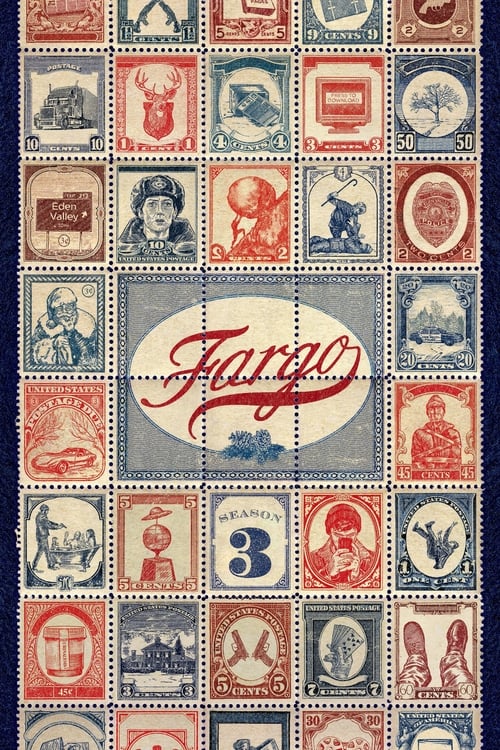
In the small town of Eden Valley, Minnesota, we are introduced to the main characters: Emmit Stussy, a successful businessman who runs a parking lot empire, and his estranged twin brother, Ray Stussy, a down-on-his-luck parole officer. Emmit is portrayed as charming and confident, while Ray is depicted as bitter and resentful, feeling overshadowed by his brother's success. The tension between them is palpable, stemming from their childhood and the inheritance of their father's stamp collection, which Ray believes Emmit unfairly took.
Ray is in a relationship with a woman named Nikki Swango, a crafty and ambitious parolee who encourages him to take action against Emmit. She convinces Ray to steal the valuable stamp collection from Emmit, believing it will solve their financial problems. Ray, motivated by jealousy and desperation, decides to confront Emmit and demand his share of the inheritance.
Meanwhile, Emmit is dealing with his own issues, including a business deal with a shady character named V.M. Varga, who is looking to invest in Emmit's parking lot business. Varga is manipulative and has a sinister presence, hinting at his ulterior motives. Emmit is initially unaware of the danger Varga poses, as he is focused on expanding his business.
The plot thickens when Ray and Nikki plan to rob Emmit during a meeting at a local diner. They intend to confront him and take the stamps. However, the robbery goes awry when they are interrupted by a violent encounter with a hitman named Mr. Wrench and his partner, Mr. Numbers, who are working for Varga. In the chaos, Ray accidentally kills a diner employee, escalating the situation and forcing them to flee.
As the story unfolds, we see the impact of the robbery on all characters involved. Emmit is shaken by the violence and begins to realize the extent of the threat posed by Ray and Nikki. He seeks help from the local police, particularly from a detective named Gloria Burgle, who is investigating the murder at the diner. Gloria is determined and resourceful, but she faces challenges in her investigation, including bureaucratic obstacles and the dismissive attitudes of her male colleagues.
Nikki and Ray, on the run, become increasingly desperate. They hide out in a motel, where they argue about their future and the consequences of their actions. Nikki's ambition drives her to take control of the situation, and she suggests they go after Emmit again. Ray, feeling conflicted, is torn between his love for Nikki and the realization that their plan is spiraling out of control.
As Gloria continues her investigation, she uncovers connections between the Stussy brothers and Varga. She begins to piece together the events leading to the diner shooting and the involvement of organized crime. Gloria's determination to solve the case intensifies, and she becomes a central figure in the unfolding drama.
The tension escalates when Varga's true nature is revealed. He is not just a businessman; he is a ruthless criminal with a network of enforcers. He manipulates Emmit into making decisions that further entangle him in a web of deceit and violence. Emmit's moral compass is tested as he grapples with the consequences of his choices and the influence of Varga.
In a pivotal moment, Nikki and Ray decide to confront Emmit directly at his office. They believe they can intimidate him into giving them the stamp collection. The confrontation turns violent, and in a struggle, Ray is killed by Varga's men, leaving Nikki to fend for herself. This moment marks a significant turning point, as Nikki is left alone and must navigate the dangerous world she has become entangled in.
Nikki's character evolves as she seeks revenge for Ray's death. She becomes more resourceful and cunning, using her wits to survive. She manages to escape Varga's clutches and begins to plot her next move against Emmit and Varga. Her transformation from a desperate woman to a determined survivor is a key element of the story.
As the climax approaches, Gloria's investigation leads her to confront Varga directly. She realizes the extent of his criminal operations and the danger he poses not only to Emmit but to the entire community. Gloria's pursuit of justice becomes personal as she fights against the corruption and violence that Varga represents.
In the final act, the story culminates in a series of confrontations. Nikki confronts Varga, seeking revenge for Ray's death. The tension reaches a boiling point as Gloria, Emmit, and Nikki's paths intersect. The resolution of their conflicts leads to a dramatic showdown, where loyalties are tested, and the true nature of each character is revealed.
The season concludes with a sense of ambiguity and moral complexity. Characters face the consequences of their actions, and the cycle of violence and revenge leaves a lasting impact on the community. The final scenes leave viewers questioning the nature of justice and the lengths individuals will go to in pursuit of their desires.









What is the ending?
In the ending of Fargo Season 3, Emmit Stussy confronts his brother Ray, leading to a tragic conclusion. Ray is killed by V.M. Varga, who is ultimately apprehended by the police. Gloria Burgle, the local police chief, uncovers the truth behind the chaos, leading to a resolution of the conflict. The season concludes with a sense of justice, but also a lingering ambiguity about the nature of evil and the consequences of choices.
As the final episodes unfold, the tension escalates between the Stussy brothers, Emmit and Ray. The scene opens in a dimly lit motel room where Ray, desperate and angry, confronts Emmit about their family legacy and the perceived injustices he has suffered. Ray's emotional turmoil is palpable; he feels overshadowed by Emmit's success and is driven by a mix of resentment and a desire for recognition.
In a parallel narrative, V.M. Varga, the enigmatic and manipulative figure, continues to exert his influence over Emmit, pushing him deeper into a web of deceit and crime. Varga's cold demeanor and calculated moves create an atmosphere of dread, as he orchestrates events to serve his own interests.
The climax occurs when Emmit and Ray meet in a tense confrontation. The motel room is filled with a sense of impending doom as the brothers' fraught relationship reaches its breaking point. Emmit, torn between familial loyalty and self-preservation, struggles with his emotions. Ray, fueled by anger and desperation, believes he can reclaim his life by confronting Emmit. The scene is charged with raw emotion, highlighting the deep-seated issues that have plagued their relationship.
In a shocking turn, Varga arrives and, without hesitation, kills Ray. The act is swift and brutal, leaving Emmit in a state of shock and horror. The weight of betrayal and loss crashes down on him, as he realizes the extent of Varga's manipulation. This moment encapsulates the tragic consequences of their choices, as familial bonds are shattered by greed and ambition.
Meanwhile, Gloria Burgle, the local police chief, has been piecing together the threads of the chaotic events surrounding the Stussy brothers and Varga. Her determination to uncover the truth leads her to confront Varga, who has been operating in the shadows, pulling strings and evading justice. In a tense encounter, Gloria's resolve shines through as she confronts the darkness that has enveloped her community.
The final scenes depict the aftermath of the violence. Varga is apprehended by the police, his facade of control crumbling as he faces the consequences of his actions. The sense of justice is bittersweet, as the chaos he sowed has left deep scars on those involved. Emmit, now a broken man, grapples with the loss of his brother and the realization of how far he has fallen under Varga's influence.
As the season concludes, Gloria stands as a symbol of resilience and moral clarity amidst the chaos. The final moments leave viewers with a haunting sense of ambiguity, reflecting on the nature of evil and the choices that lead individuals down dark paths. The fates of the main characters serve as a poignant reminder of the complexities of human relationships and the often tragic consequences of ambition and betrayal.
Is there a post-credit scene?
In Fargo Season 3, there is no post-credit scene. The season concludes with the final episode, "Somebody to Love," which wraps up the storylines of the main characters without any additional scenes after the credits. The focus remains on the resolution of the central conflict between the characters Emmit Stussy and Ray Stussy, as well as the implications of their actions throughout the season. The absence of a post-credit scene aligns with the show's tone, emphasizing closure rather than leaving viewers with a cliffhanger or additional narrative threads.
What is the significance of the rivalry between Emmit and Ray Stussy?
The rivalry between Emmit and Ray Stussy serves as a central conflict in Season 3. Emmit, the successful businessman, represents the 'good' side of the Stussy family, while Ray, his estranged brother, embodies the 'bad' side, struggling with jealousy and resentment. Their conflict escalates when Ray, feeling overshadowed by Emmit's success, attempts to steal a valuable stamp from him, leading to a series of violent and tragic events that intertwine their fates.
How does V.M. Varga manipulate Emmit Stussy throughout the season?
V.M. Varga, a cunning and enigmatic figure, manipulates Emmit Stussy by exploiting his insecurities and vulnerabilities. Varga presents himself as a business partner, but his true intentions are to take control of Emmit's company. He uses psychological tactics, including intimidation and gaslighting, to undermine Emmit's confidence, leading him to make increasingly desperate decisions that ultimately jeopardize his business and personal life.
What role does Gloria Burgle play in the investigation of the murders?
Gloria Burgle, the local police chief, plays a crucial role in the investigation of the murders that unfold throughout the season. As a determined and resourceful character, she faces skepticism from her male counterparts but remains committed to uncovering the truth. Her personal struggles, including her complicated relationship with her ex-husband and her role as a mother, fuel her determination to solve the case, leading her to connect the dots between the various characters and events.
How does the character of Nikki Swango evolve throughout the season?
Nikki Swango, initially introduced as Ray Stussy's girlfriend, evolves from a seemingly manipulative and self-serving character into a more complex figure driven by love and revenge. As the season progresses, her motivations shift from merely supporting Ray to seeking her own power and agency. Her cunning nature is revealed as she devises plans to outsmart Varga and Emmit, showcasing her resilience and resourcefulness in the face of danger.
What is the significance of the character interactions at the Stussy family reunion?
The Stussy family reunion serves as a pivotal moment in Season 3, highlighting the fractured relationships within the family. The interactions reveal deep-seated resentments and rivalries, particularly between Emmit and Ray. This gathering becomes a microcosm of the larger themes of betrayal and familial conflict, as the characters confront their pasts and the choices that have led them to their current predicaments. The tension culminates in a violent confrontation that sets the stage for the ensuing chaos.
Is this family friendly?
Fargo, Season 3, while critically acclaimed, contains several elements that may not be suitable for children or sensitive viewers. Here are some potentially objectionable aspects:
-
Violence: The season features multiple scenes of graphic violence, including shootings and physical confrontations that can be intense and disturbing.
-
Murder: There are several instances of murder throughout the season, often depicted in a brutal manner, which may be upsetting.
-
Strong Language: The dialogue includes frequent use of profanity, which may not be appropriate for younger audiences.
-
Dark Themes: The narrative explores themes of betrayal, greed, and moral ambiguity, which can be heavy and unsettling.
-
Psychological Manipulation: Characters engage in manipulative and deceitful behavior, which may be distressing for some viewers.
-
Death and Loss: The emotional weight of loss and the impact of death on characters are central to the story, potentially evoking strong feelings.
-
Tension and Suspense: The overall tone of the series is tense and suspenseful, which may be anxiety-inducing for some viewers.
These elements contribute to the show's mature rating and may not be suitable for a family-friendly viewing experience.