







Popular
What happens to Chuck McGill's mental state in Season 3?
How does Jimmy McGill's relationship with Kim Wexler evolve in Season 3?
What role does Mike Ehrmantraut play in the events of Season 3?
How does the rivalry between Chuck and Jimmy escalate in Season 3?
What is the significance of the 'Slippin' Jimmy' persona in Season 3?
Should I watch it?
Ask Your Own Question

What is the plot?
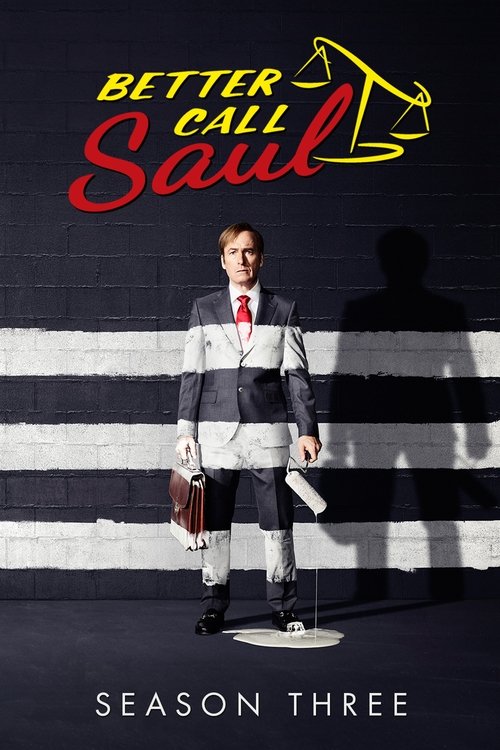
The season opens with a flashback to Chuck McGill's past, where he is seen in a home setting, struggling with his mental health and the effects of his electromagnetic hypersensitivity. He is shown to be paranoid about electricity, which foreshadows his later actions. The scene transitions to the present, where Chuck is recovering from the events of the previous season, particularly the fallout from his confrontation with Jimmy.
Jimmy McGill is trying to navigate his new life after the fallout with Chuck. He is working at a cell phone store, where he is frustrated by the mundane nature of the job. He begins to devise a plan to get back into the legal field, motivated by his desire to prove himself and to help his brother. Meanwhile, Chuck is still dealing with the aftermath of his brother's actions and is determined to take legal action against Jimmy for the forgery of his signature.
As the season progresses, Jimmy's relationship with Kim Wexler deepens. Kim is working at a prestigious law firm, but she is increasingly drawn to Jimmy's unconventional methods. She struggles with her own moral compass as she becomes more involved in Jimmy's schemes. In one significant moment, Kim decides to help Jimmy by creating a plan to get him reinstated to the bar, showcasing her loyalty to him despite the risks involved.
Chuck, feeling threatened by Jimmy's potential return to law, begins to gather evidence against him. He sets up a surveillance system in his home to monitor Jimmy's activities. This decision highlights Chuck's paranoia and his willingness to go to extreme lengths to protect his interests. He becomes increasingly obsessed with proving Jimmy's wrongdoing, which leads to a series of confrontations between the brothers.
In a pivotal moment, Jimmy and Kim work together to create a fake advertisement for a new law practice. They use clever tactics to attract clients, showcasing their chemistry and shared ambition. However, this also leads to tension as Kim grapples with the ethical implications of their actions. She begins to question whether she is compromising her own values by associating with Jimmy's questionable methods.
As the season unfolds, the rivalry between Chuck and Jimmy escalates. Chuck files a complaint against Jimmy, leading to a hearing that puts their relationship on the line. During the hearing, Chuck presents evidence of Jimmy's past misdeeds, including the forgery incident. The tension in the room is palpable as both brothers confront their shared history and the deep-seated issues that have driven them apart.
In a dramatic twist, Chuck's mental state deteriorates further. He becomes increasingly isolated and paranoid, leading to a breakdown during the hearing. He struggles to maintain his composure as he realizes the extent of his obsession with Jimmy. This moment serves as a turning point for both brothers, as it highlights the emotional toll their rivalry has taken on them.
Meanwhile, Mike Ehrmantraut is drawn deeper into the criminal underworld. He is working for Gus Fring, who is expanding his drug empire. Mike's relationship with Gus is complex, as he navigates the dangerous world of drug trafficking while trying to protect his granddaughter, Kaylee. Mike's motivations are driven by a desire to provide for her future, which leads him to make increasingly risky decisions.
As the season nears its conclusion, the tension between Chuck and Jimmy reaches a boiling point. In a climactic confrontation, Chuck confronts Jimmy about his actions and the impact they have had on their family. The emotional weight of their history comes to a head, leading to a devastating fallout that leaves both brothers irrevocably changed.
The season ends with a shocking twist: Chuck's actions lead to a tragic accident that results in his death. This event serves as a culmination of the season's themes of family, betrayal, and the consequences of one's choices. The impact of Chuck's death reverberates through the lives of Jimmy and Kim, setting the stage for the next chapter in their tumultuous relationship.







What is the ending?
In the ending of Better Call Saul Season 3, titled "Lantern," Chuck McGill's struggle with his mental health culminates in a tragic confrontation with his brother, Jimmy McGill. After a series of escalating tensions, Chuck's actions lead to a devastating fire in his home, resulting in his death. Meanwhile, Jimmy's transformation into Saul Goodman is solidified as he embraces his morally ambiguous path, fully aware of the consequences of his choices.
As the final episode begins, we find Chuck McGill in his home, surrounded by the remnants of his life and the weight of his mental illness. The scene is dimly lit, reflecting the darkness that has enveloped him. He is seen meticulously arranging his files, a ritual that provides him a sense of control amidst the chaos of his mind. Chuck's internal struggle is palpable; he is battling not only his mental health issues but also the deep-seated resentment he feels towards his brother, Jimmy.
In a pivotal moment, Chuck receives a visit from Jimmy, who is attempting to reconcile with him. The tension is thick as they engage in a heated conversation about their past and the choices that have led them to this point. Chuck's anger and bitterness surface, revealing the depth of his feelings of betrayal and disappointment in Jimmy. He accuses Jimmy of being a con artist, a label that Jimmy has been trying to shed. The emotional stakes are high, and both brothers are at their breaking points.
As the confrontation escalates, Chuck reveals that he has been secretly recording Jimmy, intending to use the evidence against him in a legal battle. This revelation is a turning point, showcasing Chuck's willingness to go to extreme lengths to protect his reputation and undermine his brother. The emotional turmoil is evident on both sides, with Jimmy feeling cornered and Chuck feeling justified in his actions.
In a moment of desperation, Jimmy tries to appeal to Chuck's humanity, but Chuck's paranoia and fear of betrayal consume him. He lashes out, and in a fit of rage, he knocks over a lantern, igniting a fire that quickly engulfs the room. The flames symbolize the destruction of their relationship and the culmination of their long-standing conflict. As the fire spreads, Chuck is trapped, and the scene shifts to a haunting silence, emphasizing the gravity of the situation.
The next sequence reveals the aftermath of the fire. Emergency responders arrive, but it is too late for Chuck. The camera lingers on the charred remains of his home, a stark representation of his internal struggles and the consequences of his actions. The emotional weight of his death hangs heavily in the air, marking a tragic end to a complex character who was once a brilliant lawyer.
Meanwhile, Jimmy's transformation into Saul Goodman is solidified in the closing moments of the episode. He is seen in a new office, surrounded by gaudy decorations and a flashy sign that reads "Saul Goodman." This visual shift signifies his complete embrace of the morally ambiguous path he has chosen. The once idealistic lawyer has now fully adopted the persona of a criminal lawyer, ready to navigate the murky waters of the legal world.
As the episode concludes, we see Jimmy's face, a mixture of triumph and sorrow. He is aware of the cost of his choices, but he is also resolute in his decision to move forward. The final shot captures the duality of his character--he is both a man who has lost his brother and a man who has found a new identity in the chaos.
In summary, the ending of Season 3 encapsulates the tragic downfall of Chuck McGill and the transformation of Jimmy McGill into Saul Goodman. Chuck's death serves as a poignant reminder of the destructive nature of their rivalry, while Jimmy's evolution highlights the moral complexities of his character. Each main character's fate is sealed in this climactic finale, leaving a lasting impact on the narrative and setting the stage for the future.
Is there a post-credit scene?
In "Better Call Saul" Season 3, there is no post-credit scene. The season concludes with the final episode titled "Lantern," which wraps up various character arcs and sets the stage for future developments. The focus remains on the intense emotional and moral dilemmas faced by the characters, particularly Jimmy McGill and Chuck McGill, without any additional scenes after the credits. The absence of a post-credit scene emphasizes the weight of the narrative and the consequences of the characters' actions leading up to the season's climax.
What happens to Chuck McGill's mental state in Season 3?
In Season 3, Chuck McGill's mental state deteriorates significantly. He becomes increasingly paranoid and obsessed with the idea that his brother, Jimmy, is trying to undermine him. This culminates in a dramatic confrontation where Chuck's fear of electricity leads him to isolate himself further, ultimately resulting in a tragic incident involving a fire in his home.
How does Jimmy McGill's relationship with Kim Wexler evolve in Season 3?
Throughout Season 3, Jimmy McGill's relationship with Kim Wexler becomes more complex. Initially, they are supportive of each other's careers, but as Jimmy's ethical boundaries blur, Kim becomes increasingly concerned about his choices. Their relationship is tested when Jimmy's actions lead to a significant professional setback for Kim, forcing her to reevaluate her feelings for him and their future together.
What role does Mike Ehrmantraut play in the events of Season 3?
In Season 3, Mike Ehrmantraut becomes deeply involved in the criminal underworld as he takes on a job for Gus Fring. His storyline explores his moral dilemmas and the lengths he will go to protect his granddaughter, Kaylee. Mike's meticulous nature is highlighted as he navigates the dangerous world of drug trafficking, ultimately leading to a tense confrontation with Hector Salamanca.
How does the rivalry between Chuck and Jimmy escalate in Season 3?
The rivalry between Chuck and Jimmy escalates dramatically in Season 3, particularly through their legal battles. Chuck's determination to discredit Jimmy leads him to take drastic measures, including using his own law firm to sabotage Jimmy's career. This culminates in a courtroom showdown where Chuck's deep-seated resentment and Jimmy's cunning tactics clash, revealing the depths of their sibling rivalry.
What is the significance of the 'Slippin' Jimmy' persona in Season 3?
In Season 3, the 'Slippin' Jimmy' persona resurfaces as Jimmy McGill grapples with his identity and moral choices. This persona represents his past as a con artist and serves as a reminder of his struggle between his desire to be a legitimate lawyer and his inclination towards manipulation and deceit. The tension between these two sides of his character becomes a central theme, influencing his decisions and relationships throughout the season.
Is this family friendly?
"Better Call Saul" Season 3 contains several elements that may not be suitable for children or sensitive viewers. Here are some potentially objectionable aspects:
-
Violence: There are scenes depicting physical confrontations and threats, which can be intense and unsettling.
-
Drug Use: The show includes references to drug dealing and the consequences of addiction, which may be distressing for some viewers.
-
Mature Themes: The narrative explores complex themes such as morality, betrayal, and the consequences of one's choices, which may be heavy for younger audiences.
-
Language: There is occasional strong language used by characters, which may not be appropriate for all viewers.
-
Emotional Distress: Characters experience significant emotional turmoil, including anxiety, guilt, and despair, which can be intense and may resonate deeply with sensitive viewers.
-
Legal and Ethical Dilemmas: The show delves into morally ambiguous situations, showcasing the darker side of the legal profession, which may be confusing or troubling for younger audiences.
These elements contribute to the show's mature rating and may not be suitable for family viewing.









