


Popular
What is the significance of the blue room in the episode 'Blekitny pokoj'?
How does the character of Inspector Markowski evolve in this episode?
What role does the victim's backstory play in the investigation?
How do the interactions between the detectives influence the case's outcome?
What emotional challenges do the characters face while solving the case?
Should I watch it?
Ask Your Own Question

What is the plot?
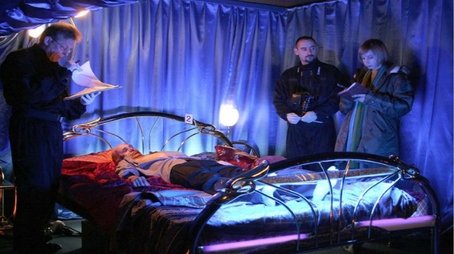
In the episode "Blekitny pokoj," the story begins with the discovery of a woman's body in a blue room, which sets the tone for the investigation that follows. The victim is identified as a young woman named Marta, who has been brutally murdered. The scene is grim, with the police arriving to examine the body and the surroundings, noting the eerie blue color of the room that contrasts sharply with the violence of the crime.
As the investigation unfolds, the main characters, including detectives Krzysztof and Aneta, begin to gather evidence. They interview neighbors and friends of Marta, trying to piece together her last moments. The detectives learn that Marta had been living alone and had recently been involved in a tumultuous relationship. This leads them to focus on her ex-boyfriend, who becomes a person of interest.
The detectives visit the ex-boyfriend's apartment, where they find signs of a struggle. Tension rises as they confront him about his whereabouts on the night of the murder. He becomes defensive, claiming he was with friends, but inconsistencies in his alibi raise suspicions. The detectives decide to dig deeper into his background, uncovering a history of violence and jealousy.
Meanwhile, Aneta experiences personal turmoil as she reflects on her own relationships, drawing parallels between her life and Marta's. This emotional connection drives her to pursue the case with even more determination. She becomes particularly invested in understanding the dynamics of Marta's relationships, believing that they hold the key to solving the murder.
As the investigation progresses, the detectives receive a tip-off about a mysterious man seen leaving the building on the night of the murder. They track down this man, who turns out to be a neighbor with a history of mental health issues. His erratic behavior and conflicting statements make him a prime suspect, but the detectives struggle to find concrete evidence linking him to the crime.
In a pivotal moment, Krzysztof and Aneta confront the neighbor, leading to a tense interrogation. The man becomes increasingly agitated, and in a fit of rage, he reveals that he had seen Marta with someone else the night she was killed. This revelation shifts the focus back to Marta's relationships, prompting the detectives to re-examine her social circle.
The detectives then discover that Marta had been involved with a new boyfriend, who had a reputation for being possessive. They track him down and bring him in for questioning. During the interrogation, he initially denies any involvement but eventually breaks down under pressure, revealing that he had been with Marta the night she died. However, he insists that he left her alive and well.
As the episode nears its climax, the detectives piece together the timeline of events leading up to the murder. They realize that Marta's ex-boyfriend had been stalking her, and his jealousy may have driven him to commit the crime. In a dramatic confrontation, they confront him with the evidence they have gathered, leading to a confession.
The episode concludes with the detectives reflecting on the case and the impact it has had on their lives. Aneta, in particular, is left grappling with the emotional weight of the investigation, as she contemplates the fragility of relationships and the darkness that can lurk beneath the surface. The blue room, once a symbol of tranquility, now serves as a haunting reminder of the violence that can erupt in seemingly ordinary lives.








What is the ending?
In the ending of "Kryminalni" Season 2, Episode 4 titled "Blekitny pokoj," the investigation reaches a climax as the detectives uncover the truth behind the mysterious blue room and the murder that took place within it. The main characters confront the perpetrator, leading to a tense resolution that reveals the motivations behind the crime. The episode concludes with a sense of closure for the detectives, but also leaves lingering questions about the nature of justice and the impact of their work on their personal lives.
As the episode unfolds towards its conclusion, the detectives are deep in the investigation of a murder that has left the community shaken. The blue room, a significant location in the case, becomes a focal point for the detectives as they piece together the events leading up to the crime.
Scene by scene, the tension builds. The detectives, led by their determined and resourceful leader, delve into the backgrounds of the victim and the suspects. They interview witnesses, each revealing fragments of information that slowly lead them closer to the truth. The emotional weight of the case is palpable, as the detectives grapple with the impact of the crime on the victim's family and the community.
As they gather evidence, the detectives discover a connection between the victim and the perpetrator that complicates the case. This revelation adds layers to the motivations behind the murder, showcasing the complexities of human relationships and the darker sides of love and betrayal. The detectives' internal struggles are evident; they are not just solving a case but are also confronting their own beliefs about morality and justice.
In the climactic scene, the detectives confront the perpetrator in the blue room, where the murder took place. The atmosphere is charged with tension as emotions run high. The perpetrator, cornered and desperate, reveals their motivations, providing a chilling insight into the mind of someone driven to commit such a heinous act. The confrontation is intense, filled with raw emotion as the detectives must balance their duty to uphold the law with their empathy for the human condition.
Ultimately, the perpetrator is apprehended, and the detectives reflect on the case's impact on their lives. Each character is left to ponder the moral implications of their work. The episode closes with a sense of resolution, but also with an acknowledgment of the ongoing struggles they face in their roles as detectives. The fate of the main characters is intertwined with the case; they emerge changed, carrying the weight of the crime and its consequences with them as they continue their work in law enforcement.
The episode ends on a poignant note, emphasizing the complexities of justice and the emotional toll that such cases take on those who seek to solve them. The detectives, while successful in their pursuit of the truth, are left with the haunting reminder of the fragility of life and the darkness that can lurk beneath the surface of human relationships.
Is there a post-credit scene?
In the episode "Blekitny pokoj" from season 2 of "Kryminalni," there is no post-credit scene. The episode concludes without any additional content after the credits roll. The focus remains on the resolution of the main plot and the emotional arcs of the characters involved, leaving no further scenes or teasers for the audience to engage with after the episode ends.
What is the significance of the blue room in the episode 'Blekitny pokoj'?
The blue room serves as a central location in the episode, symbolizing both mystery and the emotional turmoil of the characters involved. It is where key events unfold, revealing hidden truths and deepening the narrative's tension.
How does the character of Inspector Markowski evolve in this episode?
In 'Blekitny pokoj', Inspector Markowski grapples with personal demons while investigating the case. His determination to uncover the truth is juxtaposed with moments of vulnerability, showcasing his internal conflict and growth throughout the episode.
What role does the victim's backstory play in the investigation?
The victim's backstory is intricately woven into the investigation, providing crucial clues that lead the detectives to uncover motives and relationships that complicate the case. It adds layers to the narrative, making the resolution more impactful.
How do the interactions between the detectives influence the case's outcome?
The dynamics between the detectives, particularly the tension and camaraderie, significantly influence their investigative approach. Their differing perspectives lead to breakthroughs in the case, highlighting the importance of teamwork in solving the mystery.
What emotional challenges do the characters face while solving the case?
Throughout 'Blekitny pokoj', characters face emotional challenges such as grief, guilt, and the burden of past decisions. These internal struggles affect their judgment and interactions, adding depth to their character arcs and the overall narrative.
Is this family friendly?
"Kryminalni," particularly in the episode "Blekitny pokoj," contains themes and scenes that may not be suitable for children or sensitive viewers. The episode revolves around a murder investigation, which includes:
- Violent Crime: The central plot involves a murder, which may include graphic descriptions or depictions of the crime scene.
- Emotional Distress: Characters experience significant emotional turmoil, including grief and fear, which may be intense for younger viewers.
- Dark Themes: The exploration of crime and its impact on families can be unsettling, as it delves into the darker aspects of human nature and societal issues.
- Tense Situations: There are moments of suspense and tension that could be frightening for children, including confrontations and the investigation process.
These elements contribute to a mature atmosphere that may not be appropriate for all audiences.