


Popular
How do the personal lives of the detectives impact their work in this episode?
How does the character of Inspector Kaczmarek evolve in this episode?
What role does the character of Inspector Karp play in the investigation?
What significant clues do the detectives uncover that lead them closer to solving the case?
What crime is central to the plot of episode 13 'W cieniu'?
Should I watch it?
Ask Your Own Question

What is the plot?
In the opening scene of "W cieniu," the camera pans over a quiet street in Warsaw, where a young woman named Kasia is seen walking home late at night. As she approaches her apartment building, she notices a shadowy figure lurking nearby. Feeling uneasy, she quickens her pace but is suddenly confronted by the figure, who attacks her. The scene cuts to black, leaving the audience in suspense about her fate.
The next day, detectives from the Warsaw police, including the seasoned investigator Marek and his partner, the sharp-witted Ania, are called to the scene of the crime. They find Kasia's lifeless body in a nearby alley, and the initial investigation reveals that she was brutally murdered. Marek and Ania begin to gather evidence, interviewing witnesses who heard screams but did not see the attacker. The detectives express their frustration at the lack of leads.
As the investigation progresses, Marek discovers that Kasia had been involved in a local art scene and had recently received threats from an unknown individual. They delve into her personal life, interviewing friends and acquaintances. One of her friends mentions a recent argument Kasia had with a fellow artist, which raises suspicions. The detectives decide to pay a visit to this artist, who becomes a person of interest.
Meanwhile, the narrative shifts to the artist, who is revealed to be struggling with his own demons. He is shown in his studio, surrounded by chaotic artwork, reflecting his turbulent emotional state. When Marek and Ania confront him, he becomes defensive and agitated, denying any involvement in Kasia's death. However, his erratic behavior and the evidence of their argument make him a prime suspect.
As the detectives continue their investigation, they uncover a series of disturbing messages on Kasia's phone, indicating that she had been receiving threats from a stalker. This leads them to a man who had been obsessively following her. They track him down and bring him in for questioning. During the interrogation, he reveals that he had been infatuated with Kasia but insists he would never harm her. His alibi checks out, leaving Marek and Ania frustrated once again.
The plot thickens when Marek receives an anonymous tip that leads them to a hidden location where they find a collection of Kasia's belongings, including her art and personal items. This discovery suggests that someone had been watching her closely. The detectives analyze the items for clues, and Marek becomes increasingly determined to find the truth, driven by a sense of justice for the victim.
In a pivotal scene, Marek and Ania set up a sting operation to catch the stalker. They use a decoy to lure him into a trap, hoping to catch him in the act. The tension builds as they wait in the shadows, and when the stalker arrives, a confrontation ensues. Marek and Ania spring into action, leading to a physical struggle. The detectives manage to subdue the stalker, but not without a tense fight that showcases their determination and teamwork.
After the confrontation, the detectives interrogate the stalker, who finally breaks down and confesses to his obsession with Kasia. He reveals that he had been following her for months and had confronted her the night of her murder, but insists that he did not kill her. This confession leads Marek to question whether there is a deeper conspiracy at play.
As the episode nears its conclusion, Marek and Ania piece together the final clues, leading them to a shocking revelation about the true identity of Kasia's killer. They discover that the artist, in a fit of jealousy and rage, had killed her after their argument escalated. The detectives confront him once more, and he ultimately confesses, revealing the emotional turmoil that drove him to commit the crime.
The episode ends with Marek and Ania reflecting on the case, the emotional toll it has taken on them, and the importance of justice for victims like Kasia. The camera fades out as they walk away from the scene, leaving the audience with a sense of closure but also a lingering sadness for the life lost.








What is the ending?
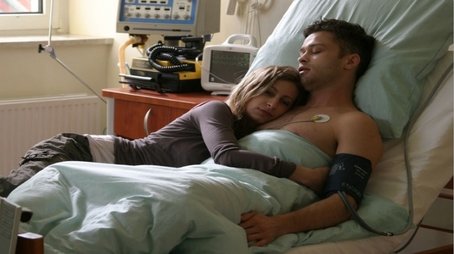
In the ending of "W cieniu," the investigation reaches a climax as the team uncovers the truth behind a series of murders linked to a shadowy figure. The main characters confront their own fears and motivations, leading to a tense resolution where justice is served, but not without personal costs. The episode concludes with a sense of closure for some, while others are left grappling with the emotional aftermath of their choices.
As the episode unfolds towards its conclusion, the tension escalates. The investigative team, led by the determined and resourceful character, is piecing together the final clues that have eluded them throughout the case. They gather in the dimly lit office, surrounded by photographs and evidence boards, their faces reflecting a mix of exhaustion and resolve. The atmosphere is thick with anticipation as they discuss the latest developments, each member contributing their insights, revealing their deep commitment to uncovering the truth.
In a pivotal scene, the team receives a crucial tip-off that leads them to a secluded location where they believe the perpetrator is hiding. The camera follows them as they navigate through dark alleyways, their expressions tense and focused. The sound of their footsteps echoes ominously, heightening the suspense. As they approach the site, the team splits up, each member taking a position to cover all angles. The air is charged with adrenaline as they prepare for a confrontation.
The confrontation itself is fraught with danger. The team finds themselves face-to-face with the shadowy figure they have been pursuing. The scene is intense, with the characters' emotions laid bare--fear, anger, and determination clash as they engage in a tense standoff. The dialogue is sharp, revealing the motivations behind the actions of both the investigators and the suspect. The suspect, cornered and desperate, reveals a glimpse of their own troubled past, adding layers to the conflict.
As the situation escalates, a struggle ensues. The camera captures the frantic movements, the shouts, and the chaos of the moment. In a heart-stopping moment, one of the team members is injured, prompting a surge of urgency among the others. They rally together, showcasing their loyalty and camaraderie as they work to subdue the suspect and ensure the safety of their injured colleague.
In the aftermath of the confrontation, the team regroups, their faces reflecting a mix of relief and sorrow. They have achieved their goal, but the cost is evident. The injured member is taken away in an ambulance, their fate uncertain, leaving the others to grapple with the emotional weight of the day's events. The camera lingers on their faces, capturing the silent understanding of the sacrifices made in the name of justice.
As the episode draws to a close, the remaining team members reflect on the case and their personal journeys. Each character is left to confront their own demons, with some finding a sense of closure while others are left with lingering questions. The final scenes show them in quiet moments, contemplating the impact of their work and the shadows that linger in their lives. The screen fades to black, leaving the audience with a poignant sense of the complexities of justice and the human experience.
Is there a post-credit scene?
In the episode "W cieniu" from season 8 of "Kryminalni," there is no post-credit scene. The episode concludes without any additional content after the credits roll, focusing instead on wrapping up the main storyline and character arcs presented throughout the episode. The narrative ends on a note that emphasizes the emotional and psychological states of the characters involved, leaving viewers with a sense of closure regarding the events that unfolded.
How do the personal lives of the detectives impact their work in this episode?
The personal lives of the detectives, particularly Kaczmarek's struggles with his past and Karp's family issues, create emotional stakes that influence their decision-making and drive their determination to solve the case.
How does the character of Inspector Kaczmarek evolve in this episode?
In this episode, Inspector Kaczmarek grapples with his own emotional turmoil as he investigates the case, revealing his vulnerabilities and the weight of his responsibilities as he seeks justice for the victim.
What role does the character of Inspector Karp play in the investigation?
Inspector Karp serves as Kaczmarek's partner, providing a contrasting perspective that balances Kaczmarek's intensity; he often acts as the voice of reason, helping to navigate the complexities of the case.
What significant clues do the detectives uncover that lead them closer to solving the case?
The detectives uncover significant clues, including a series of text messages and a hidden relationship between the victim and a local businessman, which ultimately point to deeper motives behind the crime.
What crime is central to the plot of episode 13 'W cieniu'?
The central crime in episode 13 'W cieniu' revolves around the mysterious death of a young woman, which leads the investigators to uncover a web of deceit and hidden relationships.
Is this family friendly?
"Kryminalni," particularly in season 8, episode 13 titled "W cieniu," contains themes and scenes that may not be suitable for children or sensitive viewers. The episode revolves around crime investigation, which includes:
- Violence and Crime: The narrative involves criminal activities, which may include depictions of violence or the aftermath of violent acts.
- Emotional Distress: Characters experience significant emotional turmoil, including grief and fear, which could be upsetting for younger audiences.
- Mature Themes: The episode explores complex themes such as betrayal, loss, and moral ambiguity, which may be difficult for children to understand.
- Intense Situations: There are moments of suspense and tension that could be frightening or anxiety-inducing.
These elements contribute to a darker tone that may not be appropriate for all viewers, particularly younger children or those sensitive to such content.