




































Popular
Should I watch it?
Ask Your Own Question

What is the plot?
Sorry, we aren't able to watch and write up a full detailed plot yet. Check back in a few days.

What is the ending?
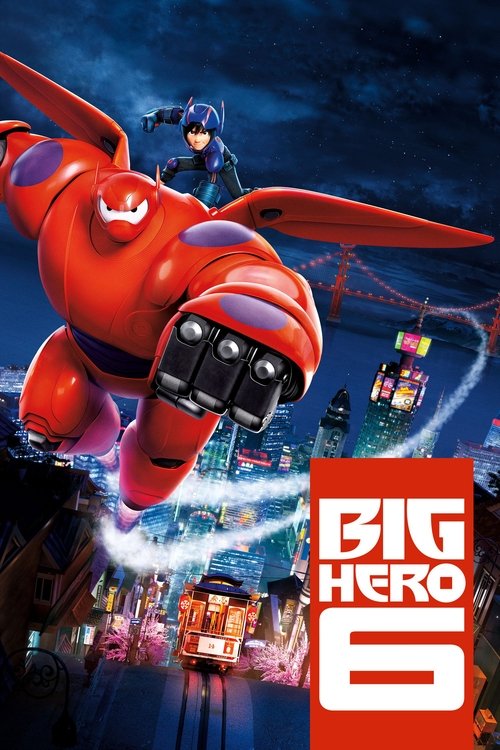
At the end of Big Hero 6, Hiro and his friends confront the villain Yokai, who is revealed to be Callaghan, the man responsible for the death of Hiro's mentor, Professor Callaghan. After an intense battle, Hiro and Baymax manage to defeat Callaghan and save the day. In the aftermath, Hiro learns to cope with his grief and begins to heal, while Baymax sacrifices himself to save Hiro. However, Hiro later finds a way to rebuild Baymax, ensuring that their friendship continues.
Now, let's delve into the ending in a more detailed, chronological narrative.
As the climax of the film unfolds, Hiro and his friends--Go Go, Wasabi, Honey Lemon, and Fred--gear up to confront the masked villain known as Yokai. They have discovered that Yokai is actually Professor Callaghan, the very man who had been a mentor to Hiro and who had been presumed dead in a tragic accident involving a portal experiment. Fueled by anger and a desire for revenge, Callaghan seeks to harness the power of the microbots that Hiro had created, which he believes will help him achieve his goals.
The scene shifts to a dramatic confrontation at the San Fransokyo Institute of Technology, where Callaghan has taken control of the microbots. The team, equipped with their unique gadgets and abilities, engages in a fierce battle against Callaghan and his army of microbots. The atmosphere is charged with tension as Hiro, still grappling with the loss of his brother Tadashi, channels his grief into determination. Baymax, the inflatable healthcare companion, is at Hiro's side, providing support and guidance.
During the fight, Hiro realizes that Baymax's programming is not just about healthcare; it also embodies the spirit of friendship and sacrifice. As the battle escalates, Callaghan unleashes a massive wave of microbots, threatening to overwhelm the team. In a moment of desperation, Hiro and Baymax devise a plan to use Baymax's rocket fist to disable Callaghan's control over the microbots. The scene is filled with high stakes as Hiro's ingenuity shines through, showcasing his growth from a troubled teen to a capable leader.
In a heart-stopping moment, Baymax sacrifices himself to save Hiro from a fatal blow, launching himself into the swarm of microbots. The emotional weight of this scene is palpable as Hiro watches his friend and protector disintegrate before his eyes. The loss of Baymax leaves Hiro devastated, but it also ignites a fire within him to honor his friend's sacrifice.
After the battle, Hiro confronts the reality of his grief and the importance of moving forward. He visits the site of the explosion that took his brother's life, where he finds a piece of Baymax's chip. This moment serves as a turning point for Hiro, as he begins to understand that while he has lost Baymax, the lessons of compassion, bravery, and friendship will always remain with him.
In the final scenes, Hiro works tirelessly to rebuild Baymax, using the chip he salvaged. The film culminates in a touching moment where Baymax is reactivated, and the bond between him and Hiro is rekindled. The joy and relief on Hiro's face reflect his journey of healing and acceptance. The rest of the team--Go Go, Wasabi, Honey Lemon, and Fred--come together to support Hiro, solidifying their friendship and commitment to being a team.
As the credits roll, we see the group of friends, now a cohesive unit known as Big Hero 6, ready to take on new challenges together. Each character has grown through their experiences, and the film closes on a hopeful note, emphasizing themes of resilience, friendship, and the importance of moving forward after loss.
Is there a post-credit scene?
Yes, "Big Hero 6" features a post-credits scene.
As the credits roll, the scene opens with Hiro Hamada in his room, where he is working on a new project. The camera pans to reveal Baymax, the inflatable healthcare companion, who is now partially deflated and resting in a corner. Hiro is seen tinkering with a small device, and he seems to be in a thoughtful mood, reflecting on the events that have transpired.
Suddenly, Hiro activates a holographic projection of Baymax's face, which appears above the device he is working on. The hologram of Baymax cheerfully greets Hiro, saying, "Hello, I am Baymax, your personal healthcare companion." This moment is filled with warmth and nostalgia, as it highlights the bond between Hiro and Baymax, despite Baymax's physical absence.
Hiro smiles at the hologram, and the scene captures a sense of hope and continuity in their relationship. The post-credits scene serves as a reminder of Baymax's enduring presence in Hiro's life, even as he continues to move forward and heal from his past experiences. It encapsulates the themes of friendship, healing, and innovation that are central to the film.
What motivates Hiro Hamada to create his microbots?
Hiro Hamada, a 14-year-old robotics prodigy, is motivated to create his microbots after witnessing their potential at an underground bot-fighting event. His passion for technology and desire to impress others drive him to develop these innovative robots, which can link together to form various structures. However, the tragic loss of his brother, Tadashi, in a fire caused by the villain, Yokai, intensifies Hiro's determination to use his inventions for good.
How does Baymax help Hiro cope with his grief?
Baymax, the inflatable healthcare companion created by Hiro's brother Tadashi, plays a crucial role in helping Hiro cope with his grief after Tadashi's death. Baymax's programmed empathy and concern for Hiro's emotional well-being lead him to encourage Hiro to express his feelings. Through their interactions, Baymax provides comfort and support, helping Hiro navigate his sorrow and ultimately guiding him toward healing and acceptance.
What is the significance of the villain's identity as Yokai?
The identity of the villain, Yokai, is significant as it is revealed to be Professor Callaghan, a mentor figure to Hiro and Tadashi. This twist adds emotional depth to the story, as Hiro grapples with the betrayal of someone he admired. Callaghan's motivations stem from a desire for revenge against the corporation that wronged him, which ultimately leads to the tragic events that affect Hiro's life. This personal connection heightens the stakes for Hiro and his friends as they confront Yokai.
How do Hiro and his friends become the superhero team Big Hero 6?
Hiro and his friends become the superhero team Big Hero 6 after Hiro initially seeks revenge against Yokai for Tadashi's death. He recruits his friends--GoGo, Wasabi, Honey Lemon, and Fred--who each bring unique skills and personalities to the team. Together, they use their individual talents to enhance their abilities and create high-tech suits and gadgets. This collaboration transforms them from ordinary students into a cohesive superhero team, united by their shared goal of stopping Yokai.
What role does the setting of San Fransokyo play in the story?
The setting of San Fransokyo, a vibrant blend of San Francisco and Tokyo, plays a crucial role in the story by providing a visually stunning backdrop that enhances the narrative. The city's futuristic technology and cultural elements reflect the innovative spirit of the characters, particularly Hiro and his friends. The unique architecture and bustling streets serve as a playground for their adventures, while also highlighting themes of friendship, community, and the impact of technology on society.
Is this family friendly?
"Big Hero 6" is generally considered family-friendly, but it does contain some scenes that may be potentially objectionable or upsetting for children or sensitive viewers. Here are a few aspects to be aware of:
-
Loss and Grief: The film opens with a tragic event involving the main character, Hiro, which leads to themes of loss and mourning. This may be emotionally challenging for younger viewers.
-
Violence: There are action sequences that include fighting and explosions. While not graphic, they may be intense for some children.
-
Villain's Threats: The antagonist poses a significant threat to the characters, and there are moments of suspense and danger that could be frightening.
-
Emotional Struggles: Characters experience feelings of loneliness, fear, and anxiety, particularly Hiro as he copes with his brother's death and his own feelings of inadequacy.
-
Mild Language: There are a few instances of mild language that some parents might find inappropriate for younger children.
Overall, while the film conveys positive messages about friendship, teamwork, and healing, these elements may require parental guidance for younger audiences.








