








































Popular
What motivates Tommaso Buscetta to become a government informant?
How does the relationship between Tommaso Buscetta and the Italian authorities evolve throughout the film?
What role does the concept of honor play in Tommaso Buscetta's decisions?
How does the film depict the impact of the Maxi Trial on the Mafia and its members?
What is the significance of Tommaso Buscetta's family dynamics in the story?
Should I watch it?
Ask Your Own Question

What is the plot?
Sorry, we aren't able to watch and write up a full detailed plot yet. Check back in a few days.




What is the ending?
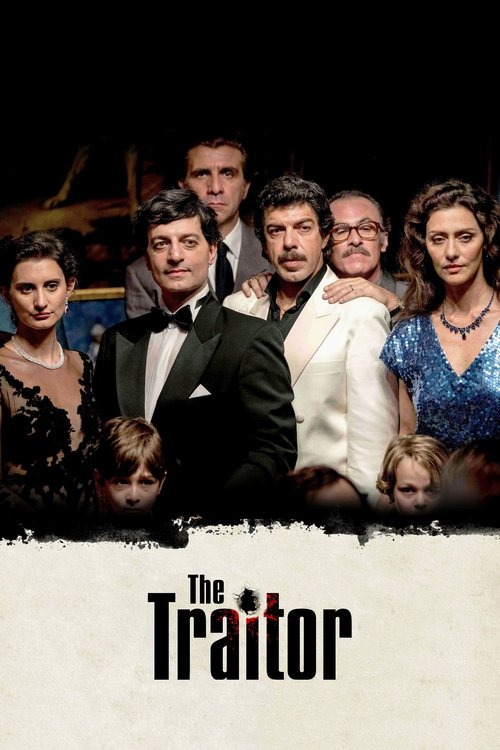
In the ending of "The Traitor," Tommaso Buscetta, the protagonist, testifies against the Sicilian Mafia, leading to significant arrests and convictions. His actions put him in danger, but he finds a sense of peace in his decision to cooperate with the authorities. The film concludes with Buscetta living in witness protection, reflecting on his life and the choices he made.
As the film approaches its climax, we find Tommaso Buscetta, portrayed with a deep sense of conflict and resolve, in a courtroom setting. The atmosphere is tense, filled with the weight of his decision to betray the Mafia. He sits before the judges, his demeanor a mix of defiance and vulnerability. The audience can feel the gravity of his choice, as he knows that by testifying, he is sealing his fate and that of many others.
In a series of flashbacks interspersed with the courtroom scenes, we see Buscetta's life unfold. He recalls his early days in Sicily, the camaraderie with his fellow mobsters, and the violent world he was a part of. Each memory is tinged with nostalgia but also regret, as he grapples with the consequences of his past actions. The emotional weight of these recollections is palpable, showcasing his internal struggle between loyalty to his former life and the desire for justice.
As he begins to testify, Buscetta recounts the inner workings of the Mafia, revealing the brutal realities of organized crime. His voice is steady, but there is an underlying tension as he describes the violent acts committed by his former associates. The camera captures the reactions of the courtroom, the judges, and the lawyers, all of whom are riveted by his testimony. His words resonate with the audience, painting a vivid picture of the Mafia's grip on society.
The scene shifts to the reactions of the Mafia members, who are watching the proceedings with a mix of anger and disbelief. They realize that Buscetta's betrayal could lead to their downfall. The tension escalates as the stakes become clear; Buscetta's life is now in jeopardy, and the Mafia will not take his testimony lightly.
In the aftermath of his testimony, we see the law enforcement officials working diligently to act on the information Buscetta has provided. They begin to make arrests, and the impact of his cooperation is felt throughout the criminal underworld. The camera captures the chaos as police raid various locations, apprehending key figures in the Mafia. This sequence is filled with a sense of urgency and determination, highlighting the ripple effect of Buscetta's decision.
As the film nears its conclusion, we witness the personal cost of Buscetta's actions. He is placed in witness protection, a stark contrast to the life he once led. The isolation is palpable; he is stripped of his former identity and forced to live in anonymity. The emotional toll is evident on his face as he reflects on the choices he made, the friends he lost, and the life he left behind.
In the final scenes, Buscetta is shown in a new environment, a quiet life away from the chaos of the Mafia. He contemplates his past, the sacrifices he made, and the people he loved. The film closes with a sense of bittersweet resolution; while he has escaped the clutches of the Mafia, he carries the weight of his decisions and the knowledge that he will always be a target.
The fates of the main characters are starkly contrasted. Buscetta, though living in fear, finds a semblance of peace in his choice to testify. The Mafia members, on the other hand, face the consequences of their actions as they are arrested and brought to justice, their power diminished by Buscetta's revelations. The film leaves the audience with a haunting reminder of the complexities of loyalty, betrayal, and the quest for redemption.
Is there a post-credit scene?
The movie "The Traitor," directed by Marco Bellocchio and released in 2019, does not contain a post-credit scene. The film concludes its narrative without any additional scenes after the credits roll. The story wraps up with a focus on the main character, Tommaso Buscetta, and the implications of his choices, leaving the audience to reflect on the themes of betrayal, justice, and the complexities of the Mafia. The absence of a post-credit scene aligns with the film's serious tone and historical context, emphasizing the weight of Buscetta's testimony and the impact it had on the fight against organized crime in Italy.
What motivates Tommaso Buscetta to become a government informant?
Tommaso Buscetta, played by Pierfrancesco Favino, is driven to become a government informant after witnessing the brutal violence and betrayal within the Sicilian Mafia, particularly after the assassination of his family members and friends. His disillusionment with the Mafia's code of silence, combined with a desire for justice and protection for his loved ones, compels him to cooperate with the authorities.
How does the relationship between Tommaso Buscetta and the Italian authorities evolve throughout the film?
Initially, Tommaso Buscetta is wary of the Italian authorities, fearing betrayal and the repercussions of his cooperation. However, as he begins to share crucial information about the inner workings of the Mafia, he develops a complex relationship with the prosecutors, particularly with Judge Giovanni Falcone. This relationship evolves from mutual distrust to a partnership based on a shared goal of dismantling the Mafia.
What role does the concept of honor play in Tommaso Buscetta's decisions?
Honor is a central theme in Tommaso Buscetta's life and decisions. Despite his betrayal of the Mafia, he grapples with the idea of honor among thieves and the consequences of his actions. His internal conflict is evident as he weighs his loyalty to the Mafia against his desire to protect his family and seek justice, ultimately leading him to redefine what honor means in the context of his choices.
How does the film depict the impact of the Maxi Trial on the Mafia and its members?
The film portrays the Maxi Trial as a pivotal moment in the fight against the Mafia, showcasing the extensive testimonies provided by Tommaso Buscetta and other informants. The trial's proceedings reveal the inner workings of the Mafia, leading to significant convictions and a temporary weakening of the organization. The emotional toll on Mafia members, including fear of betrayal and the loss of power, is vividly illustrated through their reactions to the trial's outcomes.
What is the significance of Tommaso Buscetta's family dynamics in the story?
Tommaso Buscetta's family dynamics are crucial to understanding his motivations and emotional state throughout the film. His relationships with his wife and children highlight the personal sacrifices he makes as he navigates the dangerous world of the Mafia and his role as an informant. The impact of his decisions on his family's safety and well-being adds depth to his character, illustrating the conflict between his criminal past and his desire for a better future for his loved ones.
Is this family friendly?
"The Traitor," directed by Marco Bellocchio, is a crime drama that delves into the world of the Sicilian Mafia and the complexities of betrayal. While it offers a gripping narrative, it contains several elements that may not be suitable for children or sensitive viewers.
-
Violence: The film features graphic depictions of violence, including shootings and physical confrontations, which may be disturbing to younger audiences.
-
Mafia Activities: There are scenes that portray the brutal realities of organized crime, including drug trafficking and extortion, which can be unsettling.
-
Murder: The film includes scenes of murder and assassination, showcasing the cold-blooded nature of the characters involved in the Mafia.
-
Emotional Turmoil: Characters experience intense emotional struggles, including betrayal, guilt, and fear, which may be heavy for younger viewers to process.
-
Adult Themes: The narrative explores themes of loyalty, betrayal, and moral ambiguity, which may be complex and difficult for children to understand.
-
Language: There is the use of strong language throughout the film, which may not be appropriate for younger audiences.
Overall, "The Traitor" is a mature film that deals with serious themes and contains content that may be upsetting or objectionable for children and sensitive viewers.







