


Popular
What happens to Nadja when she arrives in Venice?
How does Nadja's relationship with her friends evolve in this episode?
What role does the character of Mama Mia play in this episode?
How does Nadja react to the memories of her mother during the episode?
What challenges does Nadja face during the festival in Venice?
Should I watch it?
Ask Your Own Question

What is the plot?
Nadja and her friends, including the charming and mischievous Franz, arrive in Venice, a city known for its beautiful canals and rich culture. As they explore the picturesque streets, Nadja is captivated by the sights and sounds of the city, her eyes sparkling with wonder. The group is in high spirits, enjoying the vibrant atmosphere, but Nadja feels a twinge of longing as she thinks about her mother, whom she has been searching for.
While wandering through the bustling market, Nadja stumbles upon a small shop selling exquisite masks. She is drawn to a particular mask that reminds her of her mother, and she feels a deep emotional connection to it. As she admires the mask, the shopkeeper, an elderly woman, notices Nadja's wistful expression and strikes up a conversation. The woman shares a touching story about her own daughter, who left to pursue her dreams, and this resonates with Nadja, stirring her emotions further.
Later, the group decides to take a gondola ride through the canals. As they glide along the water, Nadja's thoughts drift to her mother, and she expresses her desire to find her. Franz, sensing her sadness, tries to cheer her up with playful banter, but Nadja's heart is heavy. The gondolier, noticing Nadja's melancholy, shares a local legend about a mother who sacrificed everything for her child, which deeply moves Nadja.
As the day progresses, Nadja and her friends encounter a street performer who is a talented singer. The performer sings a heartfelt song about love and loss, and Nadja is visibly touched. She feels a connection to the lyrics, which echo her own feelings about her mother. After the performance, Nadja approaches the singer and learns that he, too, has been separated from his family. They share a moment of understanding, and Nadja feels a sense of camaraderie with him.
That evening, the group attends a local festival celebrating the arts. The atmosphere is lively, filled with music, dancing, and laughter. Nadja, however, feels out of place as her thoughts remain with her mother. She watches as families celebrate together, and her heart aches with the desire to reunite with her own family. In a moment of vulnerability, she confides in Franz about her fears of never finding her mother, and he reassures her that they will continue their search together.
As the festival continues, Nadja spots a woman in the crowd who bears a striking resemblance to her mother. Her heart races as she rushes through the throngs of people, calling out to the woman. However, when she finally reaches her, she discovers that it is not her mother, but rather a stranger. Disappointed and heartbroken, Nadja retreats to a quiet corner, overwhelmed by her emotions.
Franz finds her and encourages her to not lose hope. He reminds her of the strength she has shown throughout their journey. Inspired by his words, Nadja resolves to keep searching for her mother, no matter how difficult it may be. They return to the festival, where Nadja decides to perform a song she has been practicing, pouring her heart into the performance. The crowd is captivated, and for a moment, Nadja feels a sense of belonging and connection.
As the night draws to a close, Nadja and her friends gather by the canal, reflecting on their experiences in Venice. Nadja expresses her gratitude for their support and friendship, feeling a renewed sense of determination. She vows to continue her journey, believing that her mother is out there somewhere, waiting for her. The episode ends with a beautiful shot of the moonlight reflecting on the water, symbolizing hope and the promise of new beginnings.








What is the ending?
In the ending of "Venice, The Tearful Mama Mia," Nadja and her friends help a woman named Mama Mia reunite with her son, who has been estranged from her. The emotional climax occurs when they successfully bring the two together, leading to a heartfelt reconciliation. Nadja, having played a crucial role in this reunion, feels a deep sense of fulfillment and connection to her own journey. The episode concludes with Nadja and her friends continuing their travels, enriched by the experience.
As the episode unfolds, we find ourselves in the enchanting city of Venice, where the canals glisten under the warm sun. Nadja, along with her companions, is captivated by the beauty of the city, but their adventure takes a poignant turn when they encounter Mama Mia, a woman filled with sorrow. She reveals that her son, who left to pursue his dreams, has not returned, leaving her heartbroken and longing for their reunion.
Nadja, empathetic and driven by her own experiences of loss and longing, decides to help Mama Mia. The group learns that Mama Mia's son is performing in a local theater, and they set off to find him. As they navigate the winding streets of Venice, the vibrant atmosphere contrasts sharply with Mama Mia's emotional turmoil. Nadja's determination shines through as she encourages Mama Mia to hold onto hope.
Upon reaching the theater, they discover that Mama Mia's son is indeed performing, but he is unaware of his mother's presence. The scene is filled with tension as Nadja and her friends devise a plan to bring them together. They manage to get backstage, where Nadja's heart races with anticipation. The moment they finally reveal Mama Mia to her son is charged with emotion; he is initially shocked but quickly overwhelmed with joy and regret.
The reunion is a powerful scene, filled with tears and heartfelt embraces. Mama Mia expresses her love and forgiveness, and her son, realizing the importance of family, vows to never leave her side again. This moment encapsulates the episode's theme of love, connection, and the importance of family ties.
As the episode draws to a close, Nadja reflects on the experience, feeling a sense of fulfillment in having helped Mama Mia. Her friends share in the joy of the reunion, and they all feel a deeper bond with one another. The camera pans out, showing the picturesque canals of Venice as Nadja and her friends continue their journey, enriched by the emotional experience they shared.
In the end, Nadja's journey is not just about her own quest for identity but also about the connections she forges with others. Mama Mia and her son find solace in each other, while Nadja and her friends carry the lessons of love and reconciliation with them as they move forward in their adventures.
Is there a post-credit scene?
In the episode "Venice, The Tearful Mama Mia" from "Ashita no Nadja," there is no post-credit scene. The episode concludes without any additional content after the credits roll. The focus remains on the main storyline and character development throughout the episode, wrapping up the events that transpired in Venice without extending into a post-credit moment.
What happens to Nadja when she arrives in Venice?
When Nadja arrives in Venice, she is immediately captivated by the beauty of the city, with its canals and vibrant atmosphere. However, she soon learns that her arrival coincides with a local festival, which brings both excitement and challenges as she navigates the bustling streets.
How does Nadja's relationship with her friends evolve in this episode?
In this episode, Nadja's relationship with her friends deepens as they face the challenges of the festival together. They support each other emotionally, especially when Nadja feels overwhelmed by the memories of her mother, which adds a layer of vulnerability to her character.
What role does the character of Mama Mia play in this episode?
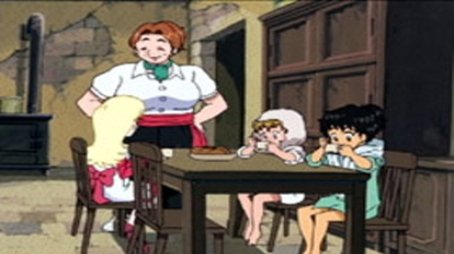
Mama Mia is a pivotal character in this episode, representing the warmth and nostalgia of family. She runs a small restaurant and becomes a maternal figure for Nadja, providing comfort and guidance as Nadja grapples with her feelings about her own mother.
How does Nadja react to the memories of her mother during the episode?
Throughout the episode, Nadja experiences a mix of joy and sorrow as she recalls memories of her mother. These flashbacks are triggered by the sights and sounds of Venice, leading her to feel a deep longing and a sense of loss, which she struggles to articulate.
What challenges does Nadja face during the festival in Venice?
During the festival, Nadja faces several challenges, including navigating the crowded streets, dealing with her emotional turmoil regarding her mother, and participating in the festivities while trying to maintain her composure. These challenges test her resilience and highlight her growth as a character.
Is this family friendly?
"Ashita no Nadja," particularly in episode 18 titled "Venice, The Tearful Mama Mia," is generally considered family-friendly. However, there are a few elements that might be potentially objectionable or upsetting for children or sensitive viewers:
-
Emotional Themes: The episode deals with themes of family separation and longing, which may evoke feelings of sadness or distress in viewers, especially children who may relate to the emotional struggles of the characters.
-
Tearful Moments: There are scenes where characters express deep sorrow or cry, which could be upsetting for sensitive viewers.
-
Conflict and Tension: The episode includes moments of conflict that may create tension, which could be unsettling for younger audiences.
Overall, while the episode contains emotional depth and some moments of sadness, it is presented in a way that is suitable for a family audience.