


Popular
What role does Germany play in the events of WWI as depicted in the episode?
How does Italy's personality contrast with Germany's in the episode?
What is the significance of the character France in the context of WWI in this episode?
How does the episode depict the relationship between the Axis powers?
What comedic elements are used to portray the events of WWI in this episode?
Should I watch it?
Ask Your Own Question

What is the plot?
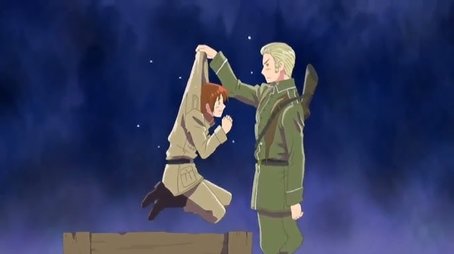
The episode begins with a brief introduction to the context of World War I, showcasing the various nations involved. The scene opens with Italy, who is depicted as carefree and somewhat naive, enjoying a sunny day while lounging around. He is soon joined by Germany, who is portrayed as serious and disciplined. Germany expresses his frustration with Italy's lack of seriousness regarding the war, emphasizing the need for Italy to be more committed.
As the conversation progresses, Italy's carefree attitude contrasts sharply with Germany's stern demeanor. Italy, feeling overwhelmed by the seriousness of the situation, tries to lighten the mood by suggesting they go for pasta instead of discussing war strategies. Germany, however, insists on focusing on the war, revealing his determination to win and his belief in the importance of discipline and strategy.
The scene shifts to a meeting of the Central Powers, where Germany is seen discussing plans with Austria-Hungary. Austria-Hungary is depicted as somewhat indecisive and reliant on Germany's leadership. They discuss the need to take action against Serbia, which is portrayed as a source of tension. Germany encourages Austria-Hungary to take a firm stance, highlighting the importance of their alliance.
Meanwhile, Italy is shown in a different light, as he interacts with his fellow Axis powers, including Japan. Italy expresses his desire to avoid conflict and his preference for a peaceful lifestyle. Japan, who is more reserved, listens to Italy's concerns but remains focused on the strategic aspects of the war. This interaction highlights Italy's internal conflict between his pacifist nature and the pressures of being part of the Axis powers.
The narrative then shifts to the battlefield, where the realities of war are depicted. Soldiers from various nations are shown in combat, illustrating the chaos and destruction of World War I. The animation captures the intensity of the battles, with explosions and gunfire creating a sense of urgency. Italy, despite his earlier reluctance, finds himself in the midst of the conflict, struggling to adapt to the harsh realities of war.
As the fighting continues, Italy's character is further developed through his interactions with other soldiers. He attempts to maintain a positive attitude, often making light of the situation, but his fear and anxiety become evident. This internal struggle is portrayed through his expressions and body language, showcasing his desire to escape the violence while feeling trapped by his circumstances.
The episode also features a comedic moment where Italy accidentally causes a mishap during a battle, leading to a humorous yet chaotic situation. This moment serves to highlight Italy's clumsiness and his tendency to inadvertently create problems, further emphasizing his character's comedic traits.
As the episode progresses, the focus returns to Germany and Austria-Hungary, who are strategizing their next moves. They discuss the importance of maintaining their alliance and the need to support each other in the face of adversity. Germany's determination to lead is evident, as he takes charge of the planning and expresses confidence in their eventual victory.
The climax of the episode occurs when Italy, feeling overwhelmed by the war, decides to flee the battlefield. He runs away, seeking refuge in a nearby town, where he hopes to find solace and avoid the chaos of war. This decision marks a significant turning point for Italy, as he grapples with his identity and the expectations placed upon him as a member of the Axis powers.
In the final scenes, Italy's escape is juxtaposed with the ongoing battles, highlighting the stark contrast between his desire for peace and the harsh realities of war. The episode concludes with a sense of uncertainty, as the characters face the consequences of their decisions and the looming challenges of the ongoing conflict. The emotional weight of the episode is felt through the characters' struggles, setting the stage for future developments in the series.









What is the ending?
In the ending of "Hetalia: Axis Powers" episode 2 titled "WWI," the episode concludes with a humorous depiction of the aftermath of World War I. The characters, representing various nations, express their frustrations and confusion over the war's outcomes and the shifting alliances. The episode ends with a comedic tone, highlighting the absurdity of the situation and the characters' personalities.
As the episode progresses towards its conclusion, the scene shifts to a war-torn battlefield, where the characters are gathered. The atmosphere is tense, filled with the remnants of conflict. Germany, who has been portrayed as a serious and disciplined character, stands amidst the chaos, looking exasperated. He is surrounded by his allies, Italy and Japan, who are less concerned about the war's seriousness and more focused on their own interests.
Italy, with his carefree demeanor, tries to lighten the mood by suggesting they should all just get along and enjoy pasta instead of fighting. His innocence and naivety shine through, as he fails to grasp the gravity of the situation. Japan, on the other hand, remains stoic and contemplative, reflecting on the war's impact on his nation and the alliances formed during this tumultuous time.
As the characters discuss the war's outcomes, they express their frustrations with the shifting alliances and the confusion surrounding the Treaty of Versailles. Germany, feeling the weight of responsibility, tries to maintain order among his allies, but his efforts are met with Italy's playful antics and Japan's quiet observations. The contrast between Germany's seriousness and Italy's lightheartedness creates a comedic tension that underscores the absurdity of war.
The episode culminates in a chaotic scene where the characters begin to argue over who is to blame for the war and its consequences. Italy, in his usual fashion, attempts to diffuse the situation with humor, but the arguments escalate, showcasing the personalities of each nation. Germany's frustration peaks as he tries to regain control, but the scene devolves into a comedic brawl, with each character embodying their national stereotypes.
As the dust settles, the characters find themselves in a state of confusion, realizing that the war has changed their relationships and alliances. The episode ends on a humorous note, with the characters reflecting on the absurdity of their situation, leaving viewers with a sense of both the gravity and the ridiculousness of war.
In summary, the episode concludes with the characters grappling with the aftermath of World War I, showcasing their distinct personalities and the comedic elements of their interactions. Germany, Italy, and Japan each face the consequences of the war in their own ways, highlighting the complexities of international relations and the absurdity of conflict.
Is there a post-credit scene?
In the episode "WWI" of Hetalia: Axis Powers, there is indeed a post-credit scene. After the main episode concludes, the scene shifts to a light-hearted moment featuring Italy, who is depicted in a comical and carefree manner.
In this scene, Italy is seen enjoying a plate of pasta, completely absorbed in his meal. His expression is one of pure bliss, showcasing his love for food. As he savors each bite, he exclaims about how delicious the pasta is, emphasizing his carefree and cheerful personality.
The scene captures Italy's innocence and simplicity, contrasting with the serious themes of war discussed in the main episode. It serves as a humorous reminder of Italy's priorities and his tendency to focus on the joys of life, even amidst the chaos of World War I. The light-heartedness of this post-credit moment provides a comedic relief, leaving viewers with a smile as the episode wraps up.
What role does Germany play in the events of WWI as depicted in the episode?
In the episode, Germany is portrayed as a serious and disciplined character, embodying the militaristic nature of his nation during WWI. He is shown trying to maintain order among the Axis powers and is often frustrated by the antics of his allies, particularly Italy, who is more carefree and less focused on the war effort.
How does Italy's personality contrast with Germany's in the episode?
Italy is depicted as carefree, whimsical, and somewhat cowardly, often avoiding conflict and seeking comfort in food and friendship. This starkly contrasts with Germany's serious demeanor and commitment to military strategy, leading to comedic situations where Italy's lightheartedness clashes with Germany's strictness.
What is the significance of the character France in the context of WWI in this episode?
France is portrayed as a flamboyant and confident character, often teasing Germany and Italy. His interactions highlight the rivalry and tensions between nations during WWI, as he embodies the spirit of France's historical role in the conflict, often seen as a romantic yet combative figure.
How does the episode depict the relationship between the Axis powers?
The episode illustrates a comedic yet chaotic dynamic among the Axis powers, particularly focusing on the interactions between Germany, Italy, and Japan. Germany often finds himself exasperated by Italy's antics, while Japan remains more reserved and serious, creating a humorous contrast that reflects their differing approaches to the war.
What comedic elements are used to portray the events of WWI in this episode?
The episode employs various comedic elements, such as exaggerated character traits, slapstick humor, and misunderstandings among the characters. For instance, Italy's cowardice leads to humorous situations where he tries to avoid battle, while Germany's frustration with Italy's behavior adds to the comedic tension, showcasing the absurdity of war.
Is this family friendly?
In "Hetalia: Axis Powers" Season 1, Episode 2 titled "WWI," the show presents historical events through a comedic lens, but there are elements that may be considered objectionable or upsetting for children or sensitive viewers. Here are some aspects to consider:
-
War Themes: The episode revolves around World War I, which inherently includes themes of conflict, violence, and the consequences of war. While depicted humorously, the backdrop of war may be unsettling for some viewers.
-
Characterization of Nations: The personifications of countries often exaggerate stereotypes, which could be misinterpreted or seen as insensitive, particularly regarding national identities and historical grievances.
-
Mild Violence: There are comedic representations of battles and conflicts, which may include slapstick violence. While not graphic, the portrayal of war can still be jarring.
-
Emotional Turmoil: Characters express feelings of frustration, sadness, and rivalry, which may resonate with viewers who are sensitive to themes of conflict and emotional distress.
-
Cultural References: Some jokes and references may be based on historical events or cultural nuances that could be confusing or inappropriate for younger audiences.
Overall, while "Hetalia" employs humor to address serious topics, the context of war and the portrayal of national stereotypes may not be suitable for all children or sensitive viewers.