


Popular
What is the significance of the flashbacks in this episode?
What role does the Rave Stone play in this episode?
What happens to Haru and his friends when they confront the Time Guardian?
How does Haru's relationship with Elie develop during this episode?
How do the characters cope with the effects of time manipulation?
Should I watch it?
Ask Your Own Question

What is the plot?
In "Out of Time, Part 3," the episode begins with Haru and his friends, Elie and Musica, still trapped in the time loop created by the villain, the Time Guardian. The atmosphere is tense as they realize they are running out of time to escape the loop and confront the Time Guardian. Haru is determined to find a way to break free, feeling the weight of responsibility to protect his friends and fulfill his role as the Rave Master.
As the episode progresses, the trio encounters various manifestations of their fears and doubts within the time loop. Each character faces their own internal struggles, with Haru grappling with his insecurities about being a leader. Elie, on the other hand, is haunted by her past and the uncertainty of her powers. Musica tries to keep the group's spirits up, but he too feels the pressure of the situation. The emotional stakes are high as they confront these personal demons, which are visually represented through dark, swirling shadows that threaten to consume them.
The Time Guardian appears, taunting them and revealing that he has the ability to manipulate time to his advantage. He showcases his powers by creating illusions that confuse and disorient Haru and his friends. In a pivotal moment, Haru musters his courage and challenges the Time Guardian, declaring that they will not be defeated by his tricks. This declaration serves as a turning point, igniting a spark of hope within the group.
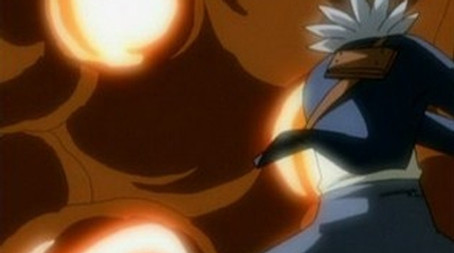
The confrontation escalates as Haru, Elie, and Musica work together to counter the Time Guardian's illusions. They combine their strengths, with Haru wielding the Rave, Elie using her magical abilities, and Musica providing support with his musical talents. The visuals are dynamic, with bursts of light and energy as they clash against the Time Guardian's dark powers. Each character's determination shines through, showcasing their growth and unity as a team.
As the battle intensifies, the Time Guardian reveals a hidden weapon: a time bomb that threatens to erase them from existence. The urgency of the situation heightens, and Haru realizes that they must act quickly to disable the bomb. In a moment of bravery, he rushes towards the device, dodging attacks from the Time Guardian. Elie and Musica provide cover, using their abilities to fend off the Guardian's strikes.
Haru reaches the time bomb and, with a surge of determination, uses the Rave to channel his energy into the device. The scene is filled with tension as the countdown ticks down, and Haru's internal struggle is palpable. He reflects on his journey and the bonds he has formed with Elie and Musica, which fuels his resolve. Just as the timer reaches its final seconds, Haru successfully disables the bomb, causing a shockwave that disrupts the Time Guardian's control over the time loop.
With the time loop collapsing, the Time Guardian is momentarily stunned, allowing Haru and his friends to launch a final attack. They combine their powers in a spectacular display of light and energy, overwhelming the Time Guardian. The Guardian, realizing he is losing, attempts to escape but is ultimately trapped by the very time manipulation he wielded. The scene is visually striking, with swirling colors and energy as the Guardian is pulled into a vortex, defeated.
As the dust settles, Haru, Elie, and Musica find themselves back in the real world, free from the time loop. They share a moment of relief and triumph, embracing one another as they celebrate their victory. Haru reflects on the importance of teamwork and the strength they found in each other during the battle. The episode concludes with a sense of hope and determination as they prepare for their next adventure, ready to face whatever challenges lie ahead.








What is the ending?
In the ending of "Out of Time, Part 3," Haru and his friends confront the time-manipulating villain, King, in a climactic battle. They manage to defeat him, restoring the timeline and saving their friends. Haru learns the importance of friendship and teamwork, and the group is left with a renewed sense of purpose as they continue their journey.
As the episode unfolds, the scene opens with Haru, Elie, and their companions standing in the ruins of the time-warped landscape created by King. The air is thick with tension as they prepare for the final confrontation. Haru, filled with determination, grips his Rave and reflects on the journey that has brought them to this moment. He feels the weight of his friends' hopes resting on his shoulders, and a sense of urgency drives him forward.
The scene shifts to King, who stands atop a crumbling tower, his eyes gleaming with malice. He taunts Haru and his friends, boasting about his power over time and the chaos he has unleashed. The atmosphere is charged with a mix of fear and resolve as Haru and his friends exchange glances, silently reaffirming their commitment to one another. Elie, her expression fierce, steps forward, ready to fight alongside Haru.
As the battle begins, King unleashes waves of temporal energy, distorting the environment around them. Haru and Elie dodge the attacks, their movements fluid and synchronized. The animation captures the intensity of their struggle, with vibrant colors and dynamic angles emphasizing the stakes of the fight. Haru's internal monologue reveals his fear of failure, but he pushes through, motivated by the memories of their adventures and the bonds they have formed.
In a pivotal moment, Haru channels the power of the Rave, and with Elie's support, they launch a combined attack against King. The energy surges around them, illuminating the darkened landscape. The scene is filled with dramatic music, heightening the emotional impact as they unleash their final strike. King, caught off guard, is overwhelmed by the force of their combined strength.
As the dust settles, King is defeated, and the time-warp begins to unravel. The landscape shifts back to its original state, and the friends are momentarily disoriented. Haru, breathing heavily, looks around and sees the familiar sights of their world returning. A sense of relief washes over him, and he realizes that they have not only saved their friends but also restored the balance of time.
In the aftermath, the group gathers together, their expressions a mix of exhaustion and triumph. Haru reflects on the importance of their friendship, acknowledging that they could not have succeeded without each other. Elie smiles at him, her eyes shining with gratitude and pride. The bonds they have forged are stronger than ever, and they share a moment of camaraderie, laughing and celebrating their victory.
As the episode draws to a close, Haru, Elie, and their friends set off on their next adventure, their spirits lifted and their resolve renewed. The final scene captures them walking together, side by side, ready to face whatever challenges lie ahead. The screen fades to black, leaving viewers with a sense of hope and the promise of new beginnings.
Is there a post-credit scene?
In the episode "Out of Time, Part 3" of Rave Master, there is no post-credit scene. The episode concludes without any additional content after the credits roll. The focus remains on the resolution of the main storyline, where Haru and his friends confront the challenges posed by the time manipulation and the ongoing battle against the forces of evil. The narrative wraps up the emotional arcs and character developments without extending into a post-credit sequence.
What is the significance of the flashbacks in this episode?
The flashbacks serve to deepen the audience's understanding of the characters' motivations and histories. They reveal pivotal moments that shaped Haru and Elie's resolve, emphasizing the stakes of their current battle against the Time Guardian and the importance of their mission.
What role does the Rave Stone play in this episode?
The Rave Stone is crucial in this episode as it is the key to defeating the Time Guardian. Haru must harness its power effectively, and the struggle to control it adds tension to the narrative, highlighting Haru's growth as a Rave Master.
What happens to Haru and his friends when they confront the Time Guardian?
In this episode, Haru and his friends face the Time Guardian, who has the ability to manipulate time. The confrontation is intense, as the Time Guardian uses his powers to create illusions and distort reality, challenging the group's resolve and teamwork.
How does Haru's relationship with Elie develop during this episode?
Throughout 'Out of Time, Part 3', Haru's feelings for Elie deepen as they face the Time Guardian together. Their bond is tested, but they support each other emotionally, showcasing their growing trust and reliance on one another in the face of danger.
How do the characters cope with the effects of time manipulation?
As the Time Guardian manipulates time, the characters experience disorientation and fear. Each character reacts differently; Haru shows determination to fight back, while others, like Elie, struggle with the emotional weight of their pasts being altered, showcasing their vulnerabilities.
Is this family friendly?
"Rave Master," particularly in the episode "Out of Time, Part 3," is generally considered family-friendly, but there are a few elements that might be concerning for younger viewers or sensitive individuals.
-
Intense Battles: The episode features action-packed scenes with battles that may include some violence, though it is presented in a fantastical context. Characters engage in combat, which could be intense for some viewers.
-
Emotional Struggles: Characters experience feelings of despair, loss, and urgency, which may resonate deeply with sensitive viewers. The emotional stakes are high, and some scenes may evoke feelings of sadness or anxiety.
-
Dark Themes: There are themes of time manipulation and the consequences of actions that could be unsettling for younger audiences. The concept of time being altered can lead to confusion or fear about the unknown.
-
Character Vulnerability: Some characters face moments of vulnerability and fear, which may be upsetting for children who are sensitive to themes of danger or helplessness.
Overall, while the show is designed for a younger audience, these elements may require parental guidance for some viewers.