


Popular
What is the significance of the Dragon Race in this episode?
How does Haru's relationship with his friends evolve during the Dragon Race?
What role does the character of Shiba play in the Dragon Race?
What are the challenges faced by the participants in the Dragon Race?
How does the episode explore the theme of legacy through the Dragon Race?
Should I watch it?
Ask Your Own Question

What is the plot?
In the episode "Truth about the Dragon Race," the story begins with Haru Glory and his companions, Elie and Musica, continuing their journey. They find themselves in a mysterious forest where they encounter a group of dragon-like creatures. The atmosphere is tense as the trio is unsure of what to expect from these beings. Haru, driven by his desire to protect his friends and uncover the truth about the dragons, takes the lead.
As they venture deeper into the forest, they come across a clearing where they witness a fierce battle between the dragon creatures and a group of humans. The humans are attempting to capture the dragons, and the scene is chaotic, filled with roars and flashes of light from magic attacks. Haru feels a surge of empathy for the dragons, sensing their pain and fear. He decides they must intervene to help the dragons, believing that they are misunderstood.
Haru, Elie, and Musica rush into the fray, using their abilities to fend off the humans. Haru wields his Rave, channeling its power to create a protective barrier around the dragons. Elie uses her magic to heal the injured creatures, while Musica employs his skills to distract the attackers. The battle is intense, with close calls and moments of bravery as they fight side by side with the dragons.
After the humans are driven off, the dragons reveal themselves to be sentient beings capable of speech. They express their gratitude to Haru and his friends, explaining that they are part of an ancient race that has been hunted for centuries. The leader of the dragons, a majestic creature named Dragnir, shares the history of the Dragon Race, detailing how they were once revered but have since been persecuted due to fear and misunderstanding.
As the conversation unfolds, Haru learns that the dragons possess a unique power that is tied to the Rave. Dragnir explains that the Rave is a key to understanding the true nature of the dragons and their connection to the world. This revelation ignites a sense of purpose in Haru, who feels a responsibility to protect the dragons and help them reclaim their rightful place in the world.
However, the peace is short-lived as a new threat emerges. A powerful sorcerer, who has been tracking the dragons, arrives on the scene with a group of mercenaries. He seeks to capture Dragnir and harness the power of the Dragon Race for his own nefarious purposes. The tension escalates as the sorcerer confronts Haru and his friends, demanding that they hand over the dragons.
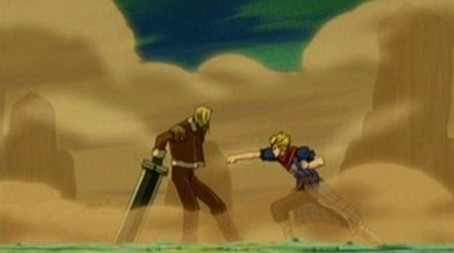
Haru, fueled by determination and a sense of justice, refuses to comply. A fierce battle ensues, with Haru and his companions fighting valiantly against the sorcerer and his mercenaries. The fight is filled with dramatic moments, showcasing each character's abilities and growth. Haru channels the power of the Rave, unleashing a powerful attack that momentarily stuns the sorcerer.
In the heat of battle, Elie and Musica work together to protect the dragons, using their skills to fend off the mercenaries. The scene is chaotic, with spells flying and the clash of weapons echoing through the forest. Haru's resolve strengthens as he witnesses the bravery of his friends and the dragons, pushing him to fight harder.
As the battle reaches its climax, Dragnir joins the fight, revealing his true power. He unleashes a devastating attack that turns the tide against the sorcerer. The sorcerer, realizing he is outmatched, attempts to retreat but is ultimately captured by the combined efforts of Haru, Elie, Musica, and the dragons.
With the threat neutralized, the atmosphere shifts from one of conflict to relief. The dragons express their gratitude once more, and Haru feels a deep sense of fulfillment knowing they have protected these creatures. Dragnir acknowledges Haru's bravery and offers to share more about the Dragon Race and their connection to the Rave.
The episode concludes with Haru and his friends reflecting on their journey and the bonds they have formed with the dragons. They understand that their fight is far from over, but they are more determined than ever to protect those who cannot protect themselves. The screen fades as they prepare to continue their adventure, united in their mission to uncover the truth and bring peace to the world.








What is the ending?
In the ending of "Truth about the Dragon Race," Haru and his friends confront the truth about the Dragon Race and its connection to the Rave. They learn about the sacrifices made by the Dragon Race and the importance of their legacy. The episode concludes with Haru reaffirming his commitment to protect the world and the bonds he shares with his friends.
As the episode unfolds, the scene opens with Haru, Elie, and their companions standing in a desolate landscape, remnants of a battle that has taken place. The air is thick with tension as they gather to discuss the revelations about the Dragon Race. Haru, visibly troubled, reflects on the weight of the truth they have uncovered. His determination to understand the past and protect the future is palpable, as he clenches his fists, vowing to honor the legacy of the Dragon Race.
The scene shifts to a flashback, where the history of the Dragon Race is revealed. The audience sees the majestic dragons soaring through the skies, their scales shimmering in the sunlight. The dragons are depicted as noble beings, guardians of peace, who sacrificed themselves to protect the world from darkness. This visual juxtaposition highlights the gravity of their sacrifice and the burden it places on Haru and his friends.
Returning to the present, Elie expresses her sorrow for the dragons and their fate. Her eyes glisten with tears as she empathizes with their struggle, showcasing her deep emotional connection to the story. Haru reassures her, emphasizing that their sacrifices were not in vain. He speaks passionately about the importance of carrying on their legacy, igniting a spark of hope in the group.
As the conversation continues, the group reflects on their own journeys and the bonds they have formed. Each character shares their thoughts, revealing their motivations and fears. Musica, with a determined look, expresses his desire to protect those he loves, while Plue, the small creature, offers a moment of comic relief, lightening the mood despite the heavy topic.
The climax of the episode arrives when Haru, filled with resolve, declares that they must continue to fight against the darkness threatening their world. He raises his sword, the Rave, high above his head, symbolizing their unity and strength. The group stands together, their faces set with determination, ready to face whatever challenges lie ahead.
In the final moments, the camera pans out, capturing the group as they stand against the backdrop of the setting sun. The colors of the sky reflect their hope and determination, a visual metaphor for their commitment to protect the world and honor the Dragon Race. The episode closes with Haru's voiceover, reiterating his promise to fight for a brighter future, solidifying the emotional weight of their journey and the bonds they have forged.
As the credits roll, viewers are left with a sense of hope and anticipation for the adventures that await Haru and his friends, each character having grown through their experiences and ready to face the next chapter of their story.
Is there a post-credit scene?
In the episode "Truth about the Dragon Race" from Rave Master, there is no post-credit scene. The episode concludes without any additional content after the credits roll. The focus remains on the main storyline and character developments throughout the episode, leaving no extra scenes or teasers for future episodes.
What is the significance of the Dragon Race in this episode?
In this episode, the Dragon Race is revealed to be a crucial event that holds deep historical significance for the characters, particularly for Haru and his understanding of his own powers. The race is not just a competition; it symbolizes the struggle between the forces of good and evil, and it is tied to the legacy of the Rave Master.
How does Haru's relationship with his friends evolve during the Dragon Race?
Throughout the Dragon Race, Haru's bond with his friends, particularly with Elie and Musica, deepens as they face challenges together. Their shared experiences during the race highlight their loyalty and the importance of teamwork, showcasing Haru's growth as a leader and friend.
What role does the character of Shiba play in the Dragon Race?
Shiba serves as a pivotal character in the Dragon Race, acting as both a mentor and a rival to Haru. His motivations are revealed to be complex, as he has his own reasons for participating in the race, which intertwine with the larger narrative of the battle against evil forces.
What are the challenges faced by the participants in the Dragon Race?
The participants in the Dragon Race face numerous challenges, including treacherous terrain, magical obstacles, and confrontations with other competitors. These challenges test their physical abilities and resolve, pushing them to their limits and revealing their true character.
How does the episode explore the theme of legacy through the Dragon Race?
The episode delves into the theme of legacy by showcasing how the Dragon Race is tied to the history of the Rave Master and the previous generations. Characters reflect on their pasts and the expectations placed upon them, particularly Haru, who grapples with the weight of his destiny as the Rave Master.
Is this family friendly?
In "Truth about the Dragon Race," there are a few elements that may be considered potentially objectionable or upsetting for children or sensitive viewers:
-
Intense Battles: The episode features scenes of combat that may be intense, with characters facing off against formidable foes. The action can be dramatic and may evoke feelings of tension or fear.
-
Emotional Struggles: Characters experience moments of doubt, fear, and sadness as they confront their past and the truth about their origins. These emotional scenes may resonate deeply and could be upsetting for some viewers.
-
Themes of Betrayal and Loss: The narrative touches on themes of betrayal and the consequences of past actions, which may be heavy for younger audiences to process.
-
Visuals of Conflict: There are visual depictions of conflict and struggle that may be unsettling, particularly for younger children who might be sensitive to such imagery.
Overall, while the episode contains adventure and fantasy elements typical of the genre, the emotional depth and intensity of certain scenes may require parental guidance for younger viewers.