
















Popular
What are the main characteristics of Katarina Claes as a character?
How does Katarina's knowledge of the game influence her actions?
What role do the other characters play in Katarina's life?
What are some of the comedic situations that arise from Katarina's attempts to avoid doom?
How does Katarina's relationship with her family influence her character development?
Should I watch it?
Ask Your Own Question

What is the plot?
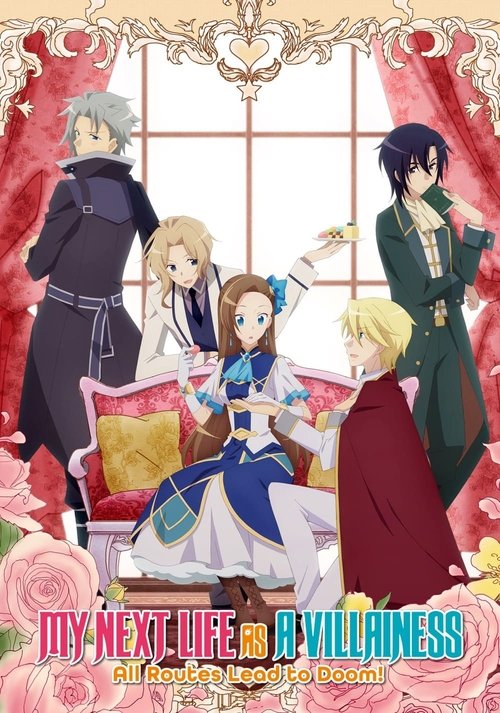
The story begins with a high school girl named Katarina Claes, who is struck on the head by a rock and suddenly remembers her past life as a Japanese student. She realizes that she has been reincarnated into the world of an otome game called "Fortune Lover," where she is cast as the villainess, Katarina Claes. In the game, her character is destined to face doom by either exile or death, depending on the choices made by the protagonist, the heroine named Mary Hunt. Determined to avoid her grim fate, Katarina resolves to change her destiny.
Katarina begins to take proactive steps to alter her future. She recalls the various routes of the game and the characters involved, including the male leads: the noble and kind-hearted Geordo Stuart, the cold but caring Keith Claes, and the charming but mischievous Nicol Ascart. She also remembers the heroine, Mary, and her rival, the sweet but naive Sophia Ascart. To prevent her doom, Katarina decides to befriend everyone, including her potential enemies.
Katarina's first major decision is to befriend Mary Hunt, the heroine of the game. She approaches Mary with kindness, inviting her to play and spend time together. This unexpected friendship surprises Mary, who is initially wary of Katarina's intentions. However, Katarina's genuine nature wins Mary over, and they quickly become close friends. This act of kindness alters the course of the story, as Katarina's friendship with Mary changes the dynamics of the game.
As Katarina continues to navigate her new life, she also befriends the other male leads. She invites Geordo to join her in gardening, which he enjoys, and they bond over their shared interests. Geordo becomes increasingly smitten with Katarina, which complicates her efforts to avoid her doom. Meanwhile, she also spends time with Keith, her childhood friend, who is protective of her and begins to develop feelings for her as well. Nicol, the playful and flirtatious character, also shows interest in Katarina, adding to the romantic tension.
Katarina's efforts to befriend everyone lead her to a series of comedic and awkward situations. She accidentally causes misunderstandings, such as when she tries to help Mary with her studies but ends up making things worse. Despite these mishaps, Katarina's charm and determination endear her to those around her. Her relationships with the characters deepen, and she becomes a beloved figure in the academy.
As the story progresses, Katarina learns about the upcoming school festival, which is a significant event in the game. She decides to participate in the festival's activities, including a play that features the main characters. Katarina's enthusiasm and willingness to help others lead her to take on various roles, further solidifying her friendships. However, she remains unaware of the romantic feelings developing around her.
During the festival, Katarina's clumsiness leads to a series of comedic events, including a mishap with the play's props. Despite the chaos, her friends rally around her, showcasing their loyalty and affection. The festival culminates in a heartfelt moment where Katarina realizes the importance of her friendships and the impact she has on those around her.
As the season nears its conclusion, Katarina's past life memories continue to haunt her, especially the knowledge of her potential doom. She becomes increasingly anxious about the future and the choices she must make to avoid her fate. In a moment of vulnerability, she confides in her friends about her fears, which strengthens their bond and leads them to support her in her quest to change her destiny.
The final episodes of the season focus on the growing tensions between the characters as they navigate their feelings for Katarina. Geordo, Keith, and Nicol each confront their emotions, leading to a love triangle that complicates their friendships. Katarina remains oblivious to the romantic tension, focusing instead on her goal of avoiding doom.
In the climactic finale, Katarina faces a pivotal moment when she accidentally triggers a series of events that mirror the game's plot. She finds herself in a situation where she must confront the consequences of her actions and the potential for doom. However, her friends come to her aid, demonstrating their loyalty and love for her. Together, they work to resolve the conflict, showcasing the strength of their bonds.
The season concludes with Katarina realizing that her relationships have changed the course of her life. She has successfully altered her fate, but the romantic entanglements and friendships she has formed leave her in a complicated position. As she reflects on her journey, she understands that her new life is filled with challenges, but she is determined to face them with the support of her friends. The season ends on a hopeful note, with Katarina ready to embrace whatever comes next, confident in her ability to navigate her new world.


What is the ending?
In the ending of "My Next Life as a Villainess: All Routes Lead to Doom!" Season 1, Katarina Claes successfully avoids all the doom flags that would lead to her demise. She manages to navigate her relationships with the main characters, including her childhood friends and potential love interests, ensuring that she does not end up exiled or killed. The season concludes with her living happily, surrounded by her friends, and hinting at future adventures.
As the final episodes unfold, the tension builds around Katarina Claes, who has been acutely aware of the doom flags that threaten her life in this otome game world. The scene opens with Katarina in her garden, surrounded by blooming flowers, a symbol of her growth and the friendships she has cultivated. She reflects on her journey, her heart filled with gratitude for her friends who have supported her.
In the next scene, we see her interacting with her childhood friends: Mary Hunt and Sophia Ascart. They are in the midst of a cheerful tea party, laughter echoing through the air. Katarina, with her usual clumsiness, accidentally spills tea, but instead of embarrassment, she laughs it off, showcasing her carefree spirit. This moment highlights the bond she has formed with them, as they share a light-hearted moment, reinforcing their friendship.
The narrative shifts to a more serious tone as Katarina faces the looming threat of her engagement to Prince Geordo Stuart. She is aware that this engagement could lead to jealousy and rivalry, particularly from her friend, the noble and elegant, Maria Campbell. In a pivotal scene, Katarina confronts her feelings and decides to be honest with Geordo about her intentions. She expresses her desire to remain friends, emphasizing her wish to avoid the romantic entanglements that could lead to her doom. Geordo, taken aback, admires her honesty and agrees to support her decision, showcasing his character's growth and understanding.
As the story progresses, the climax arrives during the school festival, where all the characters gather. The atmosphere is vibrant, filled with colorful decorations and the sounds of laughter and music. Katarina, dressed in a beautiful costume, participates in various activities, her joy infectious. However, the tension rises when Maria, feeling threatened, confronts Katarina. In a heartfelt exchange, Katarina reassures Maria of her friendship, emphasizing that she values their bond over any romantic rivalry. This moment is crucial as it resolves the conflict between them, allowing Maria to accept Katarina's place in their lives.
The final scenes depict a serene evening as the festival concludes. Katarina stands on a balcony, gazing at the stars, reflecting on her journey. She feels a sense of peace, knowing she has avoided her doom flags and built strong relationships. The camera pans out, showing her friends joining her, symbolizing unity and the strength of their bonds.
In the closing moments, the narrative hints at future adventures, with Katarina's character poised for more growth and challenges. The season ends on a hopeful note, with Katarina surrounded by her friends, embodying the themes of friendship, acceptance, and the importance of being true to oneself. Each character, from Geordo to Maria, has found their place in this new dynamic, setting the stage for potential developments in the next season.
Is there a post-credit scene?
In "My Next Life as a Villainess: All Routes Lead to Doom!" Season 1, there is indeed a post-credit scene. This scene occurs after the final episode, providing a light-hearted and humorous conclusion to the season.
As the credits roll, the scene opens with Catarina Claes, the protagonist, in a playful and carefree mood. She is seen enjoying a sunny day in the garden of her family's estate, surrounded by blooming flowers and the gentle rustle of leaves in the breeze. Catarina is happily interacting with her friends, including the charming and supportive characters like Mary Hunt and Sophia Ascart.
In this whimsical moment, Catarina is engaged in a light-hearted conversation, showcasing her cheerful personality and the bonds she has formed with her friends. The atmosphere is filled with laughter, and the camaraderie among the group is palpable, highlighting the warmth and affection they share.
Suddenly, the scene shifts to a comedic twist. Catarina, in her usual clumsy manner, accidentally trips over a garden gnome, causing a chain reaction that leads to a series of humorous mishaps involving her friends. The scene captures the essence of the show--Catarina's endearing clumsiness and the light-hearted nature of her interactions with those around her.
The post-credit scene serves as a delightful reminder of the friendships and connections Catarina has built throughout the season, leaving viewers with a sense of joy and anticipation for what may come next in her adventures. It encapsulates the show's blend of comedy, friendship, and the charm of its characters, making it a fitting conclusion to the season.
What are the main characteristics of Katarina Claes as a character?
Katarina Claes is portrayed as a cheerful, optimistic, and somewhat oblivious girl who is the daughter of a noble family. After being reincarnated into the world of an otome game as the villainess, she is determined to avoid her doomed fate. Her personality is marked by her kindness, determination, and a tendency to be clumsy, which often leads to humorous situations. She is also fiercely protective of her friends and is willing to go to great lengths to ensure their happiness.
How does Katarina's knowledge of the game influence her actions?
Katarina's knowledge of the otome game she was reincarnated into drives her to change her fate. She actively tries to avoid the bad endings that befall the villainess character, which includes being exiled or killed. This knowledge leads her to befriend the game's love interests, including the male leads, in hopes of securing their affection and altering the course of the story. Her attempts to change her fate often result in unintended consequences, creating comedic and heartwarming moments.
What role do the other characters play in Katarina's life?
The other characters, including her childhood friends Mary, Sophia, and the male leads like Geordo, Keith, and Nicol, play significant roles in Katarina's life. They each have their own backgrounds and motivations, which intertwine with Katarina's journey. For instance, Mary and Sophia initially have their own struggles with the game's narrative, but they find camaraderie and support in Katarina. The male leads, who are supposed to fall for the heroine, become confused by Katarina's genuine kindness and end up developing feelings for her instead.
What are some of the comedic situations that arise from Katarina's attempts to avoid doom?
Katarina's attempts to avoid her doom lead to numerous comedic situations, such as when she misinterprets the intentions of her friends and the male leads. For example, her clumsy attempts to befriend everyone often result in misunderstandings, like when she accidentally challenges a duel or when she tries to help her friends but ends up causing chaos. Her obliviousness to the romantic feelings others have for her adds to the humor, as she remains unaware of the love she inspires while focusing on her goal of survival.
How does Katarina's relationship with her family influence her character development?
Katarina's relationship with her family, particularly her parents, influences her character development significantly. They are supportive and loving, which instills in her a sense of confidence and security. However, her desire to avoid the fate of the villainess also stems from her wish to not disappoint them. This familial bond motivates her to act with kindness and to protect her friends, as she wants to create a positive environment around her. Her interactions with her family also highlight her growth as she learns to balance her own desires with the expectations placed upon her.
Is this family friendly?
"My Next Life as a Villainess: All Routes Lead to Doom!" is generally considered family-friendly, with a light-hearted tone and comedic elements. However, there are a few aspects that might be considered objectionable or upsetting for children or sensitive viewers:
-
Themes of Bullying: The protagonist, Catarina Claes, faces bullying and social exclusion from her peers, which may resonate with children who have experienced similar situations.
-
Romantic Tension: There are romantic subplots that involve jealousy and rivalry, which might be confusing for younger viewers.
-
Character Misunderstandings: Some scenes involve misunderstandings that lead to emotional distress for characters, which could be upsetting for sensitive viewers.
-
Fantasy Violence: While not graphic, there are instances of fantasy violence, such as duels and magical confrontations, that may be intense for some children.
-
Depictions of Failure: Catarina's repeated attempts to avoid her doom lead to moments of failure and despair, which could be disheartening for younger audiences.
Overall, while the show maintains a comedic and light-hearted approach, these elements may require parental guidance for younger viewers.