





Popular
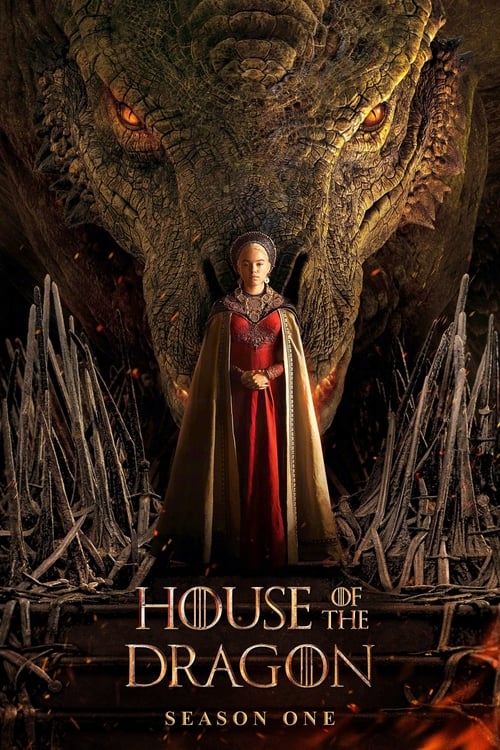
What is the significance of the Iron Throne in House of the Dragon?
What role do the dragons play in the power dynamics of House of the Dragon?
How does the relationship between Rhaenyra Targaryen and Alicent Hightower evolve throughout the season?
What are the motivations behind Daemon Targaryen's actions in the series?
How does King Viserys I Targaryen's leadership style impact the events of the season?
Should I watch it?
Ask Your Own Question

What is the plot?
The series opens with a prologue that sets the stage for the Targaryen dynasty's internal struggles. King Viserys I Targaryen, seated on the Iron Throne, is faced with the difficult decision of choosing a successor. His wife, Queen Aemma Arryn, is pregnant, and the kingdom is abuzz with speculation about the potential heir. Viserys is deeply invested in the idea of a male heir, which leads to tension with his daughter, Princess Rhaenyra Targaryen, who is the king's firstborn.
Aemma goes into labor, and the situation becomes dire. The maesters inform Viserys that Aemma and the child may not survive the birth. In a heart-wrenching decision, Viserys chooses to save the child by allowing a cesarean section, which ultimately results in Aemma's death. The newborn son, Aegon, is born but dies shortly after. Viserys is left devastated, and Rhaenyra is forced to confront the harsh realities of her position as a female heir in a patriarchal society.
Following the tragedy, the realm is in mourning, and Viserys names Aegon as his heir, despite Rhaenyra's claim. This decision sows the seeds of discord, as Rhaenyra feels betrayed by her father. The tension escalates when Otto Hightower, the Hand of the King, encourages Viserys to marry again, suggesting that a new queen could provide a stronger male heir. Viserys reluctantly agrees, and he marries Alicent Hightower, Otto's daughter, which further alienates Rhaenyra.
As time passes, Rhaenyra grows into a strong and capable woman, determined to assert her claim to the throne. She forms a bond with her uncle, Daemon Targaryen, who is a fierce warrior and a dragon rider. Daemon's rebellious nature and ambition create a complex relationship with Rhaenyra, as they both share a desire for power and recognition. Their bond deepens when they attend a tournament held in honor of Aegon's birth, where Daemon showcases his prowess in combat.
The tournament is a spectacle, filled with knights and lords vying for glory. Tensions rise as Rhaenyra watches her father's new family grow, with Alicent giving birth to Aegon II and other children. The rivalry between Rhaenyra and Alicent intensifies, as both women navigate the treacherous waters of court politics. Rhaenyra's frustration grows as she feels her claim is being undermined by her father's decisions and Alicent's influence.
As the years progress, Rhaenyra is named the official heir to the Iron Throne, but her position is continually challenged. The political landscape shifts when Alicent's children, particularly Aegon II, begin to assert their own claims. The tension culminates in a pivotal moment when Rhaenyra and Alicent confront each other, leading to a heated argument that reveals their deep-seated animosity and the stakes of their rivalry.
The situation escalates further when Daemon and Rhaenyra secretly marry, solidifying their alliance and further complicating the power dynamics within the Targaryen family. This union is met with outrage from many in the realm, as it defies traditional expectations and fuels the fire of conflict. The couple's ambition to secure their claim to the throne becomes increasingly apparent, and they begin to gather supporters.
As the political machinations unfold, the death of King Viserys creates a power vacuum. Rhaenyra believes she is the rightful queen, but Alicent and her supporters, including Otto Hightower, move quickly to crown Aegon II instead. This act of betrayal ignites a civil war known as the Dance of the Dragons, pitting Rhaenyra and her supporters against Alicent and Aegon II's faction.
The war leads to brutal confrontations, with dragons being deployed in battle. Rhaenyra's forces engage in fierce skirmishes against Aegon II's supporters, resulting in significant casualties on both sides. The emotional toll of the conflict weighs heavily on Rhaenyra, who grapples with the loss of allies and the devastation of her family.
As the war rages on, Rhaenyra's position becomes increasingly precarious. Betrayals from within her ranks and the loss of key battles force her to make desperate decisions. The conflict culminates in a series of tragic events, including the deaths of beloved characters and the destruction of dragons, which symbolize the Targaryen legacy.
In the final moments of the season, Rhaenyra's hopes for the throne are shattered as she faces betrayal from those she trusted. The season ends on a cliffhanger, leaving the fate of the Targaryen dynasty uncertain and setting the stage for further conflict in the subsequent seasons.






What is the ending?
In the ending of "House of the Dragon" Season 1, the tensions between the Targaryens escalate into open conflict, setting the stage for a civil war known as the Dance of the Dragons. The season concludes with the death of key characters and the firm establishment of rival factions within House Targaryen, particularly between Rhaenyra Targaryen and her half-brother Aegon II. The final scenes depict the deepening rift and the tragic consequences of their struggle for the Iron Throne.
As the season draws to a close, we find ourselves in the Red Keep, where the atmosphere is thick with tension. Rhaenyra Targaryen, having been named heir to the Iron Throne by her father, King Viserys I, is grappling with the betrayal of her half-brother Aegon II, who has been crowned king by a faction of nobles. The scene is heavy with the weight of betrayal and ambition, as Rhaenyra's supporters rally around her, determined to claim her rightful place.
In a pivotal moment, Rhaenyra receives news of her father's death, which sends shockwaves through the court. The camera captures her face, a mixture of grief and resolve, as she understands the implications of this news. The tension escalates as she prepares to assert her claim, knowing that Aegon II will not relinquish the throne easily. The audience can feel her internal struggle; she is torn between her desire for power and her love for her family.
Meanwhile, Aegon II, now seated on the Iron Throne, is surrounded by his supporters, who are eager to solidify his rule. The scene is filled with a sense of foreboding as Aegon grapples with the weight of his new position. He is portrayed as both a reluctant king and a man driven by ambition, showcasing the duality of his character. The camera lingers on his face, revealing the fear and uncertainty that accompany his newfound power.
As the conflict escalates, we witness the first skirmishes between the factions loyal to Rhaenyra and those supporting Aegon II. The battles are brutal and chaotic, with dragons soaring through the skies, fire lighting up the night, and the sounds of clashing steel echoing across the battlefield. Each character's motivations are laid bare in these moments; Rhaenyra fights not just for the throne but for her children and her legacy, while Aegon II is driven by a desire to prove himself worthy of the crown.
In the final scenes, the stakes are raised even higher as Rhaenyra's son, Lucerys Velaryon, is tragically killed by Aemond Targaryen, Aegon II's brother. This act of violence marks a turning point, solidifying the divide between the two factions and igniting a fierce desire for revenge in Rhaenyra. The emotional weight of this moment is palpable, as Rhaenyra's grief transforms into a burning determination to reclaim her throne and avenge her son.
The season concludes with Rhaenyra preparing for war, her face set in a mask of resolve, while Aegon II sits on the Iron Throne, surrounded by his supporters, unaware of the storm that is about to engulf them all. The final shot lingers on the Iron Throne, a symbol of power and the bloodshed that comes with it, leaving the audience with a sense of impending doom and the knowledge that the Targaryen civil war is just beginning.
In summary, the fates of the main characters are sealed in this climactic ending: Rhaenyra is poised for a fierce battle to reclaim her birthright, Aegon II is entrenched in his rule but faces growing opposition, and the conflict between the two sides promises to lead to devastating consequences for the entire realm. The stage is set for a brutal and tragic struggle, encapsulating the themes of ambition, betrayal, and the high cost of power that permeate the series.
Is there a post-credit scene?
In "House of the Dragon," Season 1, there is no post-credit scene. The season concludes with the final episode, "The Black Queen," which wraps up the main narrative arcs without any additional scenes after the credits. The focus remains on the intense political and familial conflicts leading to the Targaryen civil war, known as the Dance of the Dragons, leaving viewers with a sense of anticipation for the next season rather than a teaser or additional content. The emotional weight of the characters' decisions and the looming conflict are emphasized in the closing moments, setting the stage for future developments in the story.
What is the significance of the Iron Throne in House of the Dragon?
The Iron Throne symbolizes the ultimate power and authority in Westeros, serving as the seat of the ruler of the Seven Kingdoms. In 'House of the Dragon', it is a focal point of conflict, representing the Targaryen legacy and the bloody struggle for control among the family members. The throne itself, made from the swords of defeated enemies, is a constant reminder of the violent history of the Targaryens and the lengths they will go to maintain their rule.
What role do the dragons play in the power dynamics of House of the Dragon?
Dragons are a crucial element in 'House of the Dragon', serving as symbols of power and destruction. The Targaryens' ability to control dragons gives them a significant military advantage over their rivals. Throughout the season, the presence of dragons influences key battles and decisions, as characters like Daemon Targaryen and Rhaenyra Targaryen utilize their dragons to assert dominance and intimidate opponents, showcasing the deep connection between the Targaryens and their dragons.
How does the relationship between Rhaenyra Targaryen and Alicent Hightower evolve throughout the season?
Rhaenyra Targaryen and Alicent Hightower start as close friends, sharing a bond over their youth and the pressures of court life. However, as the series progresses, their relationship deteriorates due to political machinations and personal betrayals. Rhaenyra feels betrayed when Alicent marries her father, King Viserys I, and later, their rivalry intensifies as they both lay claim to the Iron Throne, leading to a deep-seated animosity that fuels the Targaryen civil war.
What are the motivations behind Daemon Targaryen's actions in the series?
Daemon Targaryen is driven by a complex mix of ambition, desire for power, and a longing for recognition. Throughout the season, he exhibits a reckless and impulsive nature, often acting out of a need to prove himself worthy of his family's legacy. His motivations are further complicated by his tumultuous relationship with his brother, King Viserys I, and his deep-seated love for Rhaenyra, which influences his decisions and alliances, often leading to conflict and chaos.
How does King Viserys I Targaryen's leadership style impact the events of the season?
King Viserys I Targaryen's leadership is characterized by his desire for peace and stability, which often leads him to make decisions that prioritize harmony over confrontation. However, his indecisiveness and reluctance to confront the brewing tensions within his court ultimately contribute to the fragmentation of his family and the rise of factions vying for power. His attempts to maintain unity among the Targaryens and the realm are undermined by the very conflicts he seeks to avoid, setting the stage for the impending civil war.
Is this family friendly?
"House of the Dragon" is a prequel to "Game of Thrones" and contains several elements that may not be suitable for children or sensitive viewers. Here are some potentially objectionable aspects:
-
Violence and Gore: The series features intense battle scenes, including sword fights, bloodshed, and graphic depictions of injuries and death.
-
Political Intrigue and Betrayal: The narrative includes themes of betrayal, manipulation, and power struggles, which may be complex and unsettling for younger audiences.
-
Mature Themes: The show explores themes of ambition, revenge, and the consequences of power, which can be heavy and morally ambiguous.
-
Sexual Content: There are scenes that involve nudity and sexual situations, which may not be appropriate for younger viewers.
-
Emotional Turmoil: Characters experience significant emotional distress, including loss, grief, and betrayal, which could be upsetting for sensitive viewers.
Overall, the series is intended for a mature audience and may not be family-friendly due to its graphic content and complex themes.









