
















Popular
What new characters are introduced in Season 2 and how do they impact the story?
How does Catarina's relationship with her childhood friends evolve in Season 2?
What are the significant challenges Catarina faces in Season 2?
How does Catarina's approach to avoiding her doom scenarios change in Season 2?
What role does the academy play in the development of the plot in Season 2?
Should I watch it?
Ask Your Own Question

What is the plot?
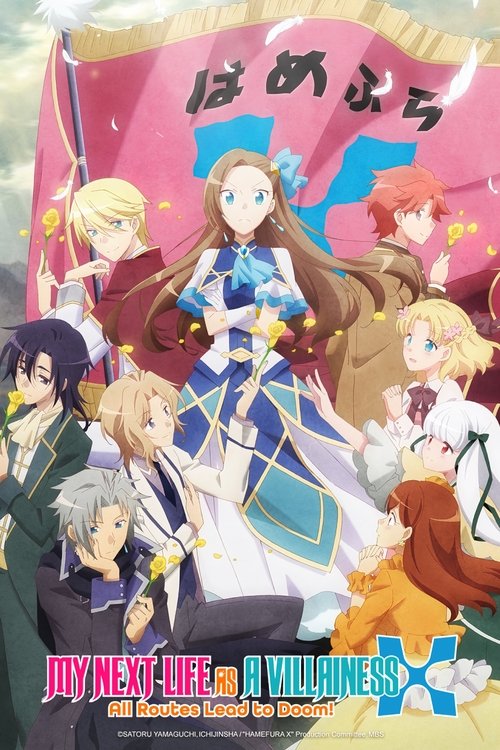
The second season of "My Next Life as a Villainess: All Routes Lead to Doom!" begins with Katarina Claes, who is now aware of her status as the villainess in the otome game "Fortune Lover." After the events of the first season, she is determined to avoid her doom flags and live a peaceful life. The story opens with Katarina enjoying her time at the academy, surrounded by her friends, including the charming and noble Mary Hunt, the stoic and protective Geordo Stuart, and the kind-hearted and gentle Alan Stuart.
As the new school year begins, Katarina is excited about the upcoming school festival. She is particularly enthusiastic about the idea of participating in various events and making memories with her friends. However, she soon learns that the festival will also include a competition for the title of "Best Couple," which raises her anxiety about her relationships with the male characters, as she fears that her actions might inadvertently lead to romantic entanglements that could trigger her doom flags.
Katarina's internal conflict deepens when she discovers that her friends have their own feelings for her. Geordo, Alan, and even the previously antagonistic Nicol Ascart show signs of affection towards her. This realization causes her to panic, as she worries that she might hurt their feelings or lead them on unintentionally. In an effort to maintain her friendships and avoid romantic complications, she decides to focus on the festival and the activities that will allow her to bond with everyone without crossing any romantic lines.
During the festival preparations, Katarina's friends rally around her, and they all work together to create a booth for the event. The camaraderie and teamwork bring them closer, and Katarina feels a sense of happiness and belonging. However, her anxiety resurfaces when she overhears a conversation about the competition and the potential for heartbreak among her friends. She resolves to support them in their romantic pursuits, believing that this will help her avoid her doom flags.
As the festival day arrives, the atmosphere is filled with excitement and anticipation. Katarina and her friends set up their booth, and they engage with other students, showcasing their hard work. However, the competition for "Best Couple" looms over them, and Katarina's fears intensify. She decides to take a proactive approach by encouraging her friends to express their feelings to one another, hoping that this will alleviate the tension and prevent any romantic misunderstandings.
Throughout the festival, various events unfold, including games and performances. Katarina participates enthusiastically, but her mind is constantly racing with thoughts of how to navigate the romantic dynamics among her friends. As the competition progresses, she witnesses moments of connection between Geordo and Mary, as well as Alan and Nicol, which brings her both joy and concern. She realizes that her presence might complicate their feelings, and she struggles with the desire to support them while also protecting herself from potential heartbreak.
In a pivotal moment during the festival, a misunderstanding occurs when Katarina accidentally gets caught in a romantic scenario with Geordo. This leads to a series of comedic and awkward situations, as her friends misinterpret the nature of their relationship. Katarina's attempts to clarify her intentions only seem to deepen the confusion, and she finds herself in a whirlwind of emotions as she tries to maintain her friendships while avoiding romantic entanglements.
As the festival comes to a close, the results of the "Best Couple" competition are announced. To Katarina's surprise, she and Geordo are declared the winners, which sends shockwaves through their friend group. The announcement forces Katarina to confront her feelings and the reality of her situation. She realizes that her actions have consequences, and she must navigate the complexities of her relationships with her friends while staying true to herself.
In the aftermath of the festival, Katarina reflects on her experiences and the bonds she has formed with her friends. She understands that her journey is not just about avoiding doom flags but also about embracing the connections she has made. The season ends with Katarina determined to face whatever challenges lie ahead, armed with the support of her friends and a newfound understanding of her own heart.


What is the ending?
In the ending of "My Next Life as a Villainess: All Routes Lead to Doom! Season 2," Catarina Claes successfully navigates the challenges posed by her past life as a villainess. She manages to avert all potential doom scenarios through her kindness and determination. The story concludes with her surrounded by her friends and love interests, who have all come to appreciate her for who she is, leading to a heartwarming resolution.
As the final episodes unfold, the narrative begins with Catarina Claes facing the aftermath of the events that transpired in the previous arcs. The atmosphere is filled with a sense of urgency as she grapples with the looming threat of the "Doom" scenarios that could befall her. Catarina, ever the optimist, resolves to change her fate by being proactive and supportive of her friends.
Scene 1: The Royal Academy The story opens at the Royal Academy, where Catarina is seen interacting with her friends, including Maria, Geordo, and the other members of the love interests' group. The camaraderie is palpable, with laughter and light-hearted banter filling the air. Catarina's internal monologue reveals her determination to protect her friends and ensure that they all have happy endings, despite the looming threats.
Scene 2: The Revelation of the Villainess As the plot progresses, Catarina learns about the existence of a new character, a transfer student named Alan, who poses a potential threat to her relationships. The tension rises as Catarina realizes that Alan's arrival could disrupt the delicate balance she has worked so hard to maintain. However, instead of viewing him as an enemy, she approaches him with kindness, hoping to understand his motivations.
Scene 3: The Confrontation In a pivotal moment, Catarina confronts Alan, who reveals his own struggles and insecurities. This scene is charged with emotion as both characters share their vulnerabilities. Catarina's empathy shines through, and she encourages Alan to embrace his true self rather than conform to the expectations placed upon him. This interaction not only helps Alan but also reinforces Catarina's role as a unifying force among her friends.
Scene 4: The Festival The narrative shifts to a grand festival at the academy, where students showcase their talents. Catarina participates wholeheartedly, showcasing her growth and confidence. The festival serves as a backdrop for various character interactions, highlighting the bonds that have formed between Catarina and her friends. Each character's development is showcased, with moments of joy, laughter, and even a few misunderstandings that are quickly resolved.
Scene 5: The Final Challenge As the festival progresses, a final challenge arises that tests the strength of Catarina's relationships. A misunderstanding leads to a rift between her and one of her closest friends, prompting Catarina to reflect on her actions and the importance of communication. This moment of introspection is crucial, as it showcases her growth and willingness to learn from her mistakes.
Scene 6: The Resolution In the climax of the season, Catarina gathers her friends to address the misunderstandings and reaffirm their bonds. The emotional weight of this scene is palpable as each character expresses their feelings, leading to heartfelt reconciliations. Catarina's ability to bring everyone together solidifies her role as the heart of the group.
Scene 7: The Future The season concludes with a serene scene where Catarina and her friends sit together, contemplating their futures. Each character expresses their hopes and dreams, and Catarina's unwavering support shines through. The final moments are filled with warmth and optimism, as they all look forward to the adventures that lie ahead, free from the constraints of their past roles.
In the end, Catarina Claes emerges not only as a beloved friend but also as a beacon of hope and positivity. The fates of the main characters are intertwined, with each finding their own path to happiness, thanks to Catarina's influence. The story closes on a note of unity and friendship, emphasizing the importance of understanding and compassion in overcoming challenges.
Is there a post-credit scene?
Yes, there is a post-credit scene in "My Next Life as a Villainess: All Routes Lead to Doom! Season 2."
In this scene, the focus shifts to a lighthearted moment that encapsulates the series' comedic tone. The scene features Katarina Claes, the protagonist, who is seen enjoying a peaceful day in the garden. She is surrounded by her friends, including Maria, Geordo, and the other members of her close-knit group. The atmosphere is warm and cheerful, with the sun shining brightly and flowers blooming around them.
As they engage in playful banter, Katarina's carefree nature shines through. She is blissfully unaware of the potential romantic tensions and underlying feelings among her friends, which adds a layer of humor to the scene. The dialogue is filled with light teasing and laughter, showcasing the bonds they have formed throughout their adventures.
The scene culminates in a moment where Katarina, in her usual obliviousness, suggests a new game for them to play, completely missing the subtle glances exchanged between her friends. This moment serves to highlight her innocence and the charm that has endeared her to the audience.
Overall, the post-credit scene reinforces the themes of friendship and the lightheartedness that permeates the series, leaving viewers with a sense of joy and anticipation for what lies ahead in Katarina's journey.
What new characters are introduced in Season 2 and how do they impact the story?
In Season 2 of My Next Life as a Villainess: All Routes Lead to Doom!, several new characters are introduced, including the charming and mysterious character, Keith Claes, who is revealed to be a key figure in the story. His presence adds complexity to the relationships among the main characters, particularly with Catarina Claes, as he becomes a potential romantic interest. Additionally, the introduction of new rival characters and allies further complicates the dynamics of the harem surrounding Catarina, leading to new challenges and comedic situations.
How does Catarina's relationship with her childhood friends evolve in Season 2?
Catarina's relationships with her childhood friends, such as Mary Hunt and Sophia Ascart, deepen in Season 2. As they navigate the challenges of their academy life, the bonds of friendship are tested and strengthened. Catarina's genuine care for her friends leads her to prioritize their happiness, often putting her own feelings aside. This selflessness creates emotional moments where her friends express their gratitude and affection, showcasing the growth of their relationships and the importance of camaraderie in overcoming obstacles.
What are the significant challenges Catarina faces in Season 2?
In Season 2, Catarina faces several significant challenges that test her resolve and adaptability. One major challenge is the emergence of new romantic rivals who threaten her relationships with her friends and potential love interests. Additionally, Catarina must navigate the complexities of her own feelings as she becomes more aware of her impact on those around her. The pressure of maintaining her 'villainess' persona while trying to avoid doom scenarios adds to her internal conflict, leading to moments of self-doubt and determination.
How does Catarina's approach to avoiding her doom scenarios change in Season 2?
Catarina's approach to avoiding her doom scenarios evolves significantly in Season 2. Initially relying on her knowledge of the game's plot to steer clear of bad endings, she begins to focus more on building genuine relationships and understanding the emotions of those around her. This shift leads her to take proactive steps to ensure the happiness of her friends, often putting their needs before her own. Her growth in emotional intelligence allows her to navigate social situations more effectively, ultimately leading to unexpected outcomes that defy the original game's narrative.
What role does the academy play in the development of the plot in Season 2?
The academy serves as a central setting in Season 2, acting as a backdrop for character development and plot progression. It is within the academy's walls that Catarina and her friends face various trials, including academic competitions, social events, and personal conflicts. The academy environment fosters both camaraderie and rivalry, pushing characters to confront their feelings and ambitions. Key events, such as the school festival and duels, create opportunities for character interactions that drive the narrative forward, highlighting themes of friendship, rivalry, and personal growth.
Is this family friendly?
"My Next Life as a Villainess: All Routes Lead to Doom! Season 2" is generally considered family-friendly, but there are a few elements that might be sensitive for children or those who are particularly sensitive.
-
Romantic Tensions: The series features various romantic subplots, including jealousy and misunderstandings among characters, which may be confusing for younger viewers.
-
Villainous Themes: The premise revolves around the protagonist, Catarina, who is reincarnated as a villainess in an otome game. While the tone is light-hearted, there are moments that touch on the consequences of villainy and the potential for conflict.
-
Emotional Struggles: Characters experience feelings of anxiety, fear of rejection, and the pressure to conform to societal expectations, which may resonate with sensitive viewers.
-
Mild Violence: There are instances of magical duels and confrontations that, while not graphic, may be intense for younger audiences.
-
Misunderstandings and Conflicts: The plot often revolves around misunderstandings that lead to emotional distress among characters, which could be upsetting for some viewers.
Overall, while the series maintains a comedic and light-hearted tone, these elements may require parental guidance for younger audiences.