

















Popular
What motivates Vivien to get involved with the Jewish community in Ridley Road?
How does Jack's character evolve throughout the series?
What role does the character of Solly play in the story?
How does the relationship between Vivien and Jack develop throughout the series?
What are the key challenges Vivien faces as she infiltrates the far-right group?
Should I watch it?
Ask Your Own Question

What is the plot?
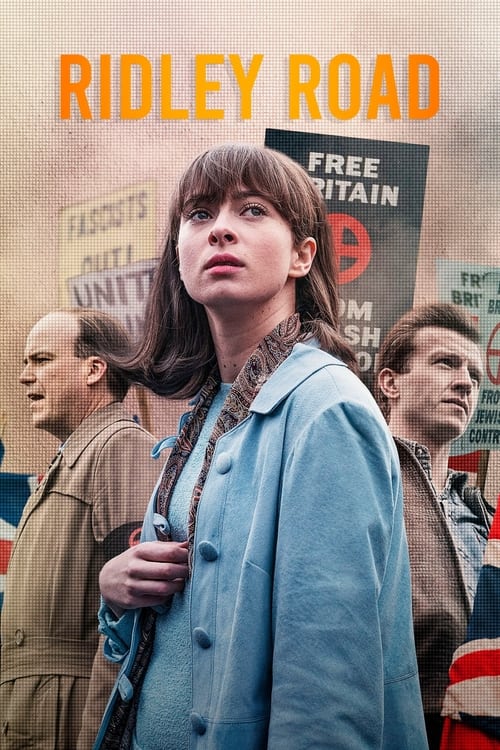
In the opening scenes of "Ridley Road," we are introduced to Vivien Epstein, a young Jewish woman living in 1960s London. She is deeply affected by the rise of anti-Semitism and the threat posed by the far-right group, the National Socialist Movement (NSM). The story begins with Vivien receiving a letter from her boyfriend, Jack, who is in Manchester. He expresses his love for her and hints at his involvement in a dangerous situation. This prompts Vivien to travel to Manchester to find him.
Upon arriving in Manchester, Vivien discovers that Jack has gone missing. She learns from his friends that he was involved in anti-fascist activities and had been trying to infiltrate the NSM. Determined to find him, Vivien decides to take on a new identity, posing as a non-Jewish woman named "Viv" to blend in with the NSM. She cuts her hair and adopts a more conservative style to fit in with the group.
Vivien's infiltration begins at a local pub where she meets members of the NSM, including the charismatic but dangerous leader, Colin Jordan. She quickly realizes the extent of their violent ideology and the threat they pose to her community. Despite the danger, Vivien is driven by her love for Jack and her desire to protect her community from the rising tide of fascism.
As Vivien becomes more entrenched in the NSM, she attends rallies and meetings, gathering information about their plans. She witnesses the brutality of the group firsthand, including a violent confrontation with anti-fascist protesters. This experience deepens her resolve to expose the NSM and find Jack. During one of the meetings, she overhears a plot to attack a Jewish community center, which heightens her urgency to act.
Vivien's internal conflict grows as she navigates her dual identity. She forms a bond with fellow NSM member, a man named "Gerry," who is unaware of her true intentions. Gerry becomes a source of support for Vivien, but she struggles with the moral implications of deceiving him. Meanwhile, she continues to search for clues about Jack's whereabouts, leading her to a series of dangerous encounters.
As the plot unfolds, Vivien discovers that Jack has been captured by the NSM and is being held in a secret location. She learns that he is being tortured for information about his anti-fascist activities. This revelation propels Vivien into action, and she devises a plan to rescue him. She enlists the help of her anti-fascist friends, who are also concerned about the NSM's growing power.
In a tense sequence, Vivien and her allies launch a rescue operation. They infiltrate the NSM's hideout, where Jack is being held. The scene is fraught with tension as they navigate through the building, avoiding NSM members. When they finally reach Jack, he is weak but alive. The rescue is chaotic, and a fight breaks out as they attempt to escape. Vivien shows remarkable bravery, fighting off NSM members to protect Jack.
After a narrow escape, Vivien and Jack regroup with their anti-fascist friends. They realize that the threat of the NSM is far from over, and they must continue to fight against the rising tide of fascism. The emotional weight of their experiences brings Vivien and Jack closer together, but they are also haunted by the violence they witnessed and the ongoing danger.
The series culminates in a dramatic confrontation between the anti-fascists and the NSM at a rally. Vivien, now fully committed to the cause, takes a stand against the hate and violence. The rally escalates into chaos, with clashes between the two groups. Vivien's bravery shines as she leads her friends in the fight against the NSM, determined to protect her community and honor the sacrifices made by those who fought against fascism.
In the final moments, the aftermath of the rally leaves Vivien and Jack reflecting on their journey. They understand that the fight against hate is ongoing, and they are resolved to continue their activism. The series ends on a note of hope, emphasizing the importance of standing up against oppression and the power of love and solidarity in the face of adversity.






What is the ending?
In the ending of "Ridley Road," the main character, Vivien, confronts the harsh realities of her world as she navigates the dangers posed by the far-right group, the National Socialist Movement. The climax sees her risking everything to save her partner, Jack, who is in grave danger. The series concludes with a sense of unresolved tension, highlighting the ongoing struggle against fascism and the personal sacrifices made in the fight for justice.
As the final episode unfolds, the atmosphere is thick with tension. Vivien, portrayed with a fierce determination, is deeply entrenched in the fight against the National Socialist Movement. The scene opens with her in a dimly lit room, surrounded by fellow activists. They are strategizing their next move, knowing that time is running out for Jack, who has been captured by the Nazis. Vivien's heart races as she recalls their moments together, her love for him fueling her resolve.
The narrative shifts to Jack, who is being held captive in a grim warehouse. He is bruised and battered, but his spirit remains unbroken. The camera lingers on his face, capturing the fear and defiance in his eyes. He knows that Vivien is out there, and the thought of her gives him strength. The sound of footsteps echoes ominously, signaling the approach of his captors.
Back with Vivien, she receives a tip-off about Jack's location. The urgency of the moment is palpable as she gathers her courage and prepares to infiltrate the enemy's stronghold. The scene transitions to a dark alley where she meets with her comrades, each one aware of the risks involved. They exchange determined glances, a silent understanding passing between them. Vivien's internal struggle is evident; she is torn between the fear of losing Jack and the need to stand up against the oppressive forces threatening their lives.
As they approach the warehouse, the tension escalates. The group splits up, and Vivien stealthily makes her way inside. The dim lighting casts long shadows, heightening the sense of danger. She navigates through the maze of crates and machinery, her heart pounding in her chest. The sound of muffled voices leads her to a room where Jack is being interrogated. The sight of him, vulnerable yet defiant, ignites a fierce determination within her.
In a heart-stopping moment, Vivien bursts into the room, confronting the captors with a mix of fearlessness and desperation. The confrontation is intense, filled with shouting and chaos. Jack's eyes widen in surprise and relief as he sees Vivien. The scene is a whirlwind of action as they fight back against the captors, showcasing their resilience and the strength of their bond.
As the dust settles, Vivien and Jack manage to escape, but not without consequences. They emerge into the night, breathless and shaken, but alive. However, the victory is bittersweet. The final scenes reveal the ongoing threat of the far-right movement, leaving viewers with a sense of unease. Vivien and Jack, though together, are acutely aware that their fight is far from over.
The series concludes with a poignant moment between the couple. They stand together, looking out over the city, the weight of their experiences heavy on their shoulders. Vivien's expression is a mix of hope and determination, while Jack's gaze reflects the scars of their struggle. The camera pulls back, capturing the vastness of the city and the challenges that lie ahead, emphasizing the ongoing battle against hatred and oppression.
In the end, Vivien and Jack's fates are intertwined, symbolizing the resilience of love in the face of adversity. Their journey is a testament to the sacrifices made in the fight for justice, leaving viewers with a lingering sense of urgency and the reminder that the struggle against fascism continues.
Is there a post-credit scene?
In "Ridley Road," there is no post-credit scene following the episodes of Season 1. The series concludes its narrative without additional scenes after the credits, focusing instead on the resolution of the main plot and character arcs within the episodes themselves. The story wraps up with a strong emphasis on the themes of resistance and the fight against fascism, leaving viewers with a sense of closure regarding the characters' journeys.
What motivates Vivien to get involved with the Jewish community in Ridley Road?
Vivien's motivation to get involved with the Jewish community stems from her personal connection to the struggles they face against rising anti-Semitism in post-war London. Her relationship with her Jewish boyfriend, Jack, deepens her commitment to the cause, as she feels a sense of urgency to protect him and others from the threats posed by the far-right.
How does Jack's character evolve throughout the series?
Jack's character evolves from a passionate activist to a more cautious individual as he grapples with the dangers posed by the National Socialist movement. Initially, he is driven by a sense of duty to fight against oppression, but as the threats become more tangible, he becomes increasingly aware of the risks involved, leading to moments of doubt and fear for his safety and that of his loved ones.
What role does the character of Solly play in the story?
Solly serves as a mentor and protector figure for Vivien, guiding her through the complexities of the underground resistance against the far-right. His experience and wisdom provide her with the knowledge she needs to navigate the dangerous landscape, while also highlighting the personal sacrifices he has made in the fight against fascism.
How does the relationship between Vivien and Jack develop throughout the series?
The relationship between Vivien and Jack develops from a romantic connection into a partnership forged in activism. As they face external threats together, their bond strengthens, but it is also tested by the pressures of their environment, including Jack's increasing involvement in dangerous activities and Vivien's own struggles to find her place in the resistance.
What are the key challenges Vivien faces as she infiltrates the far-right group?
Vivien faces numerous challenges as she infiltrates the far-right group, including the constant threat of exposure and violence. She must navigate the complexities of maintaining her cover while also dealing with the emotional toll of witnessing the hatred and bigotry within the group. Her internal conflict grows as she balances her commitment to the cause with her personal safety and the fear of losing Jack.
Is this family friendly?
"Ridley Road" is a drama set in 1960s London, focusing on themes of anti-fascism and the rise of far-right movements. While it is a compelling narrative, it contains several elements that may not be suitable for children or sensitive viewers.
-
Violence and Intimidation: The show depicts scenes of violence, including physical confrontations and intimidation tactics used by far-right groups, which can be distressing.
-
Racism and Hate Speech: There are instances of racist language and hate speech that reflect the historical context of the time, which may be upsetting for viewers.
-
Emotional Turmoil: Characters experience significant emotional distress, including fear, betrayal, and loss, which may resonate deeply with sensitive viewers.
-
Themes of Oppression: The narrative explores themes of oppression and societal conflict, which can be heavy and thought-provoking, potentially leading to discomfort.
-
Mature Situations: There are adult themes and situations that may not be appropriate for younger audiences, including romantic entanglements and the complexities of personal relationships in a politically charged environment.
Overall, while "Ridley Road" offers a rich historical narrative, its content may be challenging for children and those who are sensitive to themes of violence, racism, and emotional distress.







