
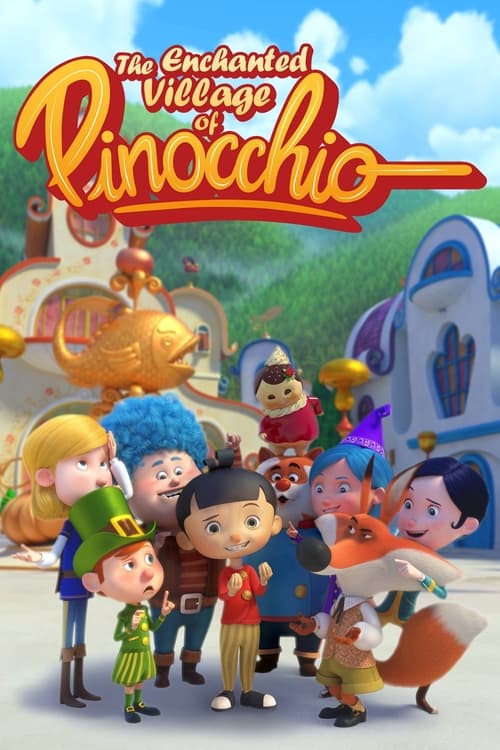




Popular
What challenges does Pinocchio face in his journey to become a real boy?
How does Geppetto's relationship with Pinocchio evolve throughout the season?
What role does the Blue Fairy play in Pinocchio's journey?
What are the consequences of Pinocchio's lies throughout the season?
How do the other characters in the village react to Pinocchio's adventures?
Should I watch it?
Ask Your Own Question

What is the plot?
In the first episode of "The Enchanted Village of Pinocchio," we are introduced to the quaint village where Pinocchio, a wooden puppet brought to life, resides. The story begins with Geppetto, the kind-hearted woodcarver, who lovingly crafts Pinocchio. As he finishes the puppet, a magical fairy appears, granting Pinocchio the gift of life. Geppetto is overjoyed, and Pinocchio, filled with curiosity, begins to explore the world around him.
As Pinocchio ventures outside, he encounters a group of children playing in the village square. He is fascinated by their games and wants to join in. However, the children are initially hesitant, unsure of how to interact with a living puppet. Pinocchio's eagerness to make friends leads him to try to impress them with tricks, but his clumsiness results in a series of mishaps, causing the children to laugh at him. Feeling rejected, Pinocchio's emotions shift from joy to sadness, highlighting his desire for acceptance.
Later, Pinocchio meets a clever and mischievous fox named Volpe, who sees an opportunity to exploit the naive puppet. Volpe convinces Pinocchio that he can become a real boy if he attends a magical school run by a mysterious figure known as the Coachman. Intrigued by the idea of becoming human, Pinocchio decides to follow Volpe, despite the warnings from Geppetto, who fears for his safety.
As they journey to the school, Pinocchio and Volpe encounter various obstacles, including a treacherous forest filled with enchanted creatures. Pinocchio's bravery is tested when they are confronted by a group of mischievous sprites who try to lead him astray. However, Pinocchio's determination to prove himself allows him to resist their temptations, showcasing his internal struggle between innocence and the allure of adventure.
Upon reaching the magical school, Pinocchio is mesmerized by the wonders inside. The Coachman, a charismatic yet sinister figure, welcomes him and promises that he will help him become a real boy. However, as Pinocchio begins his lessons, he realizes that the school is not what it seems. The other students are encouraged to indulge in mischief and disobedience, leading to chaos. Pinocchio feels conflicted, torn between the excitement of the school and the values instilled in him by Geppetto.
As the days pass, Pinocchio's behavior begins to change. He becomes more rebellious, influenced by the Coachman and his peers. Geppetto, worried about his son, sets out to find him, determined to bring him back home. During his search, Geppetto encounters various challenges, including a fierce storm that tests his resolve. His love for Pinocchio drives him forward, showcasing the deep bond between father and son.
Meanwhile, Pinocchio's transformation into a more mischievous character culminates in a pivotal scene where he and his classmates are caught causing havoc in the village. The Coachman, seeing potential in their chaos, encourages them to continue their antics, but Pinocchio begins to feel the weight of his actions. He witnesses the consequences of their behavior, as the villagers become upset and frightened. This moment sparks a realization within him, igniting a desire to return to his true self.
In a climactic confrontation, Pinocchio decides to stand up against the Coachman, declaring that he wants to return to Geppetto. The Coachman, furious at Pinocchio's defiance, attempts to trap him, but Pinocchio's newfound courage allows him to escape. He races through the enchanted school, dodging magical traps and obstacles, determined to find his way back home.
As Pinocchio makes his way through the forest, he encounters Volpe again, who tries to persuade him to stay and enjoy the freedom of the school. However, Pinocchio firmly rejects the fox's temptations, realizing that true happiness lies with his father. This decision marks a significant turning point for Pinocchio, as he embraces his identity and the values taught by Geppetto.
Finally, Pinocchio reunites with Geppetto, who is overjoyed to see his son safe. They share an emotional embrace, and Pinocchio expresses his regret for straying from the path. Geppetto forgives him, emphasizing the importance of love and understanding. The episode concludes with Pinocchio vowing to be a better son, setting the stage for his continued journey of growth and self-discovery in the enchanted village.

What is the ending?
In the ending of "The Enchanted Village of Pinocchio," season 1, Pinocchio faces a critical choice that tests his growth and understanding of what it means to be truly human. After a series of adventures and challenges, he ultimately decides to sacrifice his own desires for the sake of his friends and the village. This act of selflessness leads to a transformation that solidifies his place in the community, and he finally becomes a real boy. The other characters, including Geppetto, the Blue Fairy, and the various villagers, celebrate this moment, recognizing the importance of love, friendship, and sacrifice.
As the final scenes unfold, the village is filled with a sense of joy and unity. Geppetto, filled with pride and love for his son, embraces Pinocchio, who now embodies the values he has learned throughout his journey. The Blue Fairy watches over them, a symbol of hope and magic, as the village comes together to celebrate Pinocchio's transformation. The story concludes with a sense of closure, highlighting the themes of growth, community, and the power of selflessness.
As the final episode of "The Enchanted Village of Pinocchio" unfolds, the atmosphere is charged with anticipation. The sun sets over the quaint village, casting a warm golden hue that envelops the cobblestone streets and the vibrant homes. Pinocchio stands at the center of the village square, surrounded by his friends and family, each face reflecting a mix of hope and concern.
Scene 1: The Decision Pinocchio, having faced numerous trials, stands before the Blue Fairy, who has returned to guide him. She presents him with a choice: to remain a puppet with the ability to live freely or to sacrifice his freedom for the sake of his friends and the village. The weight of this decision hangs heavily on him. He glances at Geppetto, who watches with a proud yet anxious expression. Pinocchio's internal struggle is palpable; he recalls the moments of joy and friendship he has experienced, realizing that true happiness comes from connection and love.
Scene 2: The Sacrifice With a deep breath, Pinocchio makes his choice. He steps forward, declaring that he will give up his desire for freedom to protect the village from an impending threat. The villagers gasp, and Geppetto's eyes widen in disbelief. The Blue Fairy smiles gently, recognizing the depth of Pinocchio's growth. As he speaks, the air around them shimmers with magic, and the villagers begin to rally around him, their faces lighting up with admiration and support.
Scene 3: The Transformation In a breathtaking moment, the Blue Fairy waves her wand, and a brilliant light envelops Pinocchio. The villagers watch in awe as he transforms before their eyes. His wooden features soften, and his body takes on the form of a real boy. Gasps of joy erupt from the crowd, and Geppetto rushes forward, tears of happiness streaming down his face. He embraces Pinocchio tightly, whispering words of love and pride. The bond between father and son is now unbreakable, symbolizing the culmination of their journey together.
Scene 4: The Celebration As the transformation settles, the village erupts into celebration. Colorful banners are hung, and music fills the air. Villagers dance and laugh, their spirits lifted by the miracle they have witnessed. Pinocchio, now fully human, joins in the festivities, his heart swelling with joy. He looks around at the faces of his friends, realizing that he has found his true place in the world. The Blue Fairy watches from a distance, her presence a reminder of the magic that has guided them all.
Scene 5: A New Beginning The episode closes with a panoramic view of the village, now alive with laughter and love. Pinocchio stands beside Geppetto, surrounded by friends, embodying the values of sacrifice, friendship, and community. The camera pans up to the sky, where stars twinkle brightly, symbolizing hope and new beginnings. The final shot lingers on Pinocchio's smiling face, a testament to his journey and the lessons learned along the way.
In this poignant conclusion, each character finds their resolution: Geppetto embraces his son, the villagers unite in joy, and Pinocchio discovers the true meaning of being human. The story ends on a note of optimism, leaving viewers with a sense of fulfillment and the belief that love and sacrifice can lead to transformation and belonging.
Is there a post-credit scene?
In "The Enchanted Village of Pinocchio," season 1, there is indeed a post-credit scene that adds an intriguing layer to the story.
As the credits roll, the screen fades to a dimly lit forest glade, where the soft glow of fireflies dances in the air. The camera pans slowly, revealing a small, intricately carved wooden box resting on a moss-covered stone. The box is adorned with delicate engravings of various woodland creatures, hinting at its magical nature.
Suddenly, the box creaks open, and a gentle, ethereal light spills out, illuminating the surrounding trees. From within the box, a tiny figure emerges--a fairy with shimmering wings that sparkle like stardust. She flutters gracefully above the box, her expression a mix of curiosity and mischief.
The fairy looks directly at the audience, her eyes twinkling with secrets. "Oh, you thought the story ended here?" she teases, her voice melodic and enchanting. "There are many more adventures to come, and not all of them will be what you expect."
As she speaks, the scene shifts to glimpses of future episodes: Pinocchio facing new challenges, Geppetto discovering hidden truths about his past, and the village inhabitants encountering mysterious new characters. Each quick cut is filled with vibrant colors and emotional intensity, hinting at the growth and trials that lie ahead.
The fairy winks playfully before disappearing back into the box, which then closes with a soft thud. The screen fades to black, leaving viewers with a sense of anticipation and wonder about the unfolding journey in the enchanted village.
What challenges does Pinocchio face in his journey to become a real boy?
Throughout Season 1, Pinocchio encounters numerous challenges that test his character and resolve. He faces temptations from characters like the cunning Fox and the sly Cat, who try to lead him astray with promises of fun and adventure. Each encounter forces Pinocchio to confront his own desires versus the values of honesty and responsibility. His internal struggle is palpable as he grapples with the consequences of his choices, often feeling torn between the allure of freedom and the weight of his aspirations.
How does Geppetto's relationship with Pinocchio evolve throughout the season?
Geppetto's relationship with Pinocchio is central to the narrative. Initially, Geppetto is filled with hope and love for his wooden son, seeing him as a miracle. However, as Pinocchio begins to stray from the path of virtue, Geppetto experiences deep concern and disappointment. This emotional turmoil is depicted through Geppetto's expressions of worry and his desperate attempts to guide Pinocchio back to the right path. Their bond is tested, but ultimately, Geppetto's unwavering love serves as a beacon for Pinocchio's growth.
What role does the Blue Fairy play in Pinocchio's journey?
The Blue Fairy serves as a pivotal figure in Pinocchio's journey, embodying hope and guidance. She appears at critical moments, offering wisdom and encouragement. Her presence is often accompanied by a magical glow, symbolizing her ethereal nature. When she grants Pinocchio the ability to speak and move, it marks the beginning of his quest for humanity. However, she also emphasizes the importance of honesty and integrity, reminding Pinocchio that his actions have consequences. Her interventions are both nurturing and firm, pushing him to learn from his mistakes.
What are the consequences of Pinocchio's lies throughout the season?
Pinocchio's lies have significant consequences that ripple through his journey. Each time he lies, his nose grows, serving as a physical manifestation of his dishonesty. This not only embarrasses him but also alienates him from those he cares about, including Geppetto and his friends. The growing nose becomes a source of shame, forcing Pinocchio to confront the reality of his actions. The emotional weight of his lies culminates in moments of isolation and regret, highlighting the internal conflict between his desire for acceptance and the need for truth.
How do the other characters in the village react to Pinocchio's adventures?
The villagers have varied reactions to Pinocchio's adventures, reflecting their own beliefs and experiences. Some characters, like Lampwick, are drawn to Pinocchio's carefree spirit and encourage him to indulge in mischief, while others, like the wise old man, warn him of the dangers that lie ahead. The contrasting perspectives create a rich tapestry of community dynamics, where Pinocchio's choices impact not only his fate but also the perceptions of those around him. The villagers' reactions range from admiration to skepticism, illustrating the complexities of social acceptance and the consequences of one's actions.
Is this family friendly?
The Enchanted Village of Pinocchio is designed to be a family-friendly show, appealing to children and adults alike with its whimsical storytelling and vibrant animation. However, there are a few elements that might be considered potentially objectionable or upsetting for sensitive viewers:
-
Themes of Deception and Consequences: The show explores themes of honesty and the consequences of lying, which may be unsettling for some children who might struggle with understanding these concepts.
-
Mild Frightening Scenes: Certain scenes may include mild peril or dark imagery, such as characters facing challenges or being in danger, which could be alarming for younger viewers.
-
Emotional Struggles: Characters experience feelings of loneliness, fear, and sadness, particularly Pinocchio as he navigates his journey. These emotional moments may resonate deeply and could be upsetting for sensitive children.
-
Conflict with Authority Figures: There are instances of conflict between Pinocchio and adult characters, which may present a negative view of authority that some parents might find concerning.
-
Magical Transformations: The use of magic and transformations can be visually intense, and some children may find these scenes confusing or frightening.
Overall, while the show is crafted to be enjoyable for families, these elements may require parental guidance for younger or more sensitive viewers.









