







Popular
How does Hiraku end up in the Forest of Death, and why is he given the omnipotent farming tool?
How do Kuro and Yuki first arrive at Hiraku’s farm, and what changes when they settle there?
What is the deal with the Big Tree, and why is it so important to Hiraku’s village?
How do the village’s residents start producing paper and letters, and why does that matter in the story?
Which characters become part of Hiraku’s expanding household or community in Season 1?
Should I watch it?
Ask Your Own Question

What is the plot?
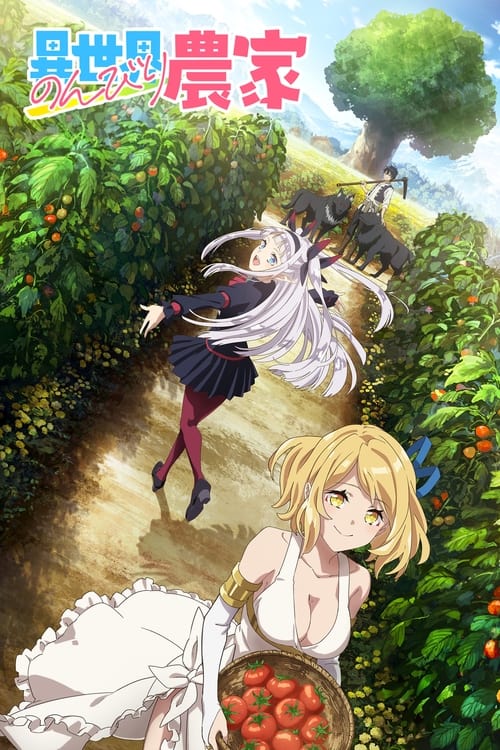
Hiraku Machio dies in his original world after suffering betrayal and a terminal illness, and a god apologizes for the mistake that led to his miserable life. The god offers him a new life in another world and grants several wishes so he can live comfortably: a healthy body, the ability to understand and speak the local language, and a life suited to peaceful farming. Hiraku chooses farming without hesitation, because that is the life he has always wanted.
He is sent to a remote wilderness called the Forest of Death, where he begins alone with only a magical farming tool that can transform into whatever implement he needs. He clears land, builds his first shelter, and starts turning the dangerous forest into arable ground. Using the tool's abilities and his own farming knowledge, he creates a workable homestead and begins planting and harvesting crops.
As Hiraku establishes the farm, animals and strange beings begin to appear around him. Wolves come to the farm, but instead of attacking, they become part of the growing household after Hiraku feeds and shelters them. A vampire girl named Ru is eventually discovered and brought into the farm's orbit, and Hiraku's home slowly becomes a refuge for unusual residents rather than a simple solo farm.
More people arrive as the farm's food and safety attract attention. Elves, beastmen, and other forest inhabitants begin depending on Hiraku's land for shelter and supplies. Hiraku keeps accepting newcomers because he wants a peaceful life, and each new arrival helps the farm grow larger and more organized. The settlement gradually shifts from a single farm into a functioning community built around work, food, and mutual protection.
The farm's defenses are tested when a wyvern attacks. Hiraku sees the danger to the people and crops, and his farming tool transforms into a spear so he can fight back. He battles the wyvern directly and defeats it before the attack can destroy the settlement, preventing major casualties and only allowing limited damage to the fields.
After the wyvern incident, Hiraku and the others continue expanding the farm. Grapes are cultivated, and wine production begins, adding another part of the settlement's daily life. The group also learns that Hiraku has been blessed with unnaturally good health and recovery, which explains why he survives hardships that would have killed a normal person.
Ru's younger sister, Flora, is later captured and brought to the farm by Zabuton and the wolves. This reveals more of the vampire family's involvement in the story and draws additional vampire connections into the settlement. Around the same time, Hiraku's dogs are revealed to be inferno wolves capable of breathing fire, which explains how powerful his animal protectors have become.
The farm keeps attracting more species. Lizardmen are brought in and assigned to heavy outdoor labor, where their strength is useful for major construction and field work. Leah then invites wandering elves to come live with them, adding another group of residents to the growing community. Hiraku does not reject these arrivals, because every new person strengthens the settlement and makes it more self-sufficient.
As the population grows, the village begins to take formal shape. Hiraku calls a meeting so everyone can agree on a name for the settlement. The group settles on Great Tree Village, and then throws a celebration. During that party, the residents unanimously choose Hiraku to be their mayor, making him the official leader of the community he never intended to govern.
The story continues with trade and outside contact becoming more important. Hiraku's village grows prosperous enough that other powers take notice. Dragons become involved in diplomacy after one of them appears at the village and challenges Hiraku to a fight. He defeats her, then learns she is Hakaren and that she is connected to the dragon lord Damal. Her presence helps establish formal relations between the village and the dragons.
Because the village's power is now politically significant, Dragon Lord Beelzebub becomes alarmed after visiting to trade for fruit and seeing how strong the settlement really is. He sends his daughter Flower to spy on the village. Flower discovers that the village is far more dangerous than expected and realizes that Hiraku himself is strong enough to threaten even major forces like the demon army. Although uneasy around him, she stays longer than planned after seeing the scale of the village's development.
The village's growth continues into a new season with more food production and trade. Seafood begins arriving, and the villagers enjoy having a wider range of supplies. A slime is also present in the household's strange ecosystem, and one drunken episode leads to it being "acquitted" after drinking an entire barrel of wine, showing how unruly and absurd life around the farm has become.
As the community expands further, the Lamia become part of the village's logistics by taking on the role of a delivery service and transporting trading goods. This makes the settlement more connected to outside markets and helps maintain the village's growing economy. Hiraku's original wish for a quiet farming life has now turned into a broad, multi-species village with diplomacy, trade, labor divisions, and defense duties all centered on him.
The season ends with the village firmly established, politically recognized, and still expanding under Hiraku's leadership. His peaceful dream has become a thriving settlement full of residents who rely on him, respect him, and continue to gather around the farm as the center of their shared life.


What is the ending?
The ending of "Farming Life in Another World" Season 1 is a heartwarming conclusion where Hiraku's Great Tree Village grows into a thriving, diverse community. After Lou, the vampire wife, gives birth to Hiraku's half-vampire, half-human baby named Alfred Liu, the village celebrates with wine, food, and new gifts. Hideko, the village's overworked craftsman, introduces a currency system to help manage trade, though it brings him even more work. The village becomes a model of compassion and cooperation when refugees from a war nearby ask to live there, and Hiraku and the villagers agree to build a new settlement for them beside the Great Tree Village--showing that their strength is not just in farming, but in their willingness to save others.
In expanded narrative form, orating scene by scene:
The final episode begins with Lou, Hiraku's vampire wife, in the early stages of giving birth. The entire village, including the oni maids, elves, and dragons, gathers around her in support. They bring her warm blankets, soothing drinks, and comfort. As the sun rises, Lou's labor intensifies. The villagers hold her hands, whisper prayers, and offer her strength. Finally, with a cry, Lou gives birth to a healthy baby boy--half vampire, half human--named Alfred Liu. The village erupts in joy. Children dance, adults cheer, and the oni maids pour wine. They celebrate not just the birth, but the future of their village, which now includes a new generation born of two worlds.
Next, the village faces a new challenge: Hideko, the craftsman who makes tools, weapons, and furniture for everyone, is overworked. People constantly come to him for new items, and he has no time to rest. To solve this, Hideko proposes a currency system. He creates a coin for the village, hoping it will help people trade goods and services without crowding him. But the moment he introduces the currency, he finds himself even more busy--people now want coins, they want to exchange goods for coins, and they want to buy items using coins. Hideko sighs, realizing that introducing money is no small task. It will take time to settle, but he hopes it will stick.
The video then shows how the villagers begin using the new currency. Some spend it on wine, some on furniture, some on tools, and others save it. The scene is light and humorous, showing how quickly the village adapts to the new system. Hiraku, the village mayor, gives the villagers coins at the start, and they use them freely. A banker from another village arrives to celebrate the new life of Alfred Liu and enjoy the festivities.
Then, a new event unfolds: a group of refugees from a war asks to live in the Great Tree Village. They need a place to settle, and they ask to join the village. However, the village is already full, and there is no room for so many people. Hiraku and the villagers decide not to turn them away. Instead, they agree to build a new village beside the Great Tree Village, just for the refugees. This decision shows that the village's strength is not just in its farming or its magic, but in its compassion. They want to save others, and they do it without hesitation.
The fate of each main character at the end:
- Hiraku Machio remains the mayor of the Great Tree Village. He continues to farm, lead, and protect his community. He is now the father of two children: Alfred Liu (half-vampire, half-human) and Tizel (angel, born from Ru).
- Lou, the vampire wife, is now the mother of Alfred Liu. She is healthy and happy, and she continues to live in the village with Hiraku.
- Ru, the angel wife, is the mother of Tizel. She remains a key member of the village, helping with medical research and farming.
- Hideko, the craftsman, is still overworked but hopeful that the currency system will eventually help him. He is the creator of the village's new money.
- Lastismoon, the dragon diplomat, remains in the village to handle diplomatic relations with the dragon world.
- Flowerim, the demon princess, stays in the village as a commoner, learning about life and farming.
- The oni maids continue to help with farming, cooking, and caring for the village's livestock.
- The elves live in harmony with the villagers, contributing to the village's growth.
- The refugees from the war are now settled in the new village beside the Great Tree Village, and they are welcomed with compassion.
The episode ends with the villagers celebrating the birth of Alfred Liu, the success of the new currency, and the decision to help the refugees. The message is clear: farming is not just about growing crops, but about growing a community that is strong, compassionate, and ready to help others.
That is the ending of "Farming Life in Another World" Season 1.
Is there a post-credit scene?
Yes. The final episode's credits lead into a brief end scene rather than a separate big post-credit gag, and the commonly reported takeaway from viewers is that it shows Lu giving birth, serving as the season finale's last story beat.
If you want, I can also describe where in the episode it appears and how it fits the ending tone of the season.
How does Hiraku end up in the Forest of Death, and why is he given the omnipotent farming tool?
Hiraku Machio dies after years of severe illness and overwork in his previous life, then is brought before a god-like being who apologizes for his suffering and grants him a second chance. He is sent to a remote fantasy wilderness known as the Forest of Death with a powerful farming tool designed to make building a peaceful life possible. This setup is the core starting point of the anime's first season.
How do Kuro and Yuki first arrive at Hiraku’s farm, and what changes when they settle there?
Kuro and Yuki are among the first major non-human visitors to reach Hiraku's farm, and their arrival marks the story's shift from a solitary survival setup to a growing household. Once they settle in, the farm becomes a true communal space, and their presence leads directly to the later births of Kuroichi, Kuroni, Kurosan, and Kurosan/Kuroyon as the group expands into a family-like community.
What is the deal with the Big Tree, and why is it so important to Hiraku’s village?
Hiraku discovers the Big Tree after awakening in the Forest of Death, and it becomes the central landmark around which he builds his first farm. As the settlement grows, the Big Tree remains tied to the farm's identity and development, functioning as the place where the village's earliest growth begins and where many later changes in the community are anchored.
How do the village’s residents start producing paper and letters, and why does that matter in the story?
As the settlement becomes Village One, the villagers begin working on paper and bamboo letters for printing. The timeline notes that production remains confidential because large quantities are not yet possible, which shows the story moving beyond simple farming into early infrastructure, communication, and organization for the growing community.
Which characters become part of Hiraku’s expanding household or community in Season 1?
Season 1 steadily introduces a widening circle around Hiraku's farm, starting with Kuro and Yuki and later extending into a larger mixed community of humanoid and beastlike companions. The season's structure emphasizes how these characters gather around Hiraku's peaceful life and turn the isolated farm into a functioning village centered on mutual support and shared labor.
Is this family friendly?
Mostly yes, but with caveats. Farming Life in Another World Season 1 is generally a light, cozy fantasy/slice-of-life anime, but it is not completely child-proof because it includes fanservice, suggestive sexual humor, and some pregnancy/relationship implications that may be awkward or inappropriate for younger children.
Potentially objectionable or upsetting elements include:
- Fanservice / revealing character designs: IMDb user comments mention "ample cleavage" very early in the series.
- Sexual innuendo and adult relationship subtext: The show is described as having a harem-like setup and jokes around intimate relationships, even though the anime tones down material from the light novels.
- Pregnancy-related content: Pregnancy is specifically mentioned as part of viewer concerns, and some plot developments may be confusing or awkward for younger viewers.
- Mild scary fantasy creatures: Vampires, dragons, and similar fantasy beings appear, but one source notes they are "not very scary" in the show.
- Brief awkwardness if watching with kids: Multiple viewers describe it as family-watchable, but with moments that can surprise adults if they walk in during certain scenes.
For a family-friendly viewing choice, this is better suited to older children or teens with parents aware of the fanservice and sexual humor rather than very young kids.









