








Should I watch it?
Ask Your Own Question

What is the plot?
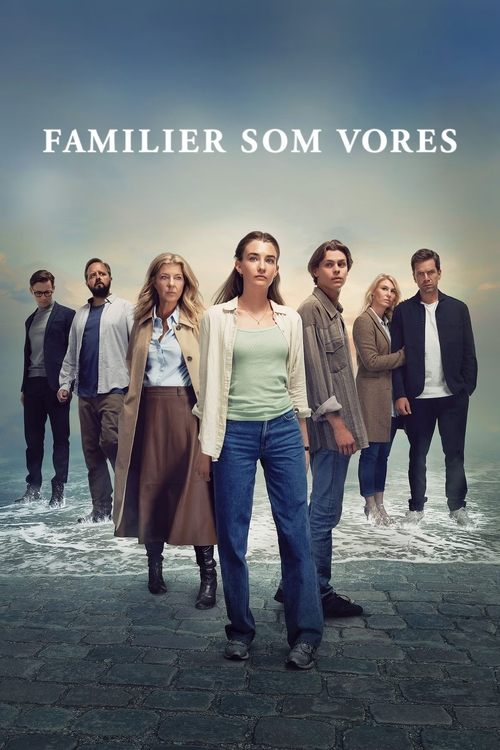
The series "Families Like Ours," set in the near future amid catastrophic climate change, begins with the Danish government deciding to evacuate the entire country due to rising sea levels that will soon flood Denmark. Nikolaj, a government official working in the Ministry of Foreign Affairs, discreetly informs his family and close friends about the impending evacuation, setting off a wave of anxiety and urgent preparations among them.
Jacob, a successful architect recently divorced from Fanny and now married to Amalie, struggles with guilt over his daughter Laura's difficulties following the divorce. He feels pressured to support his new family, including his young son Mikkel, which leads him to make hasty decisions about their future relocation. Meanwhile, Fanny, a freelance science journalist and Laura's mother, is overwhelmed by stress and insists on maintaining her independence despite her fragile mental health. She is unable to work and is forced to accept a resettlement plan that sends her to Romania, a destination she fears and resents.
Laura, on the cusp of graduating high school, faces a painful choice about which parent to follow in the evacuation: her father Jacob, who plans to move to France with his new family, or her mother Fanny, who will be relocated to Romania. This decision weighs heavily on her, as it will determine her future and the family dynamics she must navigate.
Amalie, Jacob's wife and a psychologist from a wealthy family, is deeply empathetic toward Laura's predicament. She secretly assists Laura in exploring her options, even as she sometimes fails to recognize when her own father, Bjørn, exploits their generosity. Amalie's brother Nikolaj, married to Henrik, a wealthy landowner, supports his husband in dealing with Henrik's troubled brother Peter, who causes tension within the family.
As the evacuation date approaches, the families grapple with the emotional and logistical challenges of leaving their homeland. The government's refugee resettlement plans prove wildly impractical, causing frustration and desperation. The Danes, unlike the Dutch who have already been displaced and whose economies are collapsing, are still in the early stages of relocation but face the reality of limited options and quotas in host countries.
Tensions rise as the characters confront the loss of their country and the uncertainty of their futures. Laura's relationship with her schoolmate Elias, her first love, adds a layer of personal conflict amid the broader crisis. The series also introduces other family members, such as the hot-headed uncle Holger and the child football prodigy Lucas, whose psychic-like abilities hint at the chaos to come.
The narrative unfolds through a series of intimate family moments and broader societal upheavals, showing the characters' attempts to maintain dignity and hope while facing displacement. The final episodes depict the actual evacuation process, with families packed into ferry cabins, buses, and transit centers, carrying their lives in suitcases as they leave Denmark behind.
Throughout the series, key decisions--such as Laura's choice of which parent to follow, Jacob's attempts to secure a stable future for his new family, and Fanny's struggle to assert her independence despite her vulnerability--drive the story forward. The series ends on a somber note, emphasizing the profound loss and resilience of the Danish people as they become climate refugees, forced to rebuild their lives in unfamiliar lands.
Related Titles
Browse All Titles →

What is the ending?
The ending of Families Like Ours season 1 concludes with a bittersweet reunion between Laura and Elias, who have endured separation, danger, and trauma amid Denmark's evacuation due to climate disaster. Despite Elias being presumed dead after his belongings washed ashore, he survives severe police abuse and coma, eventually reconnecting with Laura at a wedding in Finland. Other families face uncertain futures but show resilience and hope as they begin new lives abroad.
Expanded narrative of the ending, scene by scene:
The finale opens with a tense, chaotic atmosphere as Denmark's evacuation descends into disorder. The government's initial organized efforts have collapsed, leaving those remaining in the country desperate and vulnerable. The scene shows frantic typing, screams, and the disintegration of social order, setting a grim tone for the final hours in Denmark.
Laura's family is shown grappling with the reality of leaving their homeland behind. Jacob, Laura's father, and Amalie, her stepmother, face financial hardship and the emotional toll of displacement. Jacob proposes moving to Bucharest to live with Laura and Fanny, signaling a fresh start despite their losses. Amalie encourages Jacob by reminding him of his talents and their shared love, which brings a moment of hope amid despair.
Meanwhile, Laura's love story with Elias reaches its climax. Elias had disappeared, and his mother informs Laura that he might be dead after his clothes were found washed ashore. Laura refuses to accept this, continuing to text Elias and confessing her love. After many difficult days, she finally receives a message from Elias around Christmas. He reveals he survived police brutality that left him in a coma and is now in a rehabilitation center in Poland, struggling physically and emotionally.
The narrative then shifts to a poignant reunion at a wedding in Finland, where Carl and Hannah marry amid the ruins of their former lives. Elias, still weak and traumatized, avoids looking at Laura, not wanting her to see his vulnerable state. Laura sits beside him and reassures him that her love remains unchanged. This moment rekindles their emotional connection, and they decide to give their relationship another chance, symbolizing hope and resilience.
Other characters' fates are briefly touched upon: Henrik and Nik plan to go to Albania to help Danilo buy back a farm, indicating efforts to rebuild and reclaim some stability. Jacob and Amalie, despite their struggles, show determination to move forward and create a new life for their family.
The finale closes with a wedding celebration surrounded by evacuation chaos, encapsulating the series' message that even amid climate disaster and loss, human connection, love, and community endure. The series ends on a note of painful truth but also fragile hope, emphasizing survival not just as physical endurance but as emotional and relational continuity.
In summary, Laura and Elias survive and reunite, Jacob and Amalie commit to rebuilding their lives abroad, and other families face uncertain but hopeful futures. The ending balances the harsh realities of climate-induced displacement with moments of love and resilience.
Is there a post-credit scene?
The TV show Families Like Ours (2024), season 1 titled "Limited Series," does not have any information or mention of a post-credit scene in the available detailed episode summaries, reviews, or finale explanations. The sources describing the finale and ending focus extensively on the emotional and narrative closure of the main characters, such as Ida's sacrifice, the wedding scene, and the resolution of Laura and Elias's story, but none indicate the presence of a post-credit scene or extra footage after the credits roll.
Therefore, it can be concluded that Families Like Ours season 1 does not include a post-credit scene.
Is this family friendly?
Families Like Ours is not considered family friendly for young children or sensitive viewers. The series contains moderate levels of frightening and intense scenes, including moments of emotional distress, anxiety, and situations that may evoke feelings of unease or sadness. There are depictions of mild violence and mild gore, as well as moderate use of profanity and references to alcohol and smoking. While there is only mild sexual content or nudity, the overall tone is serious and grounded, with themes of crisis, displacement, and moral ambiguity that may be difficult for younger audiences to process. The show's measured pacing and frequent use of silence can heighten the emotional weight of these moments, making it more suitable for mature viewers.