
















Popular
What strategies does Prince Wein use to manage the kingdom's debt?
How does Ninym's relationship with Prince Wein evolve throughout the specials?
What role does the kingdom's council play in Prince Wein's decision-making?
How does Prince Wein's character reflect the pressures of leadership in the specials?
What challenges does Prince Wein face from rival nations in the specials?
Should I watch it?
Ask Your Own Question

What is the plot?
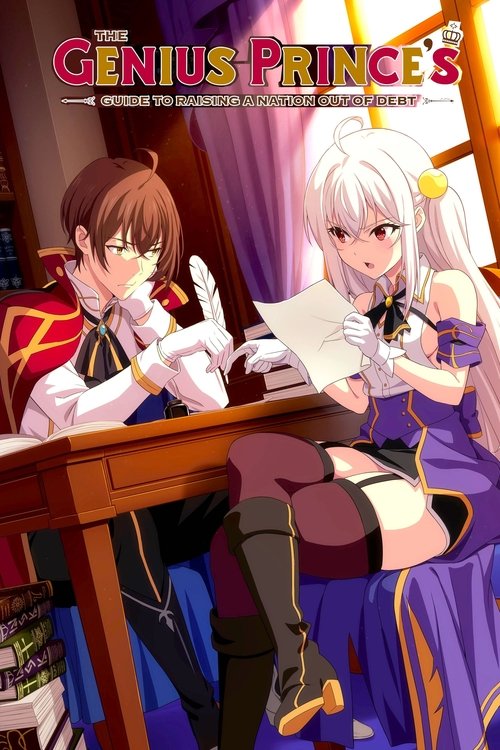
In the first special of "The Genius Prince's Guide to Raising a Nation Out of Debt," we are introduced to Prince Wein, who is grappling with the burdens of leadership and the financial struggles of his small kingdom, Natra. The episode opens with a scene of him in his office, surrounded by piles of paperwork and financial reports. He feels overwhelmed and frustrated, wishing for a way to escape his responsibilities. His loyal aide, Ninym, enters the room, bringing him a report on the kingdom's dire financial situation. Wein's internal conflict is palpable as he contemplates the weight of his duties versus his desire for a carefree life.
As the story progresses, Wein devises a plan to raise funds for the kingdom without directly taxing the citizens. He decides to host a festival to attract visitors and generate revenue. The scene shifts to the bustling town square, where preparations for the festival are underway. Wein's enthusiasm is infectious, and he begins to rally the townspeople, who are initially skeptical but gradually become excited about the potential for prosperity. The vibrant colors of decorations and the sounds of laughter fill the air, contrasting with Wein's earlier gloom.
During the festival, various events take place, showcasing the talents of the kingdom's citizens. Wein takes part in a cooking competition, where he hilariously struggles to keep up with the skilled chefs. His comedic misadventures provide a light-hearted tone, but they also reveal his determination to connect with his people. Meanwhile, Ninym observes Wein's interactions, feeling a mix of admiration and concern for his well-being. The festival culminates in a grand fireworks display, symbolizing hope and unity for the kingdom.
However, the celebration is interrupted when a rival kingdom's spies infiltrate the festival, seeking to sabotage Wein's efforts. Tension rises as Wein and Ninym realize the threat. They quickly devise a counter-strategy to protect their festival and the kingdom's reputation. In a tense confrontation, Wein confronts the spies, using his wit and charm to outsmart them. The scene is filled with suspense as he navigates the delicate balance between diplomacy and confrontation, ultimately managing to turn the situation in his favor.
As the special concludes, Wein reflects on the day's events, feeling a renewed sense of purpose. He acknowledges the importance of his role as a leader and the impact he can have on his people. The final scene shows him and Ninym overlooking the kingdom from a hilltop, with the festival lights twinkling below. Wein's expression is one of determination and hope, setting the stage for future challenges and adventures in his quest to raise Natra out of debt.




What is the ending?
In the ending of "The Genius Prince's Guide to Raising a Nation Out of Debt," the story culminates in a series of strategic maneuvers by Prince Wein and his allies to secure the future of their nation, Natra. Wein successfully navigates political challenges and personal conflicts, ultimately solidifying his position as a capable leader. The resolution sees him embracing his responsibilities, while characters like Ninym and his loyal aides reaffirm their commitment to supporting him. The fate of the kingdom appears hopeful as they look towards a brighter future.
As the final scenes unfold, the atmosphere in the royal palace of Natra is charged with anticipation. Prince Wein, having faced numerous challenges throughout his journey, stands at a pivotal moment. The camera captures his contemplative expression, revealing the weight of leadership resting heavily on his shoulders. He is no longer the carefree prince who sought to avoid responsibility; he has grown into a figure of determination and resolve.
Scene 1: The Council Chamber The scene opens in the council chamber, where Prince Wein convenes a meeting with his advisors, including Ninym, his trusted aide. The room is filled with tension as they discuss the recent threats to their kingdom. Wein's brow furrows as he listens to the concerns of his advisors, showcasing his internal struggle between his desire for a peaceful life and the duty he feels towards his people. Ninym, standing beside him, offers her unwavering support, her eyes filled with admiration and concern for Wein's well-being.
Scene 2: The Strategy Session As the discussion progresses, Wein outlines a bold strategy to counter the external threats. He speaks with a newfound confidence, his voice steady and commanding. The advisors exchange glances, impressed by his clarity of thought. Wein's internal motivation is clear; he wants to protect his kingdom and prove that he is more than just a prince who wishes to escape his responsibilities. The camera zooms in on his determined expression, highlighting his transformation.
Scene 3: The Battle Preparations The scene shifts to the training grounds, where soldiers are preparing for the impending conflict. Wein watches as they practice, his heart swelling with pride and anxiety. He knows that the fate of Natra rests on their shoulders, and he feels a deep sense of responsibility for their safety. Ninym approaches him, sensing his turmoil. She reassures him, reminding him of the strength they have built together. Their bond deepens in this moment, showcasing the emotional stakes involved.
Scene 4: The Confrontation The climax arrives as the enemy forces approach the borders of Natra. The tension is palpable as Wein leads his troops into battle. The animation captures the chaos of the battlefield, with clashing swords and the cries of soldiers echoing in the air. Wein fights valiantly, his strategic mind at work as he directs his forces. Each decision he makes is a testament to his growth as a leader, and the stakes are higher than ever.
Scene 5: The Aftermath After a fierce battle, the dust settles, and the camera pans over the battlefield, revealing the aftermath. Wein stands amidst his soldiers, a mix of relief and exhaustion washing over him. He has successfully defended his kingdom, and the cheers of victory resonate around him. However, the weight of loss is also present, as he reflects on the sacrifices made. Ninym approaches him, her eyes filled with pride and admiration. They share a moment of understanding, both aware of the challenges that lie ahead.
Scene 6: The Future of Natra In the final scene, Wein addresses his people, standing on a balcony overlooking the kingdom. His voice carries strength and hope as he speaks about the future of Natra. He acknowledges the hardships they have faced but emphasizes the importance of unity and resilience. The citizens cheer, their faith in their prince restored. Wein's journey has transformed him into a leader who embraces his role, and the camera captures the hopeful expressions of the people.
As the credits roll, the fates of the main characters are clear. Prince Wein has accepted his responsibilities, ready to lead Natra into a new era. Ninym remains by his side, a steadfast ally and confidante. The loyal aides, who have supported Wein throughout his journey, are also poised to help him navigate the complexities of governance. Together, they look towards a brighter future, embodying the themes of growth, responsibility, and the strength of unity.
Is there a post-credit scene?
In "The Genius Prince's Guide to Raising a Nation Out of Debt," season 0 titled "Specials," there is indeed a post-credit scene that adds a light-hearted touch to the overall narrative.
As the credits roll, the scene opens with a picturesque view of the kingdom of Natra, bathed in the warm glow of the setting sun. The camera pans down to reveal Prince Wein, who is sitting at a table outside, surrounded by a few of his loyal advisors. They are engaged in a lively discussion about the future of the kingdom and the various strategies Wein has implemented to improve their financial situation.
Wein, with a playful smirk, leans back in his chair, clearly enjoying the moment. His eyes sparkle with mischief as he suggests an outrageous idea for a new tax policy that would involve a festival to celebrate the kingdom's newfound wealth. The advisors exchange glances, some looking amused while others appear skeptical, highlighting the mix of personalities in his council.
Suddenly, the scene shifts to a close-up of his advisor, Ninym, who rolls her eyes but can't help but smile at Wein's antics. She knows that beneath his seemingly carefree demeanor lies a sharp mind and a deep concern for his people. The camaraderie among the group is palpable, showcasing the bond they have developed through their shared struggles and victories.
As the laughter continues, the camera zooms out, capturing the vibrant atmosphere of the kingdom, filled with citizens going about their daily lives, oblivious to the royal discussions. The scene fades to black, leaving viewers with a sense of hope and anticipation for the future of Natra, as well as a reminder of the light-hearted moments that can be found even in the midst of serious governance.
This post-credit scene encapsulates the essence of the series, blending humor with the underlying themes of leadership and responsibility, while also reinforcing the relationships that have been built throughout the story.
What strategies does Prince Wein use to manage the kingdom's debt?
Prince Wein utilizes a combination of clever diplomacy, strategic alliances, and innovative economic policies to manage the kingdom's debt. He often employs his wit to turn seemingly dire situations into opportunities for profit, showcasing his ability to think several steps ahead.
How does Ninym's relationship with Prince Wein evolve throughout the specials?
Ninym's relationship with Prince Wein evolves from one of mere loyalty to a deeper emotional connection. Initially, she is dedicated to serving him and supporting his plans, but as they face challenges together, her admiration for his intelligence and leadership grows, leading to moments of vulnerability and mutual respect.
What role does the kingdom's council play in Prince Wein's decision-making?
The kingdom's council often serves as a source of both support and conflict for Prince Wein. While some council members are skeptical of his unconventional methods, others recognize his potential and provide valuable insights. Their differing opinions create tension that Wein must navigate carefully to maintain his authority.
How does Prince Wein's character reflect the pressures of leadership in the specials?
Prince Wein's character is deeply affected by the pressures of leadership, which are highlighted in the specials. He grapples with the weight of responsibility for his kingdom's future, often feeling isolated in his decision-making. His internal struggles are depicted through moments of self-doubt and the burden of expectations from both his people and his family.
What challenges does Prince Wein face from rival nations in the specials?
In the specials, Prince Wein faces several challenges from rival nations that threaten his kingdom's stability. These include diplomatic tensions, military threats, and attempts at sabotage. Each encounter tests his strategic thinking and forces him to adapt quickly, showcasing his growth as a leader.
Is this family friendly?
The Genius Prince's Guide to Raising a Nation Out of Debt is generally considered family-friendly, but there are a few aspects that might be potentially objectionable or upsetting for children or sensitive viewers.
-
Political Intrigue: The series involves themes of political maneuvering and manipulation, which may be complex for younger audiences to fully grasp.
-
Conflict and Tension: There are scenes that depict conflict between characters, including verbal confrontations and strategic betrayals, which could be intense for some viewers.
-
Mild Violence: While not graphic, there are instances of battles and skirmishes that may include some level of violence, which could be unsettling for sensitive viewers.
-
Emotional Struggles: Characters experience moments of despair, frustration, and pressure, which may resonate with viewers who are sensitive to emotional turmoil.
-
Mature Themes: The show touches on themes of debt, governance, and responsibility, which might be heavy topics for younger audiences to understand fully.
Overall, while the series is designed to be entertaining and engaging, these elements may require parental guidance for younger viewers.









